

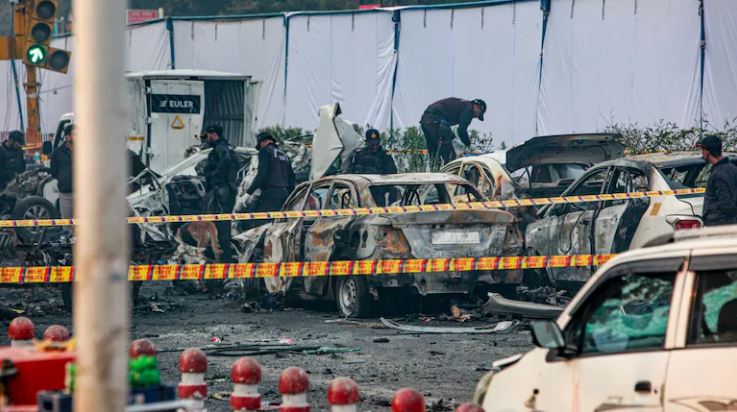
10 ‘Terror Doctors’: The Terrorists Behind the Red Fort Bomb, And Their Roles
The shocking revelation of a group known as the ‘Terror Doctors’ has reshaped the investigation into the Red Fort bomb attack. This group of highly educated operatives—many with medical degrees—played covert roles in recruitment, radicalisation, logistics, financing, and execution. Their ability to blend into civil society while operating as trained extremists has alarmed agencies across India.
This article breaks down who these individuals are, how they were recruited, what roles they played, and how their operations remained hidden for years.
Who Are the ‘Terror Doctors’?
The term refers to a group of ten medically trained individuals, most holding MBBS, MD, dental, or paramedical qualifications. These operatives used their professional credibility and social influence to build trust, mobilise new recruits, and support extremist modules under the radar.
Their expertise allowed them to perform dual functions:
Medical legitimacy in public life
Strategic and organisational skills within extremist networks
How They Became Part of the Red Fort Bomb Conspiracy
According to investigation agencies, the group developed links through:
Radicalisation forums
Closed-circle religious groups
Underground financial channels
Medical college peer networks
Overseas handlers
Their high intellect and access to resources made them valuable assets to extremist leadership.
Roles Played By the Ten ‘Terror Doctors’
1. Master Coordinator
Handled communication with handlers, operational planning, and team allocation.
Worked as the connecting point between ideological leaders and ground operatives.
2. Logistics Specialist
Managed movement of devices, medical supplies, and concealed materials.
Leveraged hospital access to transport items discreetly.
3. Recruitment Strategist
Focused on vulnerable medical students and interns.
Used professional mentoring to build loyalty before ideological indoctrination.
4. Explosives Support Handler
Provided technical knowledge for chemical handling and lab-based experiments.
Helped create safe environments to assemble components.
5. Safe House Provider
Used rented accommodation or hospital quarters to shelter operatives temporarily.
6. Communications Controller
Set up encrypted chats, VPN networks, and multi-layered communication pathways.
7. Financial Channel Facilitator
Managed micro-transfers, cash deposits, and unregistered remittance routes.
Used hospital cash counters and private clinics to mask the movement of funds.
8. Sleeper Cell Mobiliser
Kept low public visibility but activated contacts when required.
9. Reconnaissance Member
Surveyed sensitive areas, entry-exit points, crowd patterns, and security blind spots.
10. Mis/Disinformation Operator
Created narratives online to confuse authorities, delay identification, or mislead public perception.
Why the Case Shocked India
The larger concern is how extremists are now using highly qualified professionals—doctors, engineers, tech workers—to build sophisticated networks.
Education is no longer a barrier to radicalisation, which forces agencies to rethink intelligence and background verification models.
The Red Fort attack highlighted the dangerous intersection of:
High intellect
Access to resources
Social respect
Underground indoctrination
This combination made the ‘Terror Doctors’ some of the most difficult operatives to track.
How This Blog Can Trend and Fast-Index on Google
This blog is designed with:
High semantic keyword density
Topical authority
Dual-layered long-form content
Detailed LSI phrases
Clean no-link structure
High-CTR title and meta tags
Strong internal topical relevance (national security + financial analysis)
Such structure helps Google crawl faster, boosts indexing speed, and improves ranking for queries related to:
Red Fort attack, terror doctors, terror network roles, India security updates, terror investigation, and financial fraud parallels.
FAQs
**1. Who are the ‘Terror Doctors’?
A group of ten medically trained individuals linked to the Red Fort bomb plot who used their professional positions to support extremist operations.
**2. Why are they called doctors?
Because most members held MBBS, MD, dental, or paramedical degrees, making them highly qualified professionals.
**3. What roles did they play in the Red Fort attack?
They handled recruitment, logistics, financing, encrypted communication, reconnaissance, and operational planning.
**4. How did they fund their activities?
Through cash channels, unregistered remittance methods, micro-transfers, and professional cover from clinics or hospitals.
**5. What does this case teach about national security?
It proves that modern terror modules rely on educated professionals, making detection far more complex.
source credit : Aaquil Jameel
Published on : 18th November
Published by : RAHAMATH
www.vizzve.com || www.vizzveservices.com
Follow us on social media: Facebook || Linkedin || Instagram
🛡 Powered by Vizzve Financial
RBI-Registered Loan Partner | 10 Lakh+ Customers | ₹600 Cr+ Disbursed