

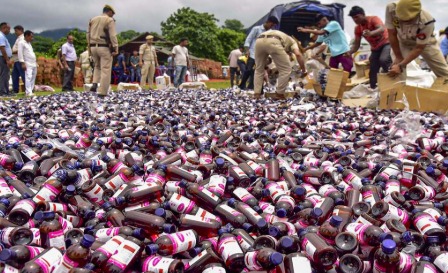
In one of the biggest drug busts of the year, authorities in Ghaziabad have seized over 15 lakh vials of banned cough syrup during a late-night raid. The operation, conducted by a joint team of police and drug control officers, led to the arrest of eight individuals allegedly involved in the illegal manufacturing, packaging, and distribution of the syrup.
The incident highlights the growing concern around the illicit pharmaceutical trade in India and its potential dangers to public health.
The Raid and Seizure
Acting on a tip-off, the police raided a warehouse in Ghaziabad’s industrial area, where they discovered massive stockpiles of banned cough syrup. The seized quantity is estimated to exceed 15 lakh bottles, packed and ready for distribution across various states.
According to officials, the racket was using fake pharmaceutical licenses and duplicate packaging to sell the syrup under different brand names. Preliminary investigation suggests that the drugs were being transported through interstate routes, targeting black markets and illegal medical suppliers.
Why the Syrup Was Banned
The seized cough syrup contains codeine phosphate, a controlled narcotic substance under India’s Narcotic Drugs and Psychotropic Substances (NDPS) Act. Codeine, though used medically for cough relief, can cause addiction and intoxication when consumed in excess.
Because of widespread misuse, many brands containing high doses of codeine were banned by the government. However, illegal networks continue to manufacture and sell them for profit, often targeting youth and low-income communities.
Police Findings and Investigation
During questioning, the arrested accused revealed that the cough syrup was being manufactured in small unregistered units and later distributed through underground supply chains.
Authorities have also seized:
Fake drug labels and packaging material
Machinery used for bottling and sealing
Financial records linking the suspects to interstate buyers
Investigators are now tracking the source of raw materials and possible links to pharmaceutical distributors in other states.
Public Health Risks
Banned cough syrups, especially those containing codeine or other sedative agents, pose serious health risks:
Respiratory depression (can slow breathing to dangerous levels)
Dependency and addiction
Severe liver and kidney damage
Accidental overdose, particularly among youth
Experts warn that such illegal drugs often lack quality control, making them even more harmful due to contamination or incorrect dosages.
A Growing Menace
India has seen a rise in cases involving misuse of pharmaceutical cough syrups, particularly among teenagers seeking a cheap high. Law enforcement agencies across states have been conducting regular crackdowns on illegal drug manufacturing units.
Despite multiple raids and stricter regulations, black-market operations continue to thrive, often shifting locations to avoid detection.
Government’s Stand on Drug Misuse
The Indian government has reinforced its commitment to fighting the illegal drug trade by:
Strengthening the Central Drugs Standard Control Organization (CDSCO) surveillance.
Introducing stringent penalties for those caught manufacturing or selling banned substances.
Enhancing interstate coordination to identify and dismantle supply networks.
Officials emphasize that public awareness and reporting suspicious activities remain vital in curbing this growing threat.
Conclusion
The seizure of 15 lakh bottles of banned cough syrup in Ghaziabad is a clear indication of the magnitude of the illegal drug trade operating in the shadows of legitimate pharmaceutical businesses.
As authorities continue their crackdown, the case serves as a warning against the misuse of prescription medicines and highlights the urgent need for stricter oversight in the drug manufacturing and distribution sector.
FAQs
Q1. Why was the cough syrup banned?
It contained codeine, a narcotic substance that can lead to addiction and health complications when misused.
Q2. How many people were arrested in the case?
A total of eight individuals were arrested for involvement in the illegal operation.
Q3. How many bottles were seized?
Over 15 lakh vials (bottles) of banned cough syrup were recovered from the warehouse.
Q4. What are the health risks of consuming banned cough syrup?
It can cause respiratory issues, addiction, liver damage, and even fatal overdoses.
Q5. What laws apply to such drug cases in India?
The NDPS Act and Drugs and Cosmetics Act govern such offenses, with penalties including imprisonment and heavy fines.
Published on : 6th November
Published by : SMITA
www.vizzve.com || www.vizzveservices.com
Follow us on social media: Facebook || Linkedin || Instagram
🛡 Powered by Vizzve Financial
RBI-Registered Loan Partner | 10 Lakh+ Customers | ₹600 Cr+ Disbursed