

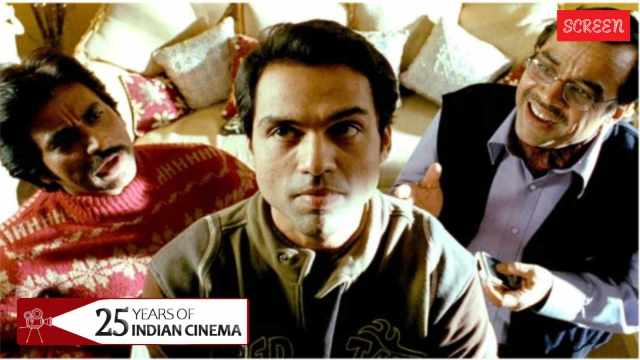
The year 2008 was one of the most curious chapters in Bollywood history — a year that oscillated between blockbuster spectacles and middling crowd-pleasers. While films like Rab Ne Bana Di Jodi, Jodhaa Akbar, Dostana, and Ghajini dominated the box-office and headlines, it was Dibakar Banerjee’s Oye Lucky! Lucky Oye! that quietly became the true gem of the year.
A Year of Spectacle Over Substance
2008 was a transition point in Hindi cinema. The Rs 100-crore benchmark was becoming the new obsession, and films like Ghajini marked the rise of high-octane, star-driven entertainment. Rab Ne Bana Di Jodi reunited audiences with Shah Rukh Khan in a dual role, Jodhaa Akbar showcased grand period storytelling, and Dostana brought urban flair and boldness to mainstream cinema.
Yet, despite their scale and star power, most of these films were long on gloss and short on freshness.
Enter Dibakar Banerjee and His ‘Lucky’ Charm
Then came Oye Lucky! Lucky Oye! — a Delhi-set satire that captured the aspirations and absurdities of the Indian middle class with razor-sharp humour. Released in November 2008, just days after the 26/11 Mumbai attacks, the film was initially overlooked. But as the dust settled, critics and cine-philes began to appreciate its brilliance.
Abhay Deol’s Effortless Cool
Abhay Deol as Lucky Singh, the charming thief who steals not just cars but hearts, delivered one of his career-defining performances. The film’s success wasn’t in loud heroism but in its subtle social commentary. Lucky’s journey — from a rebellious boy to a master-conman — became a metaphor for ambition, class divide, and the chase for status in a rapidly urbanising India.
Dibakar Banerjee’s Realism Revolution
Director Dibakar Banerjee, fresh from his debut Khosla Ka Ghosla!, once again tapped into the pulse of middle India. With Oye Lucky! Lucky Oye!, he blurred the lines between crime and comedy, crafting a world that felt both hilariously absurd and painfully real.
The dialogues were street-smart, the characters deeply relatable, and the rhythm of Delhi life — from its slang to its swagger — perfectly captured.
A Cult Classic Born Amid Blockbusters
While Ghajini broke box-office records, Oye Lucky! carved a cult following. It was the film critics called “the smartest Bollywood movie of 2008” — witty, original, and socially aware without preaching. In hindsight, it was the film that best represented the changing face of Indian cinema — small in budget, big in heart, and unapologetically local in flavour.
Why Oye Lucky! Lucky Oye! Still Matters Today
Fifteen years later, the film remains timeless — not just for its humour or charm, but for its relevance. It continues to speak about consumerism, identity, and the hustle for social validation. In many ways, Lucky Singh was a symbol of modern India: ambitious, restless, and morally flexible.
In a year full of grand romances and action spectacles, Oye Lucky! Lucky Oye! stood out as the real story of India in 2008 — clever, funny, and strikingly human.
FAQs
Q1. Why is Oye Lucky! Lucky Oye! considered special among 2008 films?
Because it balanced entertainment with realism, delivering sharp social commentary through humour and charm — a rare feat in that blockbuster-driven year.
Q2. Who directed Oye Lucky! Lucky Oye!?
The film was directed by Dibakar Banerjee.
Q3. What other major films released in 2008?
Some major releases included Ghajini, Rab Ne Bana Di Jodi, Jodhaa Akbar, Rock On!!, and Dostana.
Q4. How did audiences receive Oye Lucky! Lucky Oye!?
Though it faced a slow start (due to the timing of the 26/11 attacks), the film gained critical acclaim and cult status in later years.
Q5. What makes Abhay Deol’s role memorable?
Abhay brought effortless charisma and subtlety to Lucky Singh, redefining the “con artist” archetype in Hindi cinema and avoiding clichés.
Published on : 13TH November
Published by : SARANYA
Source Credit ; Shubhra Gupta
🛡 Powered by Vizzve Financial
RBI-Registered Loan Partner | 10 Lakh+ Customers | ₹600 Cr+ Disbursed