

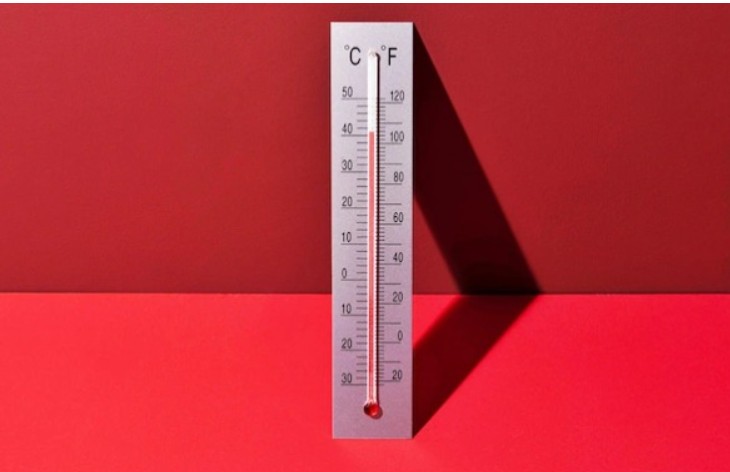
The year 2025 has started with record-breaking heat,
as January has officially become the warmest ever recorded. Scientists across
the globe are raising alarms about the accelerating impact of climate change,
with rising temperatures fueling extreme weather patterns, melting ice caps,
and unpredictable climatic shifts.
Record-Breaking Heat: What the Data Says
Preliminary data from global climate monitoring
agencies, including NASA, NOAA, and the European Copernicus Climate Change
Service, indicate that January 2025 has surpassed all previous temperature
records.
The global average temperature for January 2025 was 1.6°C
above pre-industrial levels, inching dangerously close to the 1.5°C threshold
set by the Paris Agreement.
Heatwaves have been reported across Asia, Europe, and
North America, with several cities experiencing their highest-ever winter
temperatures.
The Arctic and Antarctic regions have also witnessed abnormal
temperature spikes, accelerating glacial melting and rising sea levels.
Why Are Scientists Worried?
Experts warn that this alarming temperature rise is
not an isolated event but a sign of an ongoing and worsening climate crisis.
The major concerns include:
🔥 Extreme
Weather Events Will Get Worse
With rising temperatures, heatwaves, wildfires,
hurricanes, and floods are expected to intensify in both frequency and
severity. Scientists predict that 2025 could see more natural disasters than
previous years.
🧊 Polar Ice Caps
Are Melting Faster
The Arctic and Antarctic are experiencing unprecedented
warming, leading to glacier melt and sea-level rise. This threatens coastal
cities, which could face severe flooding in the coming decades.
🌱 Impact
on Agriculture and Food Security
Rising temperatures are affecting crop yields, with droughts
and erratic rainfall patterns disrupting food production. This could lead to higher
food prices and shortages, affecting millions globally.
🌍 The
1.5°C Limit Is Under Threat
The Paris Agreement’s goal of limiting global
temperature rise to 1.5°C above pre-industrial levels is now at serious risk.
If warming continues at this rate, experts warn that we could cross this
threshold within the next five years, leading to irreversible climate damage.
What’s Causing This Sudden Temperature Spike?
Scientists point to several factors behind January
2025’s extreme heat:
Greenhouse Gas Emissions: Continued burning of fossil
fuels, deforestation, and industrial pollution are driving global warming.
El Niño Effect: The El Niño climate phenomenon, which
warms the Pacific Ocean, has contributed to higher-than-normal global
temperatures.
Loss of Natural Carbon Sinks: Deforestation and
wildfires have reduced the planet’s ability to absorb CO₂, further accelerating
warming.
What Can Be Done?
Experts stress that urgent action is needed to slow
down global warming:
✅ Reducing
fossil fuel dependence by shifting to renewable energy sources.
✅ Strengthening
climate policies to enforce carbon reduction commitments.
✅ Investing
in climate adaptation strategies to protect vulnerable regions.
✅ Encouraging
sustainable practices at both corporate and individual levels.
Final Thoughts
The record-breaking warmth of January 2025 is a stark
reminder that climate change is not a distant threat—it is happening now.
Scientists warn that unless decisive action is taken, extreme weather events,
rising sea levels, and ecological imbalances will continue to worsen.
Why Choose Vizzve Financial?
✅ Fast Approvals – Get your loan approved in no time
✅ Minimal Documentation – No unnecessary paperwork
✅ Low Interest Rates – Affordable EMIs for easy repayment
✅ 100% Transparency – No hidden charges, just simple financing
No matter your financial need, Vizzve Financial is your trusted partner for easy and accessible loans. Apply today and get the funds you need hassle-free!