

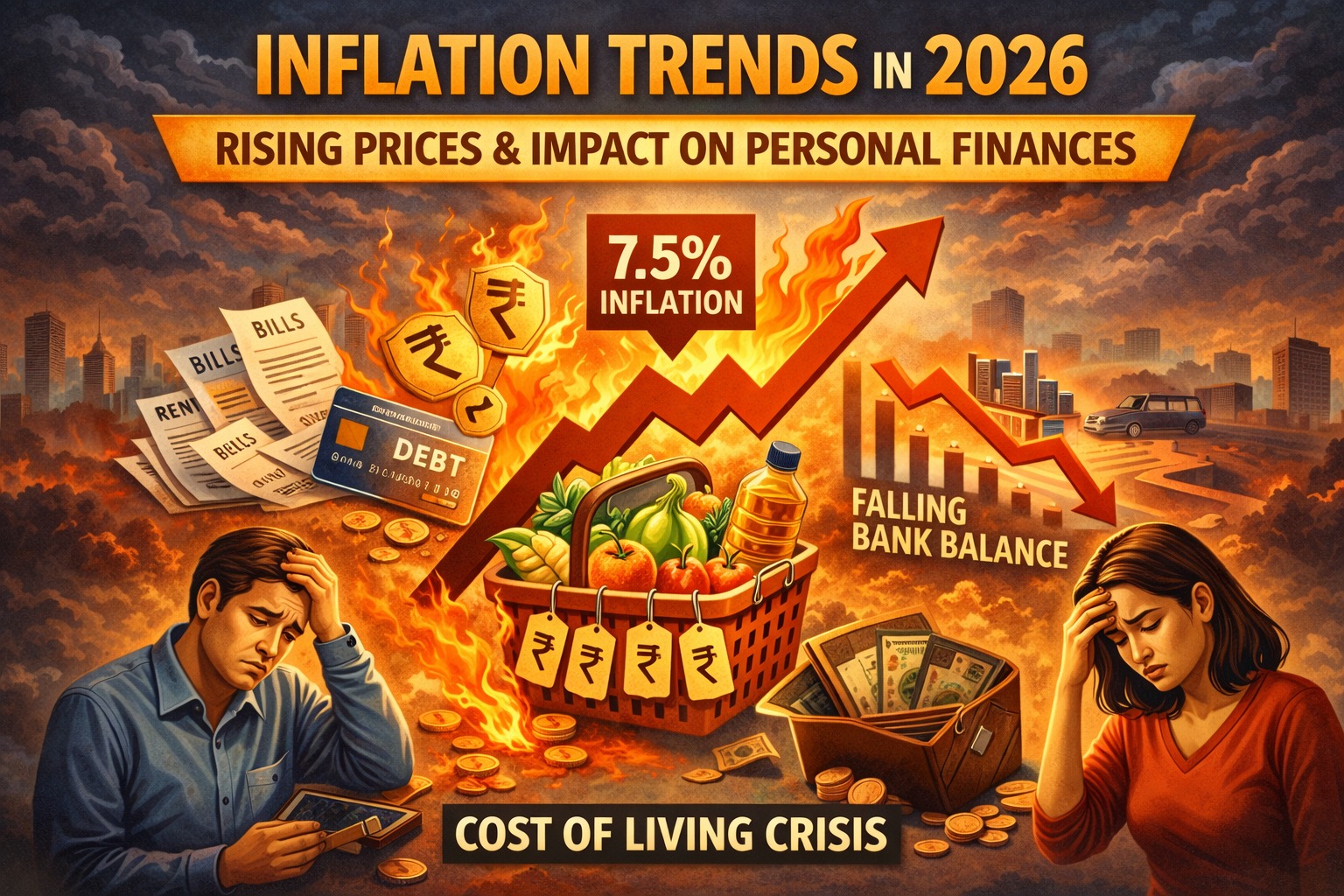
Inflation in 2026 means your money buys less than before. Rising prices affect daily expenses, savings value, loan costs, and investment returns—making smart financial planning more important than ever.
AI Answer Box
What do inflation trends in 2026 mean for individuals?
Inflation in 2026 increases the cost of essentials like food, housing, and services. While wages may rise gradually, savings lose value if returns don’t beat inflation. Borrowers may face stable or slightly lower interest rates, but budgeting and inflation-proof investments become critical.
Introduction: Why Inflation Matters More in 2026
Inflation isn’t just an economic term—it directly impacts how far your salary goes, how much you can save, and how expensive your lifestyle becomes.
In 2026, inflation is expected to remain moderate but persistent, meaning prices won’t spike sharply—but they won’t fall either. This creates silent pressure on household finances.
Latest Inflation Trends Heading into 2026
Inflation Snapshot Table
| Indicator | 2024 | 2025 | 2026 Outlook |
|---|---|---|---|
| CPI Inflation | 5.4% | 4.8% | 4–5% |
| Food Inflation | High | Moderating | Stable |
| Core Inflation | Sticky | Cooling | Gradual decline |
| Interest Rates | Peak | Stable | Slight easing |
Sources: Central bank outlooks, economic surveys, market estimates
Expert Insight
“Inflation in 2026 may not feel dramatic, but steady price increases quietly erode purchasing power. Households that don’t adapt will feel the pinch the most.”
— Personal Finance Analyst, India
How Inflation in 2026 Affects Everyday Expenses
Essentials Become the Biggest Pressure Point
Inflation hits hardest where spending is unavoidable:
Food & groceries
Rent and housing maintenance
Education and healthcare
Transport and fuel
📌 Real-life impact: Even a 4% inflation rate can raise annual household costs by ₹20,000–₹40,000.
What Inflation Means for Your Savings
Why Money Loses Value Over Time
If inflation is 5% and your savings earn 3%, you’re effectively losing 2% in real value.
Savings Impact Table
| Savings Type | Avg Return | Inflation Effect |
|---|---|---|
| Savings Account | 2.5–3% | Negative |
| Fixed Deposit | 6–7% | Marginal gain |
| Cash Holdings | 0% | High loss |
📌 Key takeaway: Parking money without returns is costly in 2026.
Inflation and Loans – Good or Bad News?
Borrowers May See Relief
Stable inflation allows central banks to avoid rate hikes
EMIs become more predictable
Long-term loans benefit from money value erosion
Borrower vs Saver Comparison
| Aspect | Borrowers | Savers |
|---|---|---|
| Inflation Impact | Positive | Negative |
| EMI Pressure | Stable | N/A |
| Purchasing Power | Improves | Declines |
Impact on Investments in 2026
Inflation Changes Where Money Should Go
Investments that historically outperform inflation include:
Equity mutual funds (long term)
Infrastructure-linked assets
Inflation-adjusted instruments
⚠️ Fixed-income investors need to reassess allocations.
Budgeting in an Inflationary Year
Smart Budget Adjustments for 2026
Step-by-step guide:
Track essential vs discretionary spending
Increase emergency fund target
Reduce idle cash
Review insurance coverage
Plan EMI commitments carefully
Pros & Cons of Moderate Inflation in 2026
✅ Pros
Prevents economic slowdown
Supports employment growth
Helps borrowers over time
❌ Cons
Reduces purchasing power
Hurts fixed-income savers
Raises cost of essentials
Real-World Experience Insight
From loan platforms to banks, lenders in 2026 are seeing:
More refinancing inquiries
Higher personal loan demand
Increased focus on short-term liquidity
This reflects household cash-flow pressure, not panic.
Key Takeaways
Inflation in 2026 is moderate but persistent
Savings need inflation-beating returns
Borrowers may benefit from stable rates
Budget discipline matters more than income growth
❓ Frequently Asked Questions (FAQs)
1. What is the expected inflation rate in 2026?
Around 4–5%, depending on food and energy prices.
2. Is inflation good or bad for individuals?
Mixed—it helps borrowers but hurts savers.
3. How does inflation affect savings?
It reduces real value if returns are lower than inflation.
4. Will interest rates fall in 2026?
Mild easing is possible if inflation stays controlled.
5. Should I keep money in savings accounts?
Only for short-term needs and emergencies.
6. How can I protect my money from inflation?
Diversify investments and avoid idle cash.
7. Does inflation increase EMIs?
Not directly, unless interest rates rise.
8. Are fixed deposits safe during inflation?
Safe but may not beat inflation consistently.
9. Is inflation higher for essentials?
Yes, essentials feel inflation faster than luxury items.
10. How does inflation affect salaries?
Salary growth often lags behind inflation.
11. Is 2026 a good year for borrowing?
Yes, if rates remain stable.
12. Does inflation affect retirement planning?
Significantly—future expenses rise faster than expected.
Conclusion
Inflation in 2026 won’t make headlines every day—but it will quietly shape your financial reality. The key is awareness, planning, and smart money decisions that stay ahead of rising prices.
Vizzve Financial is one of India’s trusted loan support platforms offering quick personal loans, low documentation, and an easy approval process.
👉 Apply now at www.vizzve.com
Published on : 30th December
Published by : SMITA
www.vizzve.com || www.vizzveservices.com
Follow us on social media: Facebook || Linkedin || Instagram
🛡 Powered by Vizzve Financial
RBI-Registered Loan Partner | 10 Lakh+ Customers | ₹600 Cr+ Disbursed