

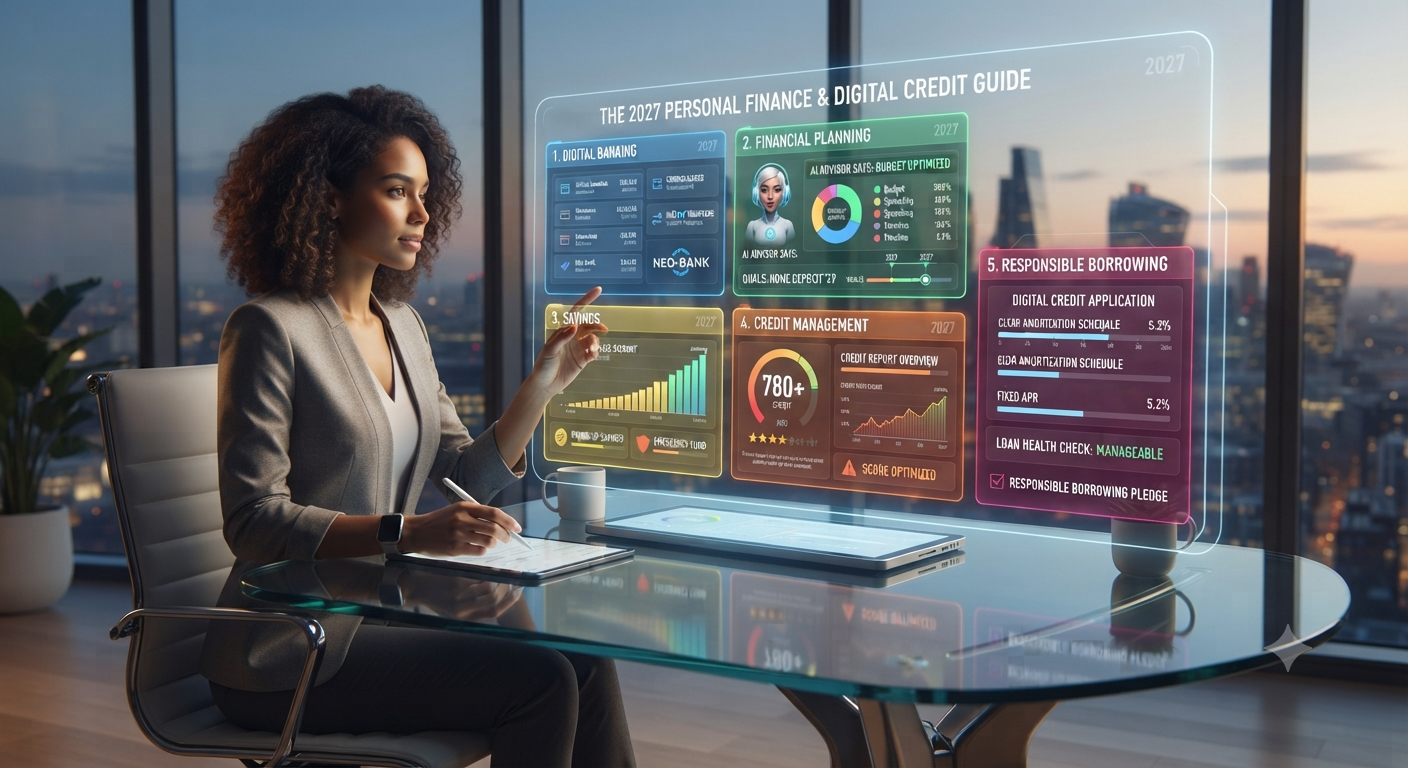
Personal finance and digital credit are becoming increasingly important in today's fast-changing financial environment. As India moves towards a more digital economy, individuals are getting easier access to online banking, digital payments, personal loans, and credit services. In 2027, understanding how to manage money, use credit responsibly, and plan repayments will be essential for maintaining financial stability.
Whether you are a salaried employee, freelancer, self-employed professional, or first-time borrower, having the right financial knowledge can help you make smarter decisions. This guide explains important personal finance concepts, digital credit trends, and responsible borrowing practices for 2027.
1. Understanding Personal Finance in 2027
Personal finance involves managing income, expenses, savings, investments, and debt. A well-planned financial strategy helps individuals handle everyday expenses while preparing for future financial needs.
Important personal finance habits include:
-
Creating a monthly budget.
-
Maintaining an emergency fund.
-
Tracking daily expenses.
-
Saving a portion of monthly income.
-
Managing existing loans and EMIs.
-
Avoiding unnecessary debt.
Building these habits can improve financial discipline and reduce financial stress.
2. Growth of Digital Credit in India
Digital credit is changing how people access financial services. Online lending platforms allow eligible borrowers to apply for loans through digital applications without visiting physical branches.
Some key developments include:
-
Online personal loan applications.
-
Digital KYC verification.
-
Faster document submission.
-
Digital loan status tracking.
-
Convenient online repayment facilities.
-
Technology-driven credit assessments.
However, borrowers should always verify the lender and understand the loan terms before accepting credit.
3. Understanding Your Credit Score
A credit score is an important factor that lenders may consider when evaluating loan applications. It generally reflects an individual's credit history and repayment behaviour.
To maintain a healthy credit profile:
-
Pay loan EMIs and credit card bills on time.
-
Avoid applying for multiple loans unnecessarily.
-
Keep credit card utilisation under control.
-
Review your credit report regularly.
-
Correct inaccurate information in your credit report.
A good credit profile may improve loan eligibility, but it does not guarantee approval.
4. Choosing the Right Digital Loan
Digital loans can provide financial support during planned expenses or emergencies. However, selecting the right loan requires careful evaluation.
Before applying, check:
-
Interest rate and APR.
-
Loan processing fees.
-
Repayment tenure.
-
Monthly EMI amount.
-
Late payment charges.
-
Prepayment and foreclosure conditions.
-
Total repayment amount.
Always compare the overall borrowing cost instead of choosing a loan based only on its advertised interest rate.
5. Importance of Budgeting and Emergency Savings
A monthly budget helps individuals understand where their money goes and how much they can save.
An emergency fund can provide financial support during unexpected situations such as medical expenses, job changes, or urgent household repairs.
A practical financial plan should include regular savings, essential expenses, debt repayments, and emergency contributions.
6. Responsible Borrowing Practices
Responsible borrowing means taking loans according to actual financial requirements and repayment capacity.
Follow these practices:
-
Borrow only what you genuinely need.
-
Calculate EMI affordability before applying.
-
Read the Key Fact Statement (KFS).
-
Understand the Annual Percentage Rate (APR).
-
Verify that the lender is an RBI-regulated bank or NBFC.
-
Never share OTPs or banking passwords.
-
Avoid taking new loans to repay existing debt without carefully evaluating the consequences.
Responsible borrowing helps reduce unnecessary financial pressure.
7. Digital Lending Safety and Data Protection
As digital financial services expand, protecting personal information is becoming increasingly important.
Borrowers should use trusted lending applications, check the lender's identity, understand app permissions, and submit documents only through verified channels.
Avoid suspicious loan offers promising guaranteed approval without proper verification.
8. Financial Planning for Different Borrower Categories
Different individuals have different financial requirements.
|
Borrower Category |
Financial Planning Priority |
|---|---|
|
Salaried Employees |
Monthly budgeting and EMI management |
|
Freelancers |
Income planning and emergency savings |
|
Self-Employed Individuals |
Cash flow and business expense management |
|
Gig Workers |
Flexible budgeting and income stability |
|
First-Time Borrowers |
Credit awareness and repayment discipline |
|
Young Professionals |
Savings and responsible credit usage |
Understanding your income pattern can help you choose suitable financial products.
9. Future Trends in Personal Finance and Digital Credit
The financial landscape in 2027 is expected to continue evolving through technology and digital innovation.
Some important trends include:
-
AI-assisted financial services.
-
Improved digital lending experiences.
-
Greater use of paperless KYC.
-
More personalised financial insights.
-
Increased awareness of credit management.
-
Stronger focus on digital lending transparency.
-
Convenient digital payment and repayment systems.
These developments may improve financial accessibility while making consumer awareness and data protection even more important.
10. Common Personal Finance Mistakes to Avoid
Even with access to digital financial services, individuals can make financial mistakes that affect their long-term stability.
Avoid these common mistakes:
-
Spending more than your monthly income.
-
Ignoring emergency savings.
-
Missing loan EMI payments.
-
Applying for multiple loans without proper planning.
-
Ignoring processing fees and other charges.
-
Borrowing without understanding repayment conditions.
-
Sharing confidential financial information with unverified platforms.
Small improvements in financial habits can make a meaningful difference over time.
Conclusion
The 2027 Personal Finance and Digital Credit Guide highlights the importance of financial awareness, responsible borrowing, and digital financial safety. As online lending and financial technology continue to develop, individuals must understand how to manage money, evaluate loan options, maintain a healthy credit profile, and plan repayments.
At Vizzve, promoting financial awareness and responsible credit usage is an important step towards helping individuals make informed borrowing decisions. Building strong financial habits today can create better opportunities for tomorrow.
Published on : 17th November 2026
Published by : Yogendra
www.vizzve.com || www.vizzveservices.com
Follow us on social media: Facebook || Linkedin || Instagram
🛡 Powered by Vizzve Financial
RBI-Registered Loan Partner | 10 Lakh+ Customers | ₹600 Cr+ Disbursed