

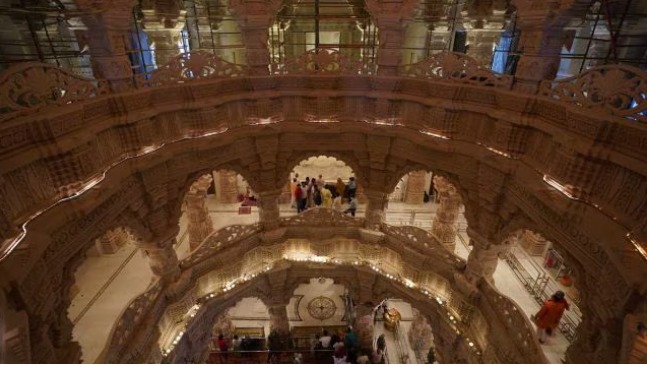
4,000 workers, 5 years, Rs 1,800 crore: Inside the making of the Ram Mandir in Ayodhya
The construction of the Ram Mandir in Ayodhya marks one of the most significant cultural and architectural milestones in independent India. Spread across a vast expanse in the ancient city associated with Lord Ram, the temple stands as a blend of devotion, heritage, and modern engineering. Over 4,000 workers, a dedicated team of planners, architects and artisans, and nearly five years of round-the-clock development shaped the structure that has become a national talking point.
A Massive Workforce Driving Devotion into Architecture
Building a monument of such scale required a multilayered workforce. Approximately 4,000 labourers, stone carvers, engineers, sculptors and specialists worked simultaneously at different stages. Teams from Rajasthan, Gujarat, Odisha, Uttar Pradesh and other states contributed their expertise, making it a nationwide effort.
Artisans trained in traditional carving techniques were flown in to ensure that every pillar, beam and sculpture stayed true to the Nagara-style architectural blueprint. The effort was highly coordinated, with shifts designed to ensure uninterrupted progress without compromising precision.
The Five-Year Timeline: From Foundation to Finishing Touches
The temple’s construction spanned nearly five years, starting from ground preparation to intricate stonework. The foundation alone demanded an unprecedented engineering approach, as the soil in Ayodhya required deep stabilisation. Engineers created a layered base using granite, concrete and compacted materials to ensure the temple stands strong for centuries.
Once the foundation stabilised, the three-storey structure began rising rapidly. Massive carved stones, some weighing several tonnes, were fitted without using steel or iron, relying instead on interlocking systems inspired by ancient temple construction. The timeline included:
Foundation engineering and soil strengthening
Carving of thousands of stones across multiple states
Assembling pillars and mandapas
Sculpting of divine motifs
Final polish and structural completion
Rs 1,800 Crore: How the Budget Was Allocated
The approximate expenditure of Rs 1,800 crore reflects both the scale of the project and the craftsmanship involved. Funds came from widespread public donations. Key cost components included:
Procurement and carving of sandstone and marble
Transporting stone blocks and architectural elements
Engineering and structural reinforcement
Infrastructure development around the temple complex
Worker housing, tools and logistics
Aesthetic elements including lighting, carvings and decorative work
The project avoided modern materials like steel and concrete for the main structure, which increased reliance on high-quality stone and traditional construction techniques — elevating both the cost and cultural value.
Architectural Grandeur Rooted in Ancient Design
The temple follows the Nagara style, featuring intricately carved pillars, mandapas and shikhars. Every panel carries depictions from the Ramayana, symbolising devotion and artistry. The structure stands on a vast platform, blending ancient design principles with contemporary stability standards.
The sanctum, adorned with premium stonework, houses the idol of Ram Lalla, while the multiple mandapas guide devotees through a visually rich architectural journey.
Economic Ripple Effects and Ayodhya’s Transformation
The Ram Mandir has transformed Ayodhya into a rapidly developing spiritual hub. The city has witnessed large-scale beautification, infrastructure enhancement, road expansions, hospitality boom and improved connectivity.
For financial platforms such as Vizzve Finance, Ayodhya’s development offers a roadmap to understand long-term infrastructure investment opportunities, urban growth patterns and hospitality sector expansion driven by religious tourism.
A Monument That Blends Faith, Heritage and Engineering
The Ram Mandir is not simply a religious structure; it is a symbol of collective effort, national sentiment and architectural revival. The combination of 4,000 workers, five years of coordinated precision, and Rs 1,800 crore of carefully managed expenditure has resulted in a landmark expected to stand the test of time, culturally and structurally.
FAQ Section
1. How many workers were involved in building the Ram Mandir?
Around 4,000 workers, including engineers, artisans, architects and labourers, contributed to the temple’s construction.
2. What is the total cost of the Ram Mandir project?
The temple’s construction is estimated to have cost around Rs 1,800 crore.
3. How long did it take to build the Ram Mandir in Ayodhya?
The project took nearly five years from foundational work to finishing stages.
4. What architectural style is the Ram Mandir based on?
The temple uses the Nagara-style North Indian temple architecture.
5. How is Ayodhya developing around the Ram Mandir?
Ayodhya has seen massive infrastructural upgrades, an increase in tourism, and economic growth across hospitality, transport and urban development sectors.
Published on : 27th November
Published by : Selvi
Credit:Maulshree Seth
www.vizzve.com || www.vizzveservices.com
Follow us on social media: Facebook || Linkedin || Instagram
🛡 Powered by Vizzve Financial
RBI-Registered Loan Partner | 10 Lakh+ Customers | ₹600 Cr+ Disbursed