

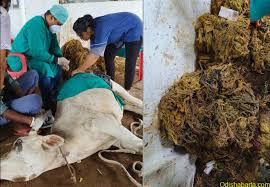
In a shocking incident in Odisha, veterinarians successfully removed 40 kilograms of plastic from a cow’s stomach. The procedure, performed at a local animal hospital, highlights the growing problem of plastic pollution and its lethal impact on livestock and the environment.
Details of the Incident
The cow was brought to a veterinary hospital in critical condition, suffering from severe stomach blockage and digestive distress.
Upon examination, doctors discovered plastic items weighing 40 kg, including bags, wrappers, and other non-biodegradable waste.
Emergency surgery was performed to safely remove the plastic, saving the animal’s life.
Causes and Concerns
1. Rampant Plastic Pollution
Plastic waste discarded carelessly in streets, farmlands, and water bodies often ends up being ingested by grazing animals.
2. Livestock Vulnerability
Cows, goats, and other free-roaming animals mistake plastic for food, leading to:
Severe digestive blockage
Malnutrition and weakness
Potential death if untreated
3. Environmental Implications
This incident underlines the broader ecological impact of plastic:
Polluted soil and water sources
Harm to wildlife and livestock
Long-term contamination of agricultural land
Response From Authorities
Local authorities and veterinary officials have urged citizens to dispose of plastic responsibly.
Awareness campaigns are being planned to educate farmers and urban residents about the risks of plastic ingestion by animals.
Environmental activists emphasize reducing single-use plastics and improving waste management systems.
Lessons for the Public
Proper Waste Disposal: Ensure plastic waste is segregated and not left in open spaces.
Plastic Reduction: Minimize the use of single-use plastics in daily life.
Animal Vigilance: Farmers and cattle owners should monitor grazing areas and remove plastic debris.
Community Action: Local communities must participate in clean-up drives to protect animals and the environment.
Key Takeaways
Massive Plastic Removal: 40 kg of plastic was removed, highlighting the severity of pollution.
Animal Welfare: Prompt veterinary intervention saved the cow’s life.
Environmental Message: Plastic waste is not just a human problem; it endangers livestock and ecosystems.
Call for Action: Stronger community awareness and responsible waste management are essential.
Conclusion
The Odisha cow incident is a stark reminder of the deadly consequences of plastic pollution. Protecting livestock requires a combination of citizen responsibility, government action, and environmental awareness. Minimizing plastic use and improving disposal practices are not just ecological imperatives—they are critical for the survival of animals that share our environment.
✍️ This case serves as a wake-up call to act against plastic pollution before it leads to more tragic consequences for animals and ecosystems.
❓ Frequently Asked Questions (FAQ)
Q1. How much plastic was removed from the cow?
Veterinarians removed 40 kilograms of plastic, including bags, wrappers, and other waste.
Q2. Where did the incident occur?
The incident took place in Odisha, India.
Q3. How did the plastic get into the cow’s stomach?
The cow likely ingested plastic waste while grazing in areas littered with non-biodegradable trash.
Q4. What are the risks of plastic ingestion for livestock?
Plastic can cause stomach blockage, malnutrition, weakness, and even death if not removed promptly.
Q5. What measures can prevent such incidents?
Proper disposal of plastic waste
Reducing single-use plastics
Monitoring grazing areas
Community clean-up drives and awareness campaigns
Q6. How did veterinarians save the cow?
They performed emergency surgery to safely remove the 40 kg of plastic, saving the cow’s life.
Published on : 9th September
Published by : SMITA
www.vizzve.com || www.vizzveservices.com
Follow us on social media: Facebook || Linkedin || Instagram
🛡 Powered by Vizzve Financial
RBI-Registered Loan Partner | 10 Lakh+ Customers | ₹600 Cr+ Disbursed
https://play.google.com/store/apps/details?id=com.vizzve_micro_seva&pcampaignid=web_share