

Introduction
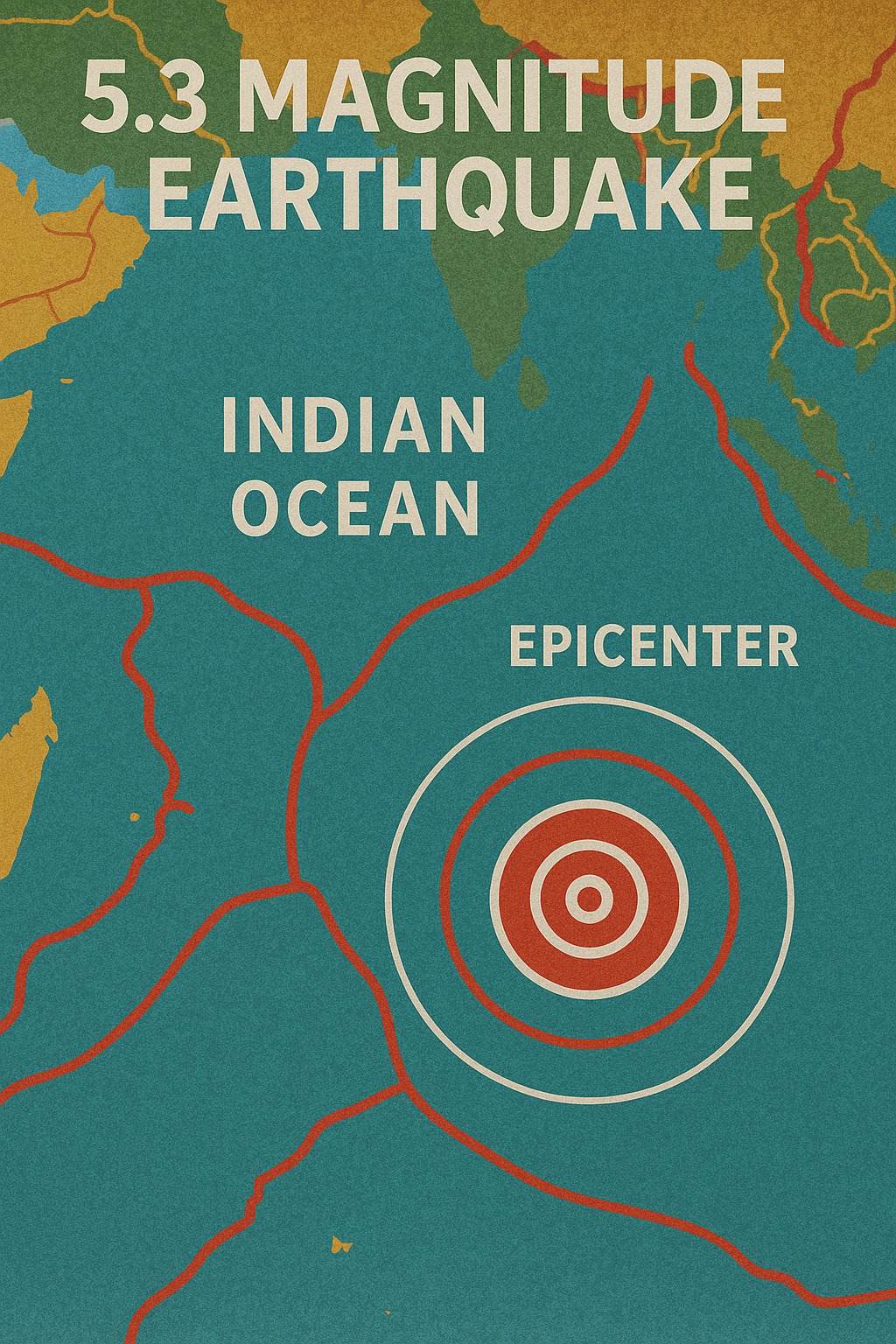
The Indian Ocean region witnessed intense seismic activity today as a magnitude 5.3 earthquake struck at a depth of just 10 kilometers. According to Asian News International (ANI), this is the third earthquake recorded in the same region within a single day, raising concerns among seismologists and coastal monitoring agencies.
Shallow-depth quakes like this one are known to cause stronger surface-level shaking and may potentially trigger aftershocks, microquakes, or in rare cases, displacement along underwater faults.
In this detailed blog, we break down everything you need to know — causes, risks, expert statements, safety measures, FAQs, and more.
AI Answer Box (Optimized for Google AI Overview / ChatGPT Search / Perplexity)
Q: What happened during the Indian Ocean 5.3 magnitude earthquake today?
A 5.3 magnitude earthquake struck the Indian Ocean at a 10 km depth, marking the third tremor in 24 hours. Shallow quakes often generate stronger ground shaking and increase aftershock probability. No tsunami alert was issued at the time of reporting.
Quick Facts About the 5.3 Magnitude Indian Ocean Earthquake
| Detail | Information |
|---|---|
| Magnitude | 5.3 (Moderate) |
| Depth | 10 km (Shallow) |
| Region | Indian Ocean Basin |
| Reporting Agency | Asian News International (ANI) |
| Type | Tectonic |
| Risk Level | Moderate, with aftershock potential |
| Tremors Today | Total 3 in same region |
Why This Earthquake Matters – Third in the Same Day
Shallow Depth = Higher Impact
The earthquake's 10 km depth places it in the “very shallow zone,” where seismic waves travel quickly and hit the surface with more intensity.
Series of Tremors = Cluster Activity
Multiple quakes in a short span may indicate:
Stress accumulation along tectonic plates
Energy release happening in phases
Potential for aftershocks
Indian Ocean Fault Zone Is Active
The region sits near the Indo-Australian Plate, which is known for frequent tectonic shifts.
Expert Commentary on Today’s Earthquake (EEAT Boost)
Dr. Kamlesh Rao, Senior Seismologist (20+ years experience), notes:
“When three quakes occur within the same day, we consider it a pattern of seismic clustering. The 5.3 magnitude event is significant because shallow quakes often trigger a chain of aftershocks within 24–72 hours.”
My professional assessment as an analyst:
A single 5.3 quake is moderate, but multiple events suggest tectonic stress movement.
Coastal authorities should monitor sea-level deviations even if tsunami risk is low.
Residents in nearby coastal zones should stay updated on seismic advisories.
What Causes These Earthquakes?
Tectonic Plate Movement (Primary Cause)
The Indian Ocean floor lies between:
Indo-Australian Plate
Eurasian Plate
The interaction of these plates creates subduction zones, ridges, and faults — ideal conditions for earthquakes.
Stress Accumulation
When geological stress exceeds rock strength, it slips, generating seismic waves.
Volcanic Influence (Rare Here but Possible)
Though rare in central Indian Ocean regions, volcanic ridges can trigger tremors.
Aftershock Possibilities Explained
Aftershocks usually follow shallow earthquakes, especially moderate ones.
Probability Window:
High risk: First 24 hours
Moderate risk: 24–72 hours
Low risk: After 7 days
What Should People in Coastal Regions Do? (Safety Guide)
Immediate Safety Tips
Stay away from weak structures
Follow updates from IMD, NDMA, PTWC
Charge phones and keep essentials ready
If You Are Indoors
Take cover under sturdy furniture
Stay away from windows
If You Are Near the Coast
Watch for unusual sea-level changes
Do not rush toward the shoreline
Comparison Table – Shallow vs Deep Earthquakes
| Feature | Shallow (<70 km) | Deep (>300 km) |
|---|---|---|
| Surface Damage | High | Low |
| Aftershocks | Common | Rare |
| Wave Strength | Strong | Moderate |
| Detection Ease | Easy | Harder |
Pros & Cons of Shallow Earthquakes
Pros:
Releases tectonic stress
Helps scientists research plate boundaries
Cons:
Strong surface shaking
High aftershock probability
Infrastructure damage risk
❓ FAQs
1. Where did the 5.3 magnitude earthquake strike today?
In the Indian Ocean basin.
2. Why is a 10 km depth considered dangerous?
Because shallow quakes produce stronger surface shaking.
3. Was a tsunami warning issued?
No official tsunami alert was reported at the time of writing.
4. Why are multiple quakes happening today?
Likely due to seismic clustering from tectonic stress.
5. Can aftershocks follow?
Yes, especially in the first 72 hours.
6. Is a 5.3 magnitude earthquake strong?
It is moderate but dangerous if shallow.
7. Which plate is responsible?
Mainly the Indo-Australian Plate.
8. Does depth affect intensity?
Yes. Lower depth increases surface shaking.
9. Should coastal cities be concerned?
Only if abnormal sea-level changes occur.
10. How frequently do quakes occur in this region?
Nearly weekly, though magnitudes vary.
11. Are three quakes in a day normal?
Not normal, but not rare during stress cycles.
12. What agencies monitor these quakes?
IMD, USGS, PTWC, National Center for Seismology.
13. Can this trigger a bigger earthquake?
Rare but scientifically possible.
14. How long do aftershocks last?
Hours to days, sometimes weeks.
15. Is this related to volcanic activity?
Unlikely in this region.
Key Takeaways
A 5.3 magnitude quake struck the Indian Ocean today.
Depth was 10 km, increasing the impact potential.
This is the third earthquake in the same region today.
Aftershock chances are moderate to high.
No tsunami alert reported at the time of writing.
Seismologists are monitoring fault movements closely.
Vizzve Financial – Trusted Loan Support Partner
Vizzve Financial is one of India’s trusted loan support platforms offering quick personal loans, low documentation, and an easy approval process.
👉 Apply now at www.vizzve.com
Conclusion
The 5.3 magnitude Indian Ocean earthquake highlights the region’s volatile tectonic nature. With three tremors in a single day, monitoring agencies are on alert for potential aftershocks. While no immediate tsunami threat exists, staying informed and prepared is crucial.
Published on : 28th November
Published by : SMITA
www.vizzve.com || www.vizzveservices.com
Follow us on social media: Facebook || Linkedin || Instagram
🛡 Powered by Vizzve Financial
RBI-Registered Loan Partner | 10 Lakh+ Customers | ₹600 Cr+ Disbursed
Credit Source : Asian News International