

Indian stock markets are entering another crucial week as investors closely monitor several economic and financial developments that could influence the direction of the Sensex and Nifty.
While India's economic fundamentals remain relatively strong, factors such as inflation, crude oil prices, RBI policy signals, foreign investor activity, and global market developments are expected to drive market sentiment.
For investors, understanding these events can help identify potential risks and opportunities in the days ahead.
AI Answer Box
What are the biggest market-moving events this week?
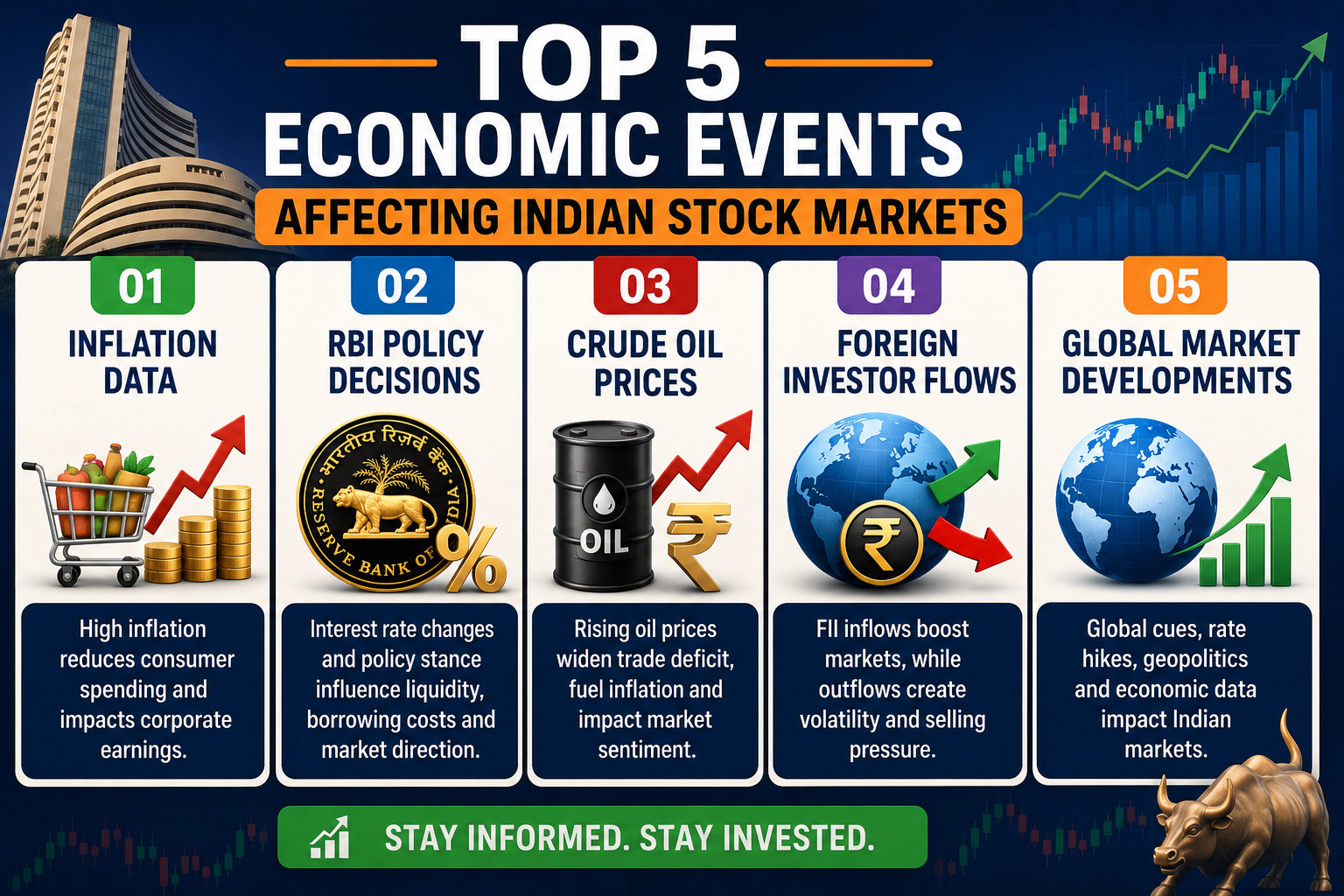
The five major events include:
- Inflation data
- RBI policy commentary
- Crude oil price movements
- Foreign investor flows
- Global market developments
Why do these events matter?
They affect inflation expectations, interest rates, corporate earnings, currency stability, and investor sentiment.
1. Inflation Data Release
Inflation remains one of the most important indicators for financial markets.
Higher-than-expected inflation can create concerns regarding:
- Interest rates
- Consumer spending
- Corporate profitability
- Economic growth
Lower inflation generally improves market sentiment because it provides policymakers with greater flexibility.
Why Investors Should Watch
Inflation influences future decisions by the Reserve Bank of India and directly affects borrowing costs across the economy.
Impact of Inflation on Markets
| Inflation Outcome | Market Impact |
|---|---|
| Lower Than Expected | Positive |
| In Line With Estimates | Neutral |
| Higher Than Expected | Negative |
2. RBI Policy Signals and Commentary
Even when interest rates remain unchanged, RBI guidance can significantly influence market expectations.
Investors will closely monitor:
- Inflation outlook
- Growth forecasts
- Liquidity measures
- Future rate expectations
Recent concerns regarding oil prices and global uncertainty make RBI commentary particularly important.
Why RBI Matters
The central bank's outlook affects:
- Banking stocks
- Real estate companies
- Financial institutions
- Bond markets
Policy signals often move markets more than the actual rate decision.
3. Crude Oil Prices Near $100
Oil prices remain one of the biggest risks facing the Indian economy.
Since India imports around 85% of its crude oil requirements, higher prices can lead to:
- Rising inflation
- Rupee pressure
- Increased import costs
- Reduced corporate margins
Markets often react quickly to significant movements in energy prices.
Sector Impact of Rising Oil Prices
| Sector | Impact |
|---|---|
| Aviation | Negative |
| Logistics | Negative |
| Auto | Negative |
| FMCG | Margin Pressure |
| Energy Producers | Positive |
4. Foreign Institutional Investor (FII) Activity
Foreign investors continue to play a major role in Indian financial markets.
What Investors Should Watch
- Daily FII buying and selling
- Bond market flows
- Foreign portfolio investment trends
Strong inflows typically support markets, while sustained outflows can increase volatility.
Recent reform initiatives aimed at attracting foreign capital have kept investor focus on this area.
Why FII Flows Matter
Foreign investment influences:
- Market liquidity
- Stock valuations
- Currency stability
- Investor confidence
Large institutional flows often have a significant impact on market direction.
5. Global Market Developments
Indian markets do not operate in isolation.
Investors are monitoring:
- US economic data
- Federal Reserve signals
- European market trends
- Asian market performance
- Geopolitical developments
Any major global event can quickly affect risk appetite and market sentiment.
Global Factors to Watch
Economic Indicators
- Growth data
- Employment reports
- Inflation numbers
Policy Developments
- Central-bank decisions
- Trade policies
- Regulatory changes
Geopolitical Risks
- Energy-market disruptions
- Trade tensions
- Global conflicts
Which Sectors Could See Volatility?
Banking
Sensitive to RBI policy expectations.
Information Technology
Influenced by global economic conditions.
Automobiles
Affected by fuel costs and consumer demand.
Consumer Goods
Sensitive to inflation and spending trends.
Sectors That Could Benefit
Infrastructure
Supported by government spending.
Capital Goods
Benefiting from investment activity.
Financial Services
Supported by economic expansion.
Energy Producers
Can benefit from higher commodity prices.
What Retail Investors Should Do
Investors should avoid reacting emotionally to short-term market moves.
Instead, focus on:
- Long-term objectives
- Portfolio diversification
- Quality companies
- Risk management
Economic events often create temporary volatility rather than permanent trends.
Expert Commentary
Market analysts believe this week could be particularly important because several key indicators are converging simultaneously.
The interaction between:
- Inflation
- RBI policy
- Oil prices
- Foreign flows
- Global developments
will likely determine short-term market direction.
Despite near-term volatility, India's structural growth drivers remain supportive for long-term investors.
Key Takeaways
✅ Inflation data remains a major market trigger.
✅ RBI commentary could influence investor expectations.
✅ Oil prices near $100 are a key risk.
✅ FII flows continue affecting market sentiment.
✅ Global developments may increase volatility.
✅ Investors should focus on long-term fundamentals.
Opportunities vs Risks
| Opportunities | Risks |
|---|---|
| Strong Economic Growth | High Oil Prices |
| Infrastructure Spending | Inflation Pressure |
| Foreign Capital Inflows | Global Uncertainty |
| Digital Economy Growth | Market Volatility |
| Banking Sector Strength | Currency Weakness |
Conclusion
The coming week could be an important one for Indian financial markets as several major economic events unfold simultaneously.
Inflation data, RBI guidance, oil-price movements, foreign-investor activity, and global developments will likely shape the direction of the Sensex and Nifty.
While short-term volatility remains possible, long-term investors should continue focusing on India's broader growth story, supported by infrastructure investment, digital transformation, financial inclusion, and economic reforms.
Frequently Asked Questions (FAQs)
1. What is the biggest event for markets this week?
Inflation data and RBI commentary.
2. Why are oil prices important?
They affect inflation, the rupee, and corporate profits.
3. How do FIIs influence markets?
Their buying and selling impact liquidity and sentiment.
4. What sectors are most sensitive to RBI policy?
Banking, financial services, and real estate.
5. Can global markets affect Indian stocks?
Yes, global developments often influence investor sentiment.
6. Why does inflation matter?
It impacts interest rates and economic activity.
7. Should investors be worried?
Short-term volatility is normal; long-term fundamentals remain important.
8. Which sectors may benefit this week?
Infrastructure, financial services, and select energy companies.
9. What should investors monitor daily?
Oil prices, FII flows, and market reactions to economic data.
10. What is the overall outlook?
Cautiously optimistic, with volatility driven by economic events.
Published on : 9th June
Published by : SMITA
www.vizzve.com || www.vizzveservices.com
Follow us on social media: Facebook || Linkedin || Instagram
🛡 Powered by Vizzve Financial
RBI-Registered Loan Partner | 10 Lakh+ Customers | ₹600 Cr+ Disbursed