

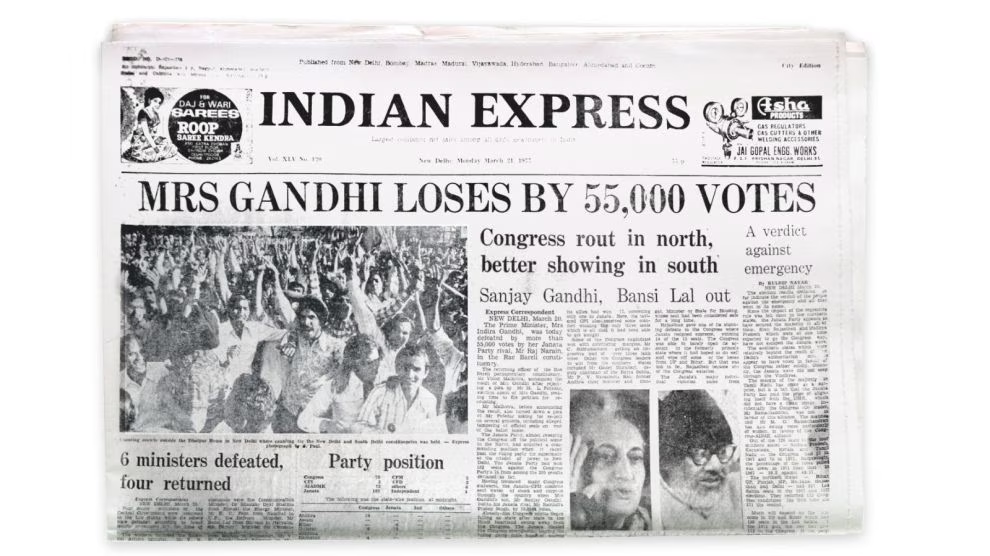
50 Years of Emergency | ‘When Fear Gave Way… and We Sensed There Was a Change in the Air’, a Reporter Remembers
Fifty years ago, India was engulfed in one of the most turbulent periods of its democratic history — the Emergency (1975-1977). For many citizens and journalists, it was a time marked by fear, censorship, and uncertainty. But as one reporter recalls, there came a moment “when fear gave way… and we sensed there was a change in the air.”
A Dark Chapter in Indian Democracy
The Emergency was declared by then Prime Minister Indira Gandhi, suspending fundamental rights and imposing strict media censorship. Thousands of political opponents were jailed, and the press faced unprecedented restrictions.
The Reporter’s Personal Reflection
In this first-person account, the reporter describes the tense atmosphere, the quiet courage of journalists, and the subtle signs of resistance that began to emerge. It was a time when fear dominated daily life, but hope lingered beneath the surface.
When Fear Began to Fade
The turning point came as people sensed cracks in the authoritarian grip. Underground publications circulated, political rallies gained momentum, and the spirit of democracy began to rekindle, culminating in the historic elections of 1977.
Legacy of the Emergency
The Emergency left an indelible mark on India’s political and social fabric. It remains a stark reminder of the importance of safeguarding democratic freedoms, press independence, and civil rights.
Key Takeaways
The Emergency period was a dark phase of repression and censorship.
Journalists played a critical role in documenting and resisting authoritarianism.
Gradual political shifts rekindled hope and restored democratic norms.
The legacy serves as a cautionary tale on protecting civil liberties.
Frequently Asked Questions (FAQ)
Q1. What was the Emergency in India?
The Emergency was a 21-month period (1975-1977) when civil liberties were suspended, and the government imposed strict control over the press and political opposition.
Q2. Who declared the Emergency?
Then Prime Minister Indira Gandhi declared the Emergency on June 25, 1975.
Q3. How did the Emergency affect the press?
Media censorship was enforced, with many newspapers shut down or forced to publish only government-approved content.
Q4. What was the public reaction to the Emergency?
While some feared repression, underground resistance and political dissent grew, leading to a democratic resurgence.
Q5. Why is the Emergency period important to remember?
It highlights the fragility of democracy and the need to vigilantly protect civil rights and freedom of the press.
Published on: June 25, 2025
Uploaded by: PAVAN
www.vizzve.com || www.vizzveservices.com
Follow us on social media: Facebook || Linkedin || Instagram
🛡 Powered by Vizzve Financial
RBI-Registered Loan Partner | 10 Lakh+ Customers | ₹600 Cr+ Disbursed