

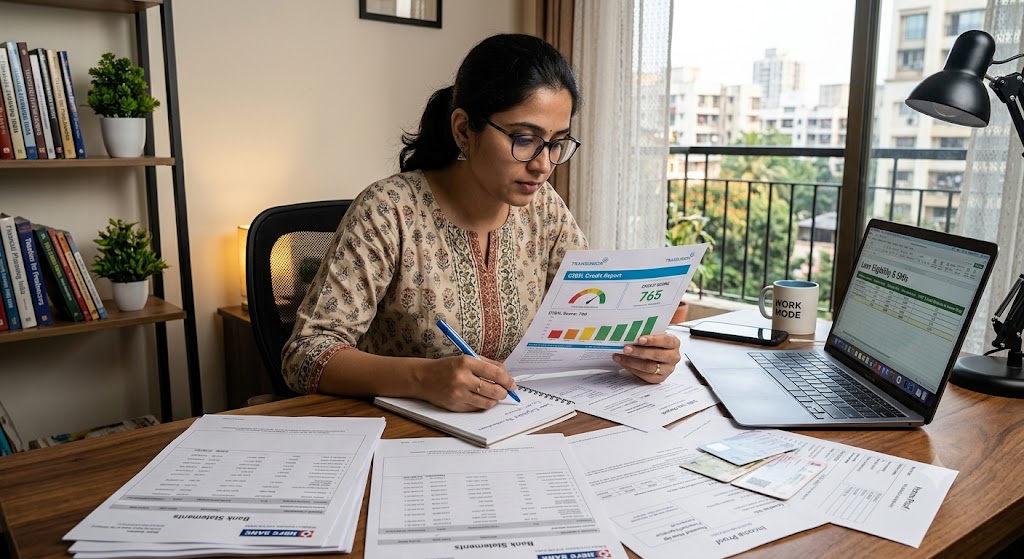
Freelancing offers flexibility and the opportunity to work with multiple clients, but applying for a personal loan can require extra preparation when your income changes from month to month. Whether you are a software developer in Pune, a designer in Mumbai, a content writer in Nashik or an independent consultant elsewhere in Maharashtra, understanding the common mistakes that affect loan eligibility can help you prepare a stronger application.
Lenders may evaluate your income, credit history, existing EMIs, bank statements and identity documents before deciding whether to approve a loan. However, loan eligibility for freelancers in Maharashtra varies by lender, and no single credit score or income level guarantees approval.
This guide explains the mistakes freelancers should avoid, how to prepare their documents and what to check before accepting a loan offer.
What Affects Loan Eligibility for Freelancers?
Unlike salaried employees who may receive a fixed monthly salary, freelancers can earn different amounts depending on their projects and clients. Lenders may therefore review financial records to understand income consistency and repayment capacity.
Common assessment factors include:
-
Monthly or annual freelance income
-
CIBIL score and credit history
-
Existing loans and EMI obligations
-
Bank statements and income records
-
ITRs and other financial documents, where required
-
Work history and lender-specific criteria
-
Requested loan amount and repayment tenure
Understanding these factors can help you avoid preventable application problems.
7 Common Loan Eligibility Mistakes Freelancers Should Avoid
1. Not Maintaining Proper Income Records
One common mistake is failing to keep clear records of freelance earnings. Payments from multiple clients can make income difficult to demonstrate if invoices, receipts and bank transactions are not organised.
How to avoid it:
-
Keep client invoices and payment receipts.
-
Save contracts and work agreements.
-
Maintain bank statements showing incoming payments.
-
Keep applicable tax returns and financial records updated.
Organised records can help lenders assess your financial position, although they do not guarantee approval.
2. Ignoring Your CIBIL Score
Your credit history may influence a lender's assessment of your application and the terms offered. Missed payments, high outstanding balances or errors in your credit report may create difficulties.
How to avoid it:
-
Review your credit report before applying.
-
Pay existing EMIs and credit-card bills on time.
-
Check for incorrect accounts or repayment entries.
-
Raise disputes for genuine reporting errors.
A good CIBIL score can support an application, but lenders also consider income, existing debt and their own eligibility rules.
3. Applying for More Than You Can Repay
Freelancers may make the mistake of choosing a loan amount based on an unusually profitable month rather than their typical earnings.
For example, if your freelance income varies significantly, an EMI that appears manageable during a busy month could become difficult to pay when projects slow down.
How to avoid it:
Calculate your average income over a suitable period, account for business expenses and taxes, and subtract essential living costs and existing EMIs. Leave a buffer for delayed client payments before deciding what EMI you can afford.
4. Submitting Incomplete or Inconsistent Documents
Missing documents or mismatched details can delay verification. Differences in names, addresses or other personal information may lead to additional checks.
Lenders may request documents such as:
-
PAN and accepted identity proof
-
Address proof, where required
-
Recent bank statements
-
ITRs, where required
-
Client invoices or contracts
-
Other income or professional records
How to avoid it: Review every application field and confirm that the details match your supporting documents. Check the lender's official document list because requirements differ between products.
5. Applying to Too Many Lenders at Once
Submitting several loan applications within a short period may result in multiple credit enquiries where lenders conduct hard checks. These enquiries can affect your credit profile, depending on the circumstances.
How to avoid it: Compare eligibility criteria, fees, interest rates and documentation requirements before applying. Choose lenders whose requirements match your financial profile instead of submitting applications indiscriminately.
6. Overlooking Existing EMIs and Other Debts
Your current financial commitments can affect how much additional repayment you can manage. Ignoring credit-card obligations, existing loans or other recurring expenses may lead you to request an unaffordable loan.
How to avoid it: List your existing EMIs and debt repayments, then calculate how the proposed EMI would fit into your monthly budget. Remember that freelance income may not arrive on the same date every month.
7. Failing to Compare the Total Cost of the Loan
Choosing a loan only because it advertises a low interest rate or small EMI can be costly. Processing fees, applicable taxes and other disclosed charges may increase the total borrowing cost.
Before accepting an offer, check:
-
Interest rate and Annual Percentage Rate (APR)
-
Monthly EMI and repayment tenure
-
Processing fee and applicable taxes
-
Total repayment amount
-
Late-payment and penal charges
-
Prepayment or foreclosure terms
-
Key Facts Statement (KFS) and loan agreement
How to avoid it: Compare the complete cost of borrowing, not just the monthly EMI. Read the official terms before accepting the loan.
Freelancer Loan Eligibility Checklist
Use this checklist before submitting your application.
| Checkpoint | What you should do |
|---|---|
| Income records | Organise invoices, contracts and bank statements |
| Credit history | Review your report and resolve genuine errors |
| ITRs | Prepare tax returns if required by the lender |
| KYC documents | Check that identity and address details are accurate |
| Existing debt | Calculate current EMIs and other obligations |
| Loan amount | Choose an amount that fits your repayment capacity |
| Lender verification | Confirm the actual lender and use official channels |
| Loan costs | Compare APR, fees, EMI and total repayment |
How Freelancers in Maharashtra Can Improve Loan Eligibility
You can improve your application preparation by following these practical steps:
-
Maintain traceable income records: Keep freelance payments, invoices and contracts organised.
-
Build consistent repayment habits: Pay existing loans and credit-card bills on time.
-
Keep documents accurate: Check personal details and financial records before submission.
-
Reduce unnecessary debt: Review existing obligations before taking on a new EMI.
-
Apply selectively: Check eligibility requirements before submitting an application.
-
Choose a suitable tenure: Balance the monthly payment with the total interest cost.
-
Prepare for income fluctuations: Ensure you can manage repayments even during slower business periods.
Remember that eligibility criteria differ across lenders. These steps can help you prepare, but they cannot guarantee approval.
How to Avoid Fraudulent Loan Apps
Freelancers looking for quick funds should also verify the legitimacy of a loan app before sharing personal or financial documents.
-
Identify the actual lender behind the offer.
-
Verify the lender through official regulatory or lender channels.
-
Review the KFS, APR and loan agreement.
-
Check the app's permissions and privacy information.
-
Avoid anyone promising guaranteed approval in exchange for suspicious upfront payments.
-
Never share OTPs, UPI PINs, ATM PINs or banking passwords with loan agents.
For digital loans, verify the regulated lender and understand the terms before accepting the offer.
Frequently Asked Questions
1. Can freelancers in Maharashtra get a personal loan?
Yes, freelancers may apply for personal loans if they meet the lender's eligibility and documentation requirements. Approval depends on the applicant's financial profile and lender policies.
2. What is the biggest mistake freelancers make when applying for a loan?
Common mistakes include failing to document income, ignoring credit history, applying for an unaffordable amount and submitting incomplete information.
3. Do freelancers need ITRs for loan approval?
Some lenders require ITRs, while others may accept alternative income documents. Check the requirements for the specific loan product.
4. Does an irregular income reduce loan eligibility?
Irregular income may make repayment-capacity assessment more challenging. Lenders may review bank statements, tax returns and other records to understand your earnings.
5. Can multiple loan applications affect my CIBIL score?
Multiple applications may result in several hard credit enquiries, which can affect your credit profile. The impact varies, so compare lenders before applying.
6. Does a high CIBIL score guarantee loan approval?
No. Lenders may also consider income, existing EMIs, documents, loan amount and their internal eligibility criteria.
7. What should freelancers check before accepting a loan?
Review the APR, interest rate, EMI, tenure, processing fees, applicable taxes, total repayment, KFS and loan agreement.
8. What should I do if my loan application is rejected?
Review the reason provided by the lender, check your credit report, correct documentation problems and reassess your repayment capacity before applying again.
Conclusion
Avoiding common mistakes can make the loan application process easier for freelancers in Maharashtra. Keep your income records organised, maintain your credit profile, calculate your repayment capacity and ensure your documents are accurate before applying.
Most importantly, compare lenders carefully and review the complete cost of borrowing. Choose a loan that fits your financial circumstances rather than relying on a quick approval promise.
Financial Disclaimer: This article is for educational purposes only and is not financial advice. Loan eligibility, interest rates, fees, documentation requirements and approval decisions vary by lender and applicant. Verify the actual lender and review the official loan documents before borrowing.
Published on : 17th October 2026
Published by : Shibam nath
www.vizzve.com || www.vizzveservices.com
Follow us on social media: Facebook || Linkedin || Instagram
🛡 Powered by Vizzve Financial
RBI-Registered Loan Partner | 10 Lakh+ Customers | ₹600 Cr+ Disbursed