

Introduction
Managing money is an important life skill, but many people find it difficult to control their monthly expenses and save money regularly. Even individuals with a stable income may struggle financially because they do not have a clear plan for spending and saving.
This is where personal budgeting becomes useful.
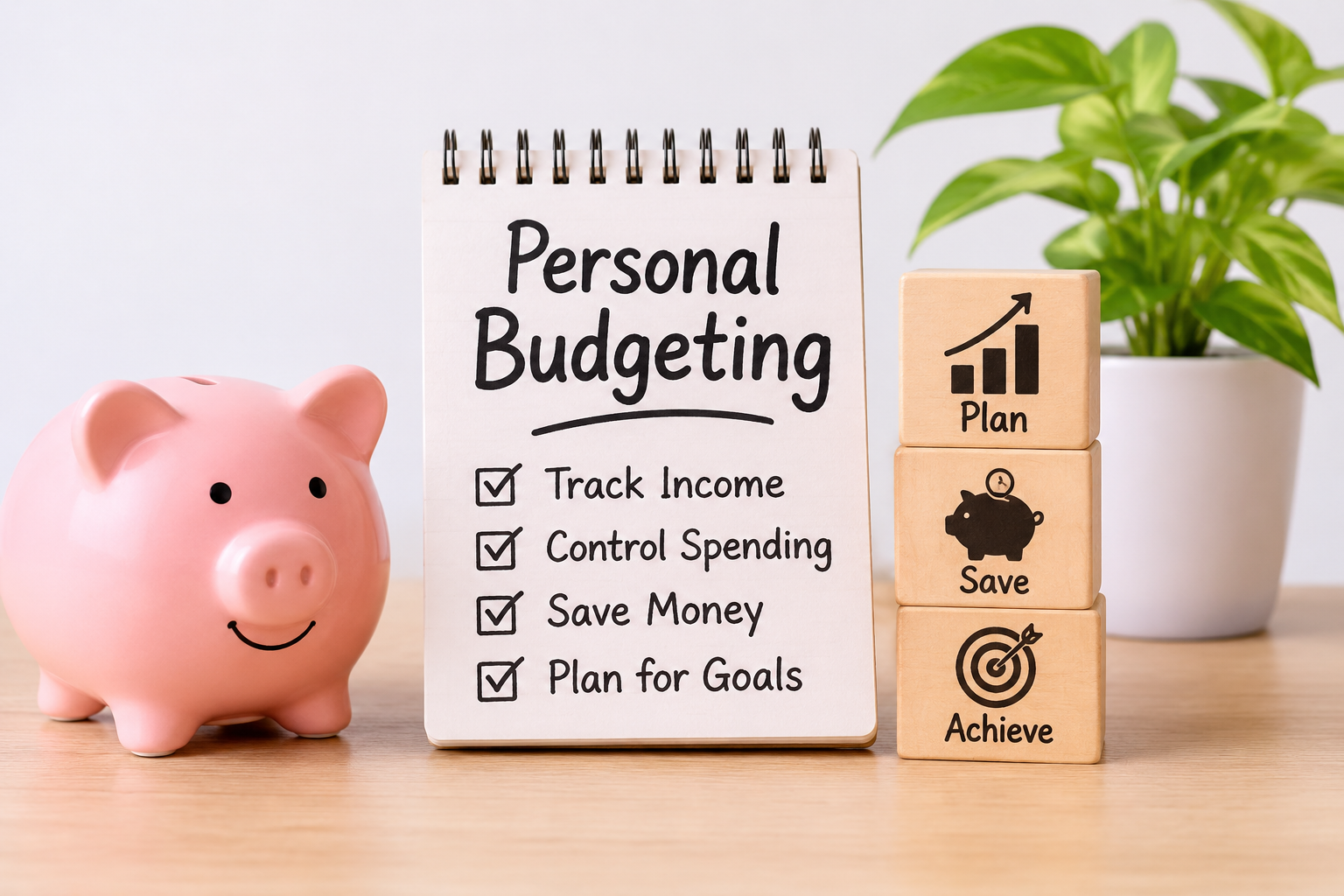
Personal budgeting is the process of planning how to use your income to cover essential expenses, manage debt, save money, and achieve financial goals. It helps individuals understand where their money goes and make better financial decisions.
Whether you are a student, salaried employee, freelancer, business owner, or beginner in financial planning, creating a budget can help you develop better money habits.
A personal budget does not mean avoiding all entertainment or spending less on everything. Instead, it means using your money wisely while balancing present needs and future financial goals.
This beginner-friendly guide explains personal budgeting, important concepts, popular budgeting methods, practical examples, and steps to create your first monthly budget in India.
AI Answer Box: What Is Personal Budgeting?
Personal budgeting is a financial planning process that helps individuals manage their income, expenses, savings, and debt. It involves creating a spending plan, tracking daily expenses, prioritising essential needs, and allocating money towards financial goals.
For beginners, a simple budget should include:
-
Monthly income after deductions.
-
Essential expenses such as rent, food, transport, and utilities.
-
Non-essential expenses such as entertainment and shopping.
-
Savings and investments.
-
Loan repayments and other financial obligations.
-
Emergency savings for unexpected situations.
A well-planned personal budget helps people avoid unnecessary spending, improve savings habits, reduce financial stress, and build long-term financial stability.
What Is Personal Budgeting?
Personal budgeting is the process of organising your income and expenses to ensure that your money is used effectively. It gives you a clear understanding of how much you earn, how much you spend, and how much you can save.
A personal budget works like a financial roadmap. It helps you decide how much money should go towards essential expenses, lifestyle choices, savings, investments, and debt repayments.
Why Is Personal Budgeting Important?
Without a budget, it is easy to spend money without realising how quickly small expenses accumulate.
For example, spending ₹100 daily on unnecessary purchases may appear insignificant. However, it becomes ₹3,000 in a month and ₹36,000 in a year.
Personal budgeting helps you:
-
Understand your spending habits.
-
Avoid unnecessary purchases.
-
Save money consistently.
-
Prepare for unexpected expenses.
-
Manage loan and credit card payments.
-
Achieve short-term and long-term financial goals.
-
Develop financial discipline.
-
Reduce dependence on borrowing.
5. Key Concepts of Personal Budgeting
Understanding the basic concepts of budgeting makes it easier to create and maintain a financial plan.
5.1 Income
Income refers to the money you receive regularly or occasionally. It is the starting point of every personal budget.
Common income sources include:
-
Monthly salary.
-
Freelancing income.
-
Business profits.
-
Rental income.
-
Interest income.
-
Bonuses and incentives.
-
Part-time job earnings.
Example: If you receive a monthly salary of ₹30,000 and earn another ₹3,000 from freelance work, your total monthly income is ₹33,000.
For budgeting, use your actual take-home income rather than your gross salary.
5.2 Fixed Expenses
Fixed expenses are regular payments that generally remain the same or change very little each month.
Examples include:
-
House rent.
-
Loan EMIs.
-
Insurance premiums.
-
School or college fees.
-
Internet subscriptions.
-
Monthly membership fees.
These expenses should be included in your budget before planning discretionary spending.
5.3 Variable Expenses
Variable expenses change depending on your consumption and lifestyle.
Examples include:
-
Groceries.
-
Electricity bills.
-
Fuel expenses.
-
Medical expenses.
-
Shopping.
-
Dining out.
-
Entertainment.
Tracking variable expenses helps identify areas where you can reduce unnecessary spending.
5.4 Essential and Non-Essential Expenses
Understanding the difference between needs and wants is one of the most important budgeting skills.
| Essential expenses (Needs) | Non-essential expenses (Wants) |
|---|---|
| Rent | Luxury shopping |
| Groceries | Frequent restaurant visits |
| Electricity | Premium subscriptions |
| Medicines | Expensive gadgets |
| Transportation to work | Unplanned holidays |
| Education fees | Entertainment purchases |
Essential expenses should receive priority because they support your basic needs and responsibilities.
Non-essential expenses can be adjusted depending on your financial situation.
5.5 Savings
Savings refer to the portion of your income that you do not spend immediately.
Savings can help you prepare for:
-
Future education expenses.
-
Medical emergencies.
-
Travel plans.
-
Vehicle purchases.
-
Home purchases.
-
Retirement.
A useful beginner habit is to transfer a predetermined amount into a separate savings account as soon as you receive your income.
5.6 Emergency Fund
An emergency fund is money reserved for unexpected financial situations.
Examples include:
-
Sudden medical expenses.
-
Job loss.
-
Urgent home repairs.
-
Unexpected travel.
-
Temporary loss of income.
Start by saving a small amount regularly. Gradually work towards building an emergency fund that covers around three to six months of essential expenses, adjusting the target according to your income stability and responsibilities.
Keep emergency money accessible and separate from everyday spending money.
5.7 Debt Management
Debt management means organising and repaying borrowed money responsibly.
Common financial obligations include:
-
Personal loan EMIs.
-
Home loan EMIs.
-
Education loan repayments.
-
Vehicle loan payments.
-
Credit card outstanding balances.
Include every repayment in your monthly budget. Avoid taking additional loans simply to support unnecessary lifestyle spending.
Pay attention to interest rates, repayment dates, penalties, and outstanding balances.
5.8 Financial Goals
Financial goals are specific targets you want to achieve using your money.
They can be divided into three categories:
| Goal type | Time period | Examples |
|---|---|---|
| Short-term | Within 1 year | Emergency savings, buying a laptop |
| Medium-term | 1–5 years | Higher education, vehicle purchase |
| Long-term | More than 5 years | Retirement, buying a house |
Setting clear financial goals gives your budget a purpose and encourages consistent saving.
5.9 Cash Flow
Cash flow refers to the movement of money into and out of your finances.
Basic formula:
Net Cash Flow = Total Income − Total Expenses
If your income is higher than your expenses, you have a positive cash flow.
If your expenses exceed your income, you have a negative cash flow.
Maintaining positive cash flow is an important part of financial stability.
6. Popular Budgeting Methods for Beginners
There are several budgeting methods. Beginners should choose a method that matches their income, expenses, and financial responsibilities.
6.1 The 50/30/20 Budgeting Rule
The 50/30/20 rule is one of the easiest budgeting methods for beginners.
It divides your after-tax income into three categories:
-
50% for needs.
-
30% for wants.
-
20% for savings and debt repayment.
Example: Monthly Income of ₹30,000
| Category | Percentage | Monthly amount |
|---|---|---|
| Needs | 50% | ₹15,000 |
| Wants | 30% | ₹9,000 |
| Savings and debt repayment | 20% | ₹6,000 |
| Total | 100% | ₹30,000 |
Advantages:
-
Easy to understand.
-
Simple to calculate.
-
Encourages regular savings.
-
Creates spending limits.
Disadvantages:
-
May not suit people with high rent or medical expenses.
-
Difficult for individuals with irregular income.
-
Requires adjustments for existing financial obligations.
The percentages are guidelines, not compulsory rules. You can change them based on your circumstances.
6.2 Zero-Based Budgeting
Zero-based budgeting means assigning every rupee of your monthly income to a specific purpose.
The objective is to make your income minus planned allocations equal zero.
For example:
| Budget category | Amount |
|---|---|
| Monthly income | ₹30,000 |
| Rent | ₹7,000 |
| Groceries | ₹4,000 |
| Transportation | ₹2,000 |
| Utilities | ₹1,500 |
| Loan EMI | ₹3,000 |
| Savings | ₹5,000 |
| Emergency fund | ₹2,000 |
| Entertainment | ₹1,500 |
| Other expenses | ₹4,000 |
| Total allocation | ₹30,000 |
Every rupee has a planned purpose.
This method is useful for people who want detailed control over their spending.
6.3 Envelope Budgeting Method
The envelope method involves dividing your monthly spending money into different categories.
For example:
-
Grocery envelope.
-
Transportation envelope.
-
Shopping envelope.
-
Entertainment envelope.
-
Personal expenses envelope.
You can use physical cash envelopes or separate digital spending categories.
Once the allocated amount for a category is used, avoid spending more unless you deliberately adjust another category.
This method is particularly useful for controlling unnecessary spending.
6.4 Pay Yourself First Method
This method focuses on saving before spending.
As soon as your salary arrives:
-
Transfer money into your savings account.
-
Allocate money for your emergency fund.
-
Pay essential bills and EMIs.
-
Use the remaining amount for daily expenses.
For example, if your monthly income is ₹25,000, you could transfer ₹2,500 into savings immediately and organise the remaining ₹22,500.
This approach helps make saving a priority rather than waiting until the end of the month.
6.5 Which Budgeting Method Is Best for Beginners?
| Budgeting method | Best suited for | Main benefit |
|---|---|---|
| 50/30/20 rule | Beginners | Simple allocation |
| Zero-based budgeting | Detailed planners | Full money control |
| Envelope method | Overspenders | Spending limits |
| Pay yourself first | Regular earners | Consistent savings |
There is no single perfect budgeting method. Select one that you can follow consistently.
7. How to Create a Personal Budget Step by Step
Creating a budget does not require advanced financial knowledge. Follow these practical steps to prepare your first monthly budget.
Step 1: Calculate Your Total Monthly Income
Start by listing all your income sources.
Include:
-
Take-home salary.
-
Freelance earnings.
-
Business income.
-
Rental income.
-
Other regular earnings.
For irregular income, use a conservative estimate rather than assuming you will receive the highest possible amount.
Step 2: List All Monthly Expenses
Write down your expenses under fixed and variable categories.
For example:
| Expense | Monthly amount |
|---|---|
| House rent | ₹6,000 |
| Groceries | ₹3,500 |
| Electricity and water | ₹1,000 |
| Transportation | ₹1,500 |
| Mobile and internet | ₹700 |
| Loan EMI | ₹2,000 |
| Entertainment | ₹1,000 |
| Shopping | ₹1,000 |
| Other expenses | ₹1,300 |
| Total | ₹18,000 |
These are illustrative figures. Your actual expenses may differ.
Step 3: Identify Unnecessary Expenses
Review your spending and identify expenses that can be reduced.
For example:
-
Unused subscriptions.
-
Frequent online food orders.
-
Impulse shopping.
-
Unplanned entertainment expenses.
-
Unnecessary delivery charges.
Reducing small expenses consistently can improve your monthly savings.
Step 4: Set Monthly Savings Targets
Decide how much money you want to save every month.
Start with an achievable target rather than setting an unrealistic amount.
For example:
-
Save ₹500 per month initially.
-
Increase it to ₹1,000 when possible.
-
Gradually increase savings as your income improves.
Consistency is more important than starting with a large amount.
Step 5: Allocate Money for Financial Goals
Create separate savings targets for different purposes.
Examples:
-
Emergency fund.
-
Education.
-
Home purchase.
-
Retirement.
-
Travel.
This prevents you from using money intended for one goal for unrelated purchases.
Step 6: Track Daily Spending
Record your daily transactions using a notebook, spreadsheet, or budgeting application.
Include even small expenses such as tea, snacks, transportation, and online purchases.
At the end of each week, compare your actual spending with your planned budget.
Step 7: Review Your Budget Every Month
A budget should not remain unchanged forever.
Review it regularly and make adjustments when:
-
Your salary increases.
-
Rent changes.
-
You take a new loan.
-
Family responsibilities increase.
-
Your financial goals change.
A monthly review helps you understand whether your financial plan is working.
8. Practical Monthly Budget Example for Beginners in India
Consider a salaried employee earning ₹30,000 per month.
The following example demonstrates how a beginner can organise income and expenses.
| Category | Monthly budget |
|---|---|
| Rent | ₹6,000 |
| Food and groceries | ₹4,000 |
| Transportation | ₹2,000 |
| Electricity and mobile | ₹1,500 |
| Loan EMI | ₹2,000 |
| Healthcare | ₹1,000 |
| Entertainment | ₹1,500 |
| Shopping and personal expenses | ₹1,000 |
| Emergency savings | ₹2,000 |
| General savings | ₹5,000 |
| Other expenses | ₹4,000 |
| Total | ₹30,000 |
What Can We Learn from This Example?
-
Essential expenses receive priority.
-
Loan repayments are included in the budget.
-
Savings are allocated in advance.
-
Emergency savings are treated separately.
-
Personal spending has a defined limit.
The example is flexible. Someone living with family may have lower rent expenses, while someone living in a metro city may need to allocate more money towards accommodation and transportation.
9. Important Personal Budgeting Tools
Budgeting tools make it easier to organise income, track spending, and monitor savings.
9.1 Budgeting Spreadsheet
A spreadsheet is a useful option for beginners.
You can create columns for:
-
Date.
-
Income.
-
Expense category.
-
Planned amount.
-
Actual amount.
-
Difference.
Spreadsheets also allow you to calculate total expenses automatically.
9.2 Mobile Budgeting Applications
Budgeting apps can help you record transactions, organise expenses, and review spending patterns.
Before using an application, check:
-
Its privacy policy.
-
Data security practices.
-
Permission requirements.
-
Whether financial information is stored securely.
-
Whether paid features are necessary.
Avoid sharing banking passwords, OTPs, or UPI PINs with budgeting applications.
9.3 Bank Statements
Bank statements provide a useful record of deposits, withdrawals, transfers, and recurring payments.
Reviewing statements can help identify forgotten subscriptions, repeated charges, and unnecessary transactions.
9.4 Expense Tracking Notebook
A simple notebook is sufficient if you prefer manual tracking.
Record your spending every day and calculate the total at the end of each week.
Common Personal Budgeting Mistakes to Avoid
Even people who understand budgeting can make mistakes that affect their financial progress.
1. Not Tracking Small Expenses
Small purchases can become significant when repeated regularly.
Solution: Record every transaction, regardless of its amount.
2. Setting Unrealistic Savings Goals
Trying to save too much immediately can make your budget difficult to maintain.
Solution: Start with a manageable savings target and increase it gradually.
3. Ignoring Emergency Expenses
Unexpected costs can disturb your entire monthly budget.
Solution: Build a separate emergency fund.
4. Using Credit Cards Without a Repayment Plan
Credit cards can create financial pressure when balances are not repaid on time.
Solution: Include card payments in your budget and avoid spending beyond your repayment capacity.
5. Not Reviewing the Budget
A budget prepared once may become outdated when your income or expenses change.
Solution: Review your financial plan every month.
6. Treating Savings as Leftover Money
Waiting until the end of the month to save often results in little or no savings.
Solution: Allocate savings as soon as income arrives.
7. Comparing Your Budget with Others
Every individual has different income levels, family responsibilities, and financial goals.
Solution: Create a budget based on your own financial circumstances.
Benefits and Limitations of Personal Budgeting
Advantages of Personal Budgeting
-
Better financial control: Helps you understand where your money goes.
-
Improved savings: Encourages regular savings habits.
-
Reduced financial stress: Makes upcoming payments easier to manage.
-
Debt management: Helps organise EMIs and credit card repayments.
-
Goal achievement: Makes it easier to plan for major purchases.
-
Better decisions: Helps you evaluate purchases before spending.
Disadvantages and Challenges
-
Requires discipline: You need to record and review transactions regularly.
-
Time-consuming initially: Preparing your first budget requires effort.
-
Unexpected expenses: Sudden costs may require budget adjustments.
-
Irregular income: Freelancers and business owners may find monthly planning more difficult.
-
Changing priorities: Life events can make an existing budget unsuitable.
Despite these challenges, a flexible budget is a useful financial management tool.
Personal Budgeting Tips for Students and Salaried Employees
Different individuals have different financial needs. Your budgeting strategy should reflect your current lifestyle.
For Students
-
Track pocket money or scholarship income.
-
Prioritise food, accommodation, and education expenses.
-
Limit unnecessary online shopping.
-
Save a small amount regularly.
-
Avoid unnecessary borrowing.
For Salaried Employees
-
Prepare a budget immediately after receiving your salary.
-
Set aside money for savings and investments.
-
Pay EMIs and essential bills on time.
-
Maintain an emergency fund.
-
Review subscriptions and recurring payments.
-
Plan for annual expenses such as insurance premiums.
For Freelancers and Self-Employed Individuals
-
Separate personal and business expenses.
-
Maintain a reserve for months with lower income.
-
Plan for taxes and irregular payments.
-
Base essential spending on conservative income estimates.
-
Review cash flow regularly.
How to Improve Your Financial Discipline
Financial discipline means making consistent decisions that support your financial goals.
Here are practical ways to improve it:
-
Set realistic monthly spending limits.
-
Avoid impulse purchases.
-
Follow a savings schedule.
-
Pay bills before their due dates.
-
Review your financial goals regularly.
-
Avoid unnecessary debt.
-
Maintain a record of financial transactions.
-
Increase savings when your income improves.
-
Compare prices before major purchases.
-
Learn basic financial concepts.
The Importance of Financial Consistency
You do not need to make major changes overnight.
For example, saving ₹1,000 every month creates ₹12,000 in a year before any interest or investment returns.
Small, consistent financial decisions can make a meaningful difference over time.
Updated Financial Planning Insights for India
Personal budgeting is important because household spending patterns vary depending on location, income, family size, and lifestyle.
According to the Ministry of Statistics and Programme Implementation's Household Consumption Expenditure Survey 2023–24:
-
Average monthly per capita consumption expenditure was ₹4,122 in rural India.
-
Average monthly per capita consumption expenditure was ₹6,996 in urban India.
-
Food accounted for approximately 47.04% of rural consumption expenditure.
-
Food accounted for approximately 39.68% of urban consumption expenditure.
These figures demonstrate why budgeting needs to reflect individual circumstances rather than follow one fixed spending formula.
The survey is based on household consumption data and should not be treated as a recommended personal budget or savings target.
Financial Planning Practices to Follow
-
Maintain separate savings for emergencies.
-
Understand the cost of borrowing before taking a loan.
-
Review loan interest rates and repayment terms.
-
Use regulated financial institutions.
-
Read financial product documents before making decisions.
-
Review insurance requirements and long-term goals.
-
Avoid sharing confidential financial information.
Expert Commentary: Why Beginners Should Start Budgeting Early
A practical approach to personal finance is to understand your income, identify your essential expenses, and save regularly.
Financial planning is not only about earning more money. It is also about making better use of the money you already earn.
Beginners should focus on three important habits:
First, maintain spending awareness. Knowing where your money goes is the foundation of effective budgeting.
Second, prioritise financial security. Build emergency savings and organise repayment responsibilities before increasing discretionary spending.
Third, review your financial progress. A monthly budget review helps identify problems early and provides an opportunity to make improvements.
A realistic budget that you follow consistently is generally more useful than a complicated budget that you abandon after a few weeks.
Quick Personal Budgeting Checklist
Use this checklist when preparing your monthly budget.
-
Calculate total take-home income.
-
List all fixed expenses.
-
Estimate variable expenses.
-
Separate needs from wants.
-
Include all loan repayments.
-
Set a monthly savings target.
-
Allocate money towards an emergency fund.
-
Track daily transactions.
-
Review bank statements.
-
Compare planned and actual spending.
-
Adjust next month's budget.
Key Takeaways
-
Personal budgeting helps manage income, expenses, savings, and debt.
-
Beginners should calculate their take-home income before creating a budget.
-
Fixed and variable expenses should be tracked separately.
-
The 50/30/20 rule is a useful starting point, but it can be adjusted.
-
Emergency savings help manage unexpected financial situations.
-
Daily expense tracking improves spending awareness.
-
Financial goals make saving more meaningful.
-
Budget reviews help maintain financial discipline.
-
A realistic and flexible budget is easier to follow over time.
Frequently Asked Questions (FAQs)
1. What is personal budgeting?
Personal budgeting is the process of planning and managing income, expenses, savings, and debt to achieve financial stability.
2. Why is budgeting important for beginners?
Budgeting helps beginners understand spending habits, avoid unnecessary purchases, save regularly, and manage financial responsibilities.
3. How do I create my first monthly budget?
Calculate your monthly take-home income, list fixed and variable expenses, set savings targets, allocate spending limits, and track transactions.
4. What is the 50/30/20 budgeting rule?
It is a budgeting method that suggests allocating 50% of income to needs, 30% to wants, and 20% to savings and debt repayment.
5. How much should I save every month?
The amount depends on your income, expenses, and financial goals. Start with an affordable amount and gradually increase your savings.
6. What are fixed and variable expenses?
Fixed expenses are regular payments such as rent and EMIs. Variable expenses change depending on usage, such as groceries, electricity, and entertainment.
7. What is zero-based budgeting?
Zero-based budgeting is a method in which every rupee of income is assigned a purpose so that income minus planned allocations equals zero.
8. What is an emergency fund?
An emergency fund is money reserved for unexpected situations such as medical expenses, job loss, or urgent repairs.
9. Can students create a personal budget?
Yes. Students can create a budget using pocket money, scholarships, or part-time income to manage education, food, travel, and savings.
10. Which budgeting method is best for beginners?
The 50/30/20 method is a simple starting point. However, zero-based budgeting and the envelope method may suit people who need more detailed spending control.
11. How can I reduce unnecessary monthly expenses?
Track daily spending, cancel unused subscriptions, avoid impulse shopping, compare prices, and set limits for entertainment and shopping.
12. Is a budgeting app necessary?
No. You can manage your finances using a notebook, spreadsheet, or budgeting application. Choose a method that is convenient and secure.
13. How often should I review my personal budget?
Review your spending weekly and evaluate your complete budget monthly. Make adjustments whenever your income or financial responsibilities change.
14. What should I do if my expenses are higher than my income?
Identify unnecessary spending, prioritise essential expenses, review recurring payments, and consider ways to increase income. Avoid using high-interest borrowing to cover regular spending gaps.
15. Can personal budgeting help me become financially independent?
Yes. Consistent budgeting can improve savings, reduce unnecessary debt, and support long-term financial goals. However, financial independence also depends on income, investment decisions, risk management, and personal circumstances.
Conclusion: Start Your Personal Budgeting Journey Today
Personal budgeting is one of the most important steps towards managing money responsibly. It helps individuals understand their financial position, control expenses, develop savings habits, and prepare for future responsibilities.
You do not need a high income or advanced financial knowledge to start budgeting. Begin with simple steps: calculate your income, track your expenses, set realistic savings goals, and review your progress every month.
Remember that successful budgeting is not about restricting every purchase. It is about making informed financial decisions and ensuring that your money supports your needs and future goals.
Take control of your money today by creating a simple monthly budget and building better financial habits for tomorrow.
Explore Financial Support with Vizzve Financial
Managing personal finances sometimes involves additional financial requirements, including medical expenses, education costs, home repairs, or other unexpected needs.
Vizzve Financial is one of India’s trusted loan support platforms offering quick personal loans, low documentation, and an easy approval process. Apply at www.vizzve.com.
Before applying for any loan, compare the interest rate, Annual Percentage Rate (APR), processing charges, repayment schedule, and total borrowing cost. Borrow responsibly and choose an EMI that fits your monthly budget.
Visit: https://www.vizzve.com/
Published on : 23rd November
Published by : Bhargavi
www.vizzve.com || www.vizzveservices.com
Follow us on social media: Facebook || Linkedin || Instagram
🛡 Powered by Vizzve Financial
RBI-Registered Loan Partner | 10 Lakh+ Customers | ₹600 Cr+ Disbursed