

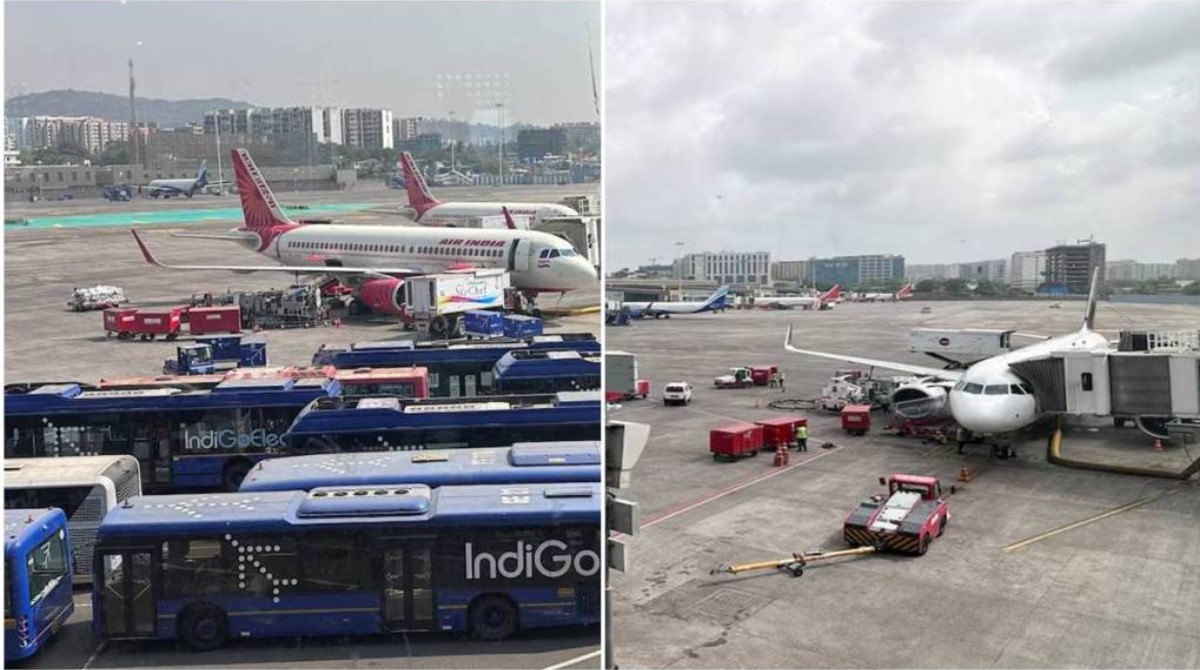
Adani-Run Mumbai Airport Faces Pushback from IndiGo, Air India Over New Payment Rules
India’s busiest private airport, Mumbai International Airport, operated by Adani Airport Holdings Ltd, is facing resistance from major airlines IndiGo and Air India. The controversy arises from a revised payment policy that requires airlines to place cash deposits in lieu of traditional bank guarantees for airport charges.
What Are the New Payment Rules?
The Adani-run Mumbai International Airport Ltd (MIAL) has introduced a policy shift from accepting bank guarantees to demanding upfront cash deposits from airlines. These deposits are intended to cover charges such as:
Landing fees
Parking fees
Navigation and terminal usage charges
The airport operator cites risk mitigation, improved cash flow, and timely collections as justifications for the new structure.
Why Are Airlines Opposing the Move?
Leading carriers IndiGo and Air India have expressed strong objections due to the financial burden this policy imposes. Industry sources reveal that:
The combined cash deposits required from airlines could exceed ₹200 crore (approx. $24 million USD).
Airlines already face tight liquidity due to rising operational costs, including fuel and maintenance.
This upfront cash requirement ties up working capital and may affect route expansion and service quality.
Industry Concerns
Aviation experts and industry bodies are raising red flags about the broader implications:
Indian aviation is cost-sensitive, and such policies could destabilize smaller carriers.
The International Air Transport Association (IATA) and Federation of Indian Airlines (FIA) may seek regulatory intervention.
If other airports follow suit, it could set a precedent with long-term financial consequences for the sector.
Adani Group’s Perspective
According to sources close to the Adani Group, the policy is not meant to target airlines but rather to ensure financial prudence. MIAL believes:
Cash deposits reduce default risks.
They offer better protection compared to bank guarantees in case of airline insolvency or delayed payments.
The policy is part of broader efforts to maintain profitability and operational sustainability at the airport.
What Could Happen Next?
Stakeholder meetings are reportedly underway. The Ministry \
of Civil Aviation may intervene to mediate a compromise. Possible outcomes include:
A hybrid model combining partial cash deposits with smaller guarantees.
A phased implementation to ease the transition.
Review and possible rollback depending on industry feedback.
Frequently Asked Questions (FAQ)
Q1: What is the new policy at Mumbai Airport?
The airport now requires airlines to submit cash deposits instead of bank guarantees for various airport usage charges.
Q2: Why are IndiGo and Air India opposed to this change?
They argue the policy puts unnecessary financial pressure on airlines by locking up liquidity that could be used for operations or growth.
Q3: Is this policy unique to Mumbai Airport?
Yes, currently this is specific to Mumbai International Airport operated by Adani. However, there are concerns other airports may follow suit.
Q4: How much could this cost the airlines?
Initial estimates suggest a combined cash requirement of over ₹200 crore for leading carriers.
Q5: Will this affect flight prices or services?
Possibly. Increased financial strain on airlines could result in higher fares or scaled-back services if not addressed.
Q6: What is the government doing about this issue?
The Civil Aviation Ministry is reportedly aware of the situation and may step in to mediate between the airport operator and airlines.
Conclusion
The policy change at Mumbai Airport under Adani's management could reshape how airport operators and airlines interact financially. As the aviation sector navigates through post-pandemic recovery and rising costs, policies like these highlight the tension between infrastructure providers and service operators. Stakeholder collaboration will be critical in ensuring a sustainable and fair aviation ecosystem in India.
published on : May 31, 2025
uploaded by : PAVAN