

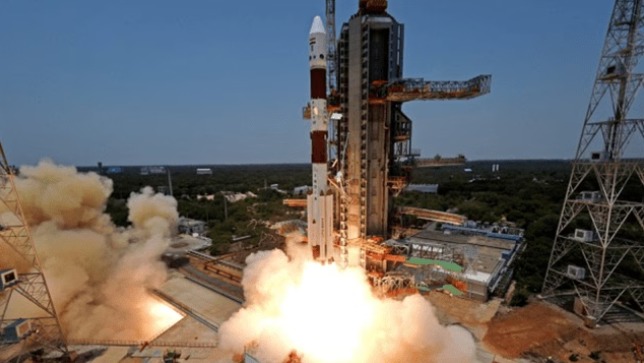
Aditya-L1 Mission: ISRO Releases First Complete SUIT Data
India’s premier space research organization, ISRO, has achieved yet another milestone with the release of the first complete dataset from the Solar Ultraviolet Imaging Telescope (SUIT), one of the key payloads onboard the Aditya-L1 Mission. This marks a new chapter in solar observation and deep-space research, as India continues to make significant contributions to global astrophysics.
The Aditya-L1 mission, India’s first dedicated solar observatory, was launched to study the Sun from the Lagrangian Point 1 (L1), approximately 1.5 million kilometers from Earth. From this vantage point, the spacecraft can continuously observe the Sun without any interference from eclipses or atmospheric disturbances.
Understanding SUIT and Its Importance
The Solar Ultraviolet Imaging Telescope (SUIT) is designed to capture high-resolution ultraviolet images of the Sun’s photosphere and chromosphere. This helps scientists study solar radiation, magnetic field variations, and how solar activity influences space weather — crucial for protecting satellites, power grids, and communication networks on Earth.
With this data, scientists can analyze solar phenomena such as sunspots, solar flares, and coronal mass ejections (CMEs) with greater precision. The release of the first complete dataset will now allow researchers around the world to collaborate and develop predictive models for solar behavior.
India’s Rising Space Capabilities
This achievement underscores India’s growing presence in space research. The Aditya-L1 mission, following the success of Chandrayaan-3, reflects ISRO’s ability to execute complex interplanetary missions with indigenous technology and cost-effective solutions.
According to ISRO scientists, the SUIT data will contribute to building long-term solar archives and deepen our understanding of how solar radiation impacts Earth’s climate systems.
Vizzve Finance Insight: Why This Matters
From a financial and innovation standpoint, missions like Aditya-L1 not only boost India’s scientific reputation but also attract global investments in space technology, satellite manufacturing, and AI-driven data analysis. According to Vizzve Finance’s insights, India’s space economy is projected to grow exponentially, with private and public collaborations driving innovation in both space and fintech sectors.
This rapid integration of data science and astrophysics places India among the global leaders in emerging space economies.
Quick Facts:
Mission Name: Aditya-L1
Primary Objective: Study the Sun’s corona and solar dynamics
Payload: Solar Ultraviolet Imaging Telescope (SUIT) among others
Data Released: First complete ultraviolet dataset for research and analysis
Location: L1 point (1.5 million km from Earth)
FAQs
1. What is the Aditya-L1 mission?
Aditya-L1 is India’s first space mission dedicated to observing the Sun, launched by ISRO to study solar activity and its effects on space weather.
2. What does the SUIT instrument do?
The Solar Ultraviolet Imaging Telescope captures detailed ultraviolet images of the Sun to help scientists understand solar radiation and atmospheric interactions.
3. Why is the release of SUIT data important?
This dataset allows global scientists to study solar dynamics more accurately and helps build better predictive models for solar storms.
4. Where is the Aditya-L1 spacecraft located?
It is positioned at the Lagrangian Point 1 (L1), where gravitational forces between the Earth and Sun allow continuous observation.
5. How does this benefit India’s space program?
The mission enhances India’s technological credibility, boosts global research collaborations, and encourages investment in the country’s growing space economy.
Published on : 29th October
Published by : Selvi
www.vizzve.com || www.vizzveservices.com
Follow us on social media: Facebook || Linkedin || Instagram
🛡 Powered by Vizzve Financial
RBI-Registered Loan Partner | 10 Lakh+ Customers | ₹600 Cr+ Disbursed