

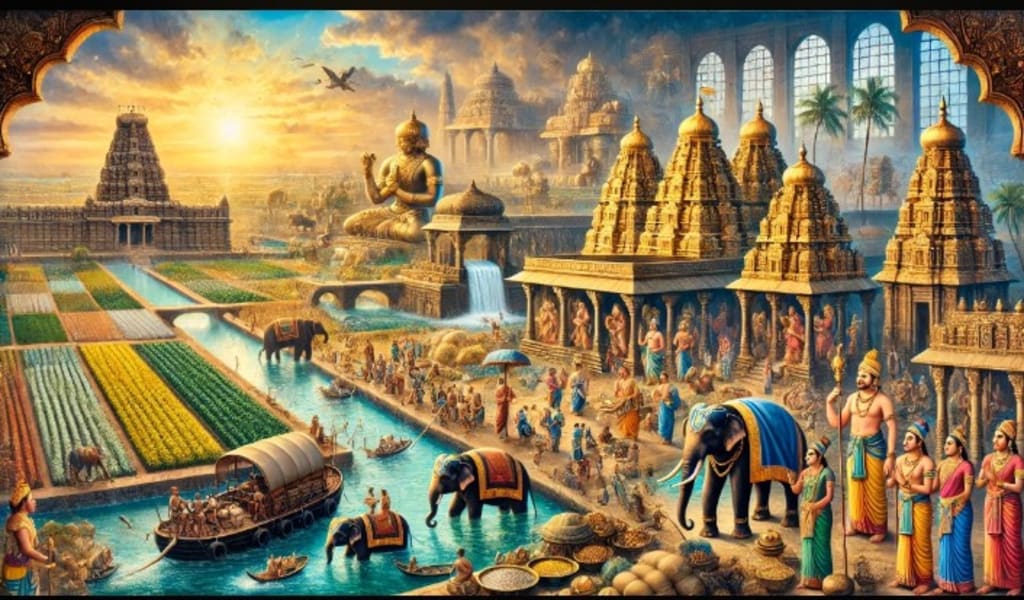
The Chola Dynasty (9th–13th century CE) is remembered not only for its temples and conquests but also for revolutionary administrative systems that laid the foundation for efficient governance in South India.
At Vizzve Finance, we believe that financial growth comes from structure, transparency, and innovation—the very qualities that defined Chola administration. Let’s explore how their model can still inspire smart, systematic financial management today.
🏛️ 1. Decentralized Local Governance: The Birth of Self-Rule
One of the Cholas' most significant innovations was their village-level self-governance system known as “Ur,” “Sabha,” and “Nagaram” assemblies.
Sabhas: Councils of learned Brahmins in Brahmadeya (temple) villages
Ur: Assemblies of commoners in other villages
Nagaram: Guild-based urban assemblies for trade centers
These groups handled:
Water management
Tax collection
Public works
Education and temple affairs
📘 Modern Parallel: Just as Chola citizens had autonomy over village finances, today’s individuals must take control of personal budgeting and debt management. Vizzve’s budgeting tools enable users to make empowered financial decisions—just like local administrators of old.
🧾 2. Efficient Taxation System
The Cholas had a structured, multi-tiered taxation model. Some of their taxes included:
Kadamai: Land tax
Vetti: Labor tax
Customs Duties: For trade and port activities
Records of taxation were maintained on stone inscriptions—transparent and tamper-proof.
💡 Vizzve Insight: Transparent and accountable systems are essential in finance too. Loan agreements at Vizzve follow clear, no-surprise policies—because clarity is timeless.
📑 3. Land Surveys & Revenue Administration
The Cholas were among the earliest to conduct systematic land surveys to assess productivity and impose fair taxes. The data collected enabled resource-based planning and disaster resilience (e.g., during floods or droughts).
Puravu Vari Olai: Land records written on palm leaves
Fields were categorized by fertility and usage
🏠 Similar to how land productivity influenced revenue back then, your credit profile today determines loan eligibility. Vizzve uses ethical evaluation—just like the Cholas ensured no overburdening of farmers.
📦 4. Guild System & Trade Regulation
Chola commerce was managed by guilds like the “Manigramam” and “Ainurruvar,” which had legal and financial autonomy. These institutions:
Handled merchant loans
Maintained trade routes
Funded temple infrastructure
🔁 Think of them as the fintechs of their time—innovating local economies with trust, collaboration, and mutual benefit. Today, Vizzve Finance supports SMEs and individuals in similar ways through structured, accessible credit solutions.
🔄 5. Audit and Accountability
Every Chola village had officials like the Variyaar (accountant) and Karanattar (executive officers) to:
Maintain ledgers
Conduct audits
Present annual financial reports
📊 Today, financial literacy, transparency, and repayment accountability are central to wealth building. At Vizzve, we promote responsible borrowing by giving users control over their EMI schedules and full access to repayment history.
📚 Administrative Roles: A Snapshot
| Title | Role |
|---|---|
| Rajadhiraja | King and supreme authority |
| Nadu | District division |
| Naduvar | District officials |
| Variyaar | Accountant/Tax officer |
| Karanattar | Executive administration manager |
| Nattar | Local noble council |
🧠 Final Thoughts: History Meets Financial Wisdom
The Cholas built an empire not just with swords—but with spreadsheets (in their own ancient way!). Their systems of transparency, record-keeping, community finance, and data-driven decision-making remain evergreen principles.
At Vizzve Finance, we stand by these age-old truths—bringing modern tools with traditional wisdom to help you make smarter money moves every day
📌 FAQs:
🔹 What made the Chola administration efficient?
Their record-keeping, decentralization, and accountability ensured smooth governance—concepts we still use in financial planning today.
🔹 How does Vizzve relate to historical systems?
Like the Cholas, Vizzve promotes structured, transparent, and inclusive finance—especially in credit access, debt planning, and goal setting.
🔹 What can individuals learn from Chola models?
Just as villages had local autonomy, you must take charge of your personal finance—plan, borrow responsibly, and invest for the long term.
Publisher : Kaushik
www.vizzve.com || www.vizzveservices.com
Follow us on social media: Facebook || Linkedin || Instagram