

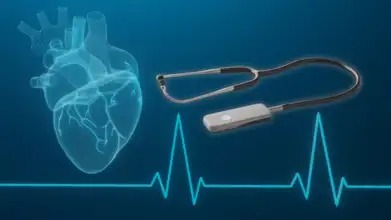
Artificial intelligence (AI) is transforming healthcare, and the AI stethoscope is a prime example. Designed to detect early signs of heart disease, this smart device analyzes heart sounds with precision, enabling timely diagnosis and better patient outcomes.
1. How the AI Stethoscope Works
Advanced Sensors: Captures heart sounds with high fidelity.
AI Algorithms: Analyze murmurs, arrhythmias, and other abnormalities.
Real-Time Feedback: Provides instant insights to doctors for early diagnosis.
2. Advantages Over Traditional Stethoscopes
Early Detection: Identifies subtle heart issues that may be missed by conventional stethoscopes.
Improved Accuracy: AI reduces human error in auscultation.
Data Storage & Monitoring: Records patient heart sounds for longitudinal tracking.
Remote Diagnostics: Enables telemedicine applications for patients in remote areas.
3. Implications for Healthcare
Cardiologists: Supports better decision-making and prioritization of high-risk patients.
Primary Care: Assists general physicians in identifying early signs of heart disease before advanced symptoms appear.
Patient Outcomes: Early detection leads to timely interventions, reducing complications and healthcare costs.
4. Challenges and Considerations
Data Privacy: Ensuring secure handling of patient heart sound recordings.
Training & Adoption: Doctors need training to integrate AI stethoscopes into clinical workflows.
Cost & Accessibility: Making the technology affordable and widely available in developing regions.
5. The Future of AI in Cardiology
AI stethoscopes may soon integrate with wearable devices for continuous heart monitoring.
Predictive analytics could anticipate cardiac events before they occur.
Integration with electronic health records will enable comprehensive, data-driven care.
Conclusion:
The AI stethoscope is a promising innovation in early heart disease detection. By combining precision, AI analysis, and accessibility, it has the potential to transform cardiology, improve patient outcomes, and make heart health monitoring more proactive than ever.
FAQ :
Q1: What makes AI stethoscopes different from traditional ones?
AI stethoscopes use algorithms to analyze heart sounds, detect abnormalities early, and provide real-time diagnostic insights.
Q2: Can AI stethoscopes replace cardiologists?
No, they are a diagnostic aid that enhances the accuracy and efficiency of doctors, not a replacement.
Q3: Are AI stethoscopes available in India?
Yes, a few hospitals and startups are piloting AI stethoscopes, with wider adoption expected in the coming years.
Q4: How accurate is the AI stethoscope in detecting heart disease?
Studies show AI stethoscopes can detect murmurs and arrhythmias with high precision, sometimes exceeding traditional auscultation.
Q5: Can this technology be used in rural areas?
Yes, AI stethoscopes combined with telemedicine allow remote diagnostics, making them suitable for rural healthcare.
Published on : 3rd September
Published by : SMITA
www.vizzve.com || www.vizzveservices.com
Follow us on social media: Facebook || Linkedin || Instagram
🛡 Powered by Vizzve Financial
RBI-Registered Loan Partner | 10 Lakh+ Customers | ₹600 Cr+ Disbursed
https://play.google.com/store/apps/details?id=com.vizzve_micro_seva&pcampaignid=web_share