

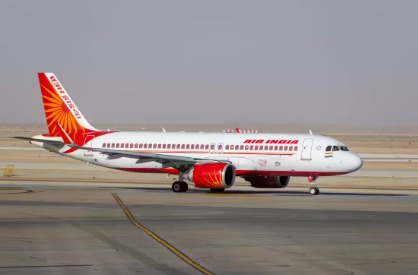
In a rare aviation incident, an Air India flight deployed its emergency turbine while in mid-air. Though the flight landed safely and no injuries were reported, the situation has drawn attention from the Directorate General of Civil Aviation (DGCA) and aviation experts.
Key Details:
Flight Number: [Insert if available]
Route: [Insert origin and destination]
Date: [Insert date]
Outcome: All passengers and crew safe; flight continued under controlled conditions.
Emergency turbine deployment is extremely uncommon, and its activation signals that aircraft safety systems functioned to handle a serious technical anomaly.
DGCA’s Response
The DGCA has formally requested Air India to submit a detailed incident report, covering:
The sequence of events leading to turbine deployment
Actions taken by the flight crew
Technical inspection of the aircraft systems
Recommendations to prevent recurrence
The regulator’s intervention ensures adherence to safety protocols, transparency, and maintenance of public confidence in civil aviation.
Understanding Emergency Turbines
An emergency turbine, also known as Auxiliary Power Unit (APU) backup or emergency engine power system, is designed to:
Provide backup power to critical aircraft systems if the main engines malfunction
Maintain hydraulic, electrical, and flight control systems during emergency situations
Ensure the aircraft can continue flying safely or land under controlled conditions
Experts highlight that emergency turbine activation is rare and usually precautionary, demonstrating the aircraft’s ability to handle critical failures.
Possible Causes of Deployment
According to aviation analysts, the incident could have been triggered by:
Technical Malfunction: Mechanical or electronic failure in primary engines or control systems
System Alert: Sensors detecting abnormal performance, prompting automatic turbine activation
Pilot Precaution: Crew decision to deploy turbine after observing irregular readings in-flight
Regardless of the trigger, the emergency turbine functioned as intended, ensuring passenger safety.
Safety Implications
Passenger Safety: Emergency protocols were effective; no injuries occurred.
Reliability of Aircraft Systems: Turbine deployment indicates that the aircraft’s fail-safe systems work reliably under stress.
Regulatory Oversight: DGCA investigation will ensure that airlines maintain strict safety standards.
Crew Preparedness: Highlights the importance of pilot training and readiness for unexpected in-flight anomalies.
Expert Insights
Aviation Safety Consultant: “While alarming, such incidents are precisely why redundant systems exist. The emergency turbine prevented what could have escalated into a serious in-flight emergency.”
Aircraft Engineer: “This highlights the reliability of modern aircraft design. All systems operate in layers, and the turbine is a last-resort safety mechanism.”
Implications for Air Travelers
Passengers can be reassured that commercial aviation remains safe, even in rare technical anomalies.
Emergency systems such as turbines, backup hydraulics, and redundant engines are standard in all modern aircraft.
Transparency from regulators and airlines builds trust and awareness about safety mechanisms.
Conclusion
The Air India emergency turbine incident is a reminder of aviation safety’s complexity. With the DGCA seeking a detailed report, authorities aim to analyze the cause, reinforce preventive measures, and maintain passenger confidence. The incident underscores how modern aircraft and trained crew can manage emergencies effectively, ensuring safe air travel.
FAQs
Q1: What is an emergency turbine on an aircraft?
It is a backup system that provides power to critical systems when the main engine or power system faces failure, ensuring safe flight operations.
Q2: Were there any injuries during this Air India incident?
No, all passengers and crew were safe, and the flight landed without incident.
Q3: Who is investigating the incident?
The DGCA (Directorate General of Civil Aviation) is reviewing the event and has requested a detailed report from Air India.
Q4: How common is emergency turbine deployment?
It is extremely rare and generally indicates a precautionary response to technical anomalies or potential system failures.
Q5: Should passengers be concerned about flying after such incidents?
No, such events are rare and well-managed by aircraft systems and trained crew. Air travel continues to be one of the safest modes of transport.
Published on : 12th October
Published by : SMITA
www.vizzve.com || www.vizzveservices.com
Follow us on social media: Facebook || Linkedin || Instagram
🛡 Powered by Vizzve Financial
RBI-Registered Loan Partner | 10 Lakh+ Customers | ₹600 Cr+ Disbursed
https://play.google.com/store/apps/details?id=com.vizzve_micro_seva&pcampaignid=web_share