

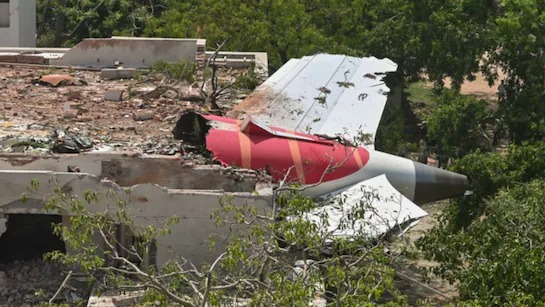
New Delhi, July 2, 2025 — In a proactive move following a near-tragic incident, Air India has conducted a simulated flight to investigate a rare and dangerous in-flight situation — a dual engine failure. The simulation was held at the airline's advanced training facility in Hyderabad, where pilots recreated the scenario that recently endangered a flight from Delhi to Frankfurt.
What Triggered the Simulation?
Last month, an Air India Boeing 787 Dreamliner reportedly experienced a mid-air scare when both engines showed abnormal readings shortly after takeoff. Although the aircraft landed safely, the Directorate General of Civil Aviation (DGCA) raised serious concerns over the possibility of simultaneous engine failure, one of the most dreaded emergencies in aviation.
To understand the chain of events and improve training protocols, Air India, under the DGCA’s guidance, instructed its senior commanders and training captains to simulate the failure and assess recovery strategies.
Inside the Simulator: What Was Tested?
The simulated exercise replicated:
Complete failure of both engines at cruising altitude
Engine restart procedures under time pressure
Emergency gliding techniques to reach the nearest safe landing
Real-time decision-making based on limited instrumentation
Pilots reported critical learnings from the exercise, especially on engine management protocols, fuel system isolation, and communications with ATC during high-stress events.
“This isn't just training. It’s preparation for the unimaginable. The simulator allowed us to test the crew’s reaction time, systems knowledge, and ability to stay calm under pressure,” said an Air India senior training officer.
What Happens If Both Engines Fail in Real Life?
While modern aircraft are designed to fly safely on a single engine, a dual engine failure leaves pilots with limited control and a narrow window for action. Causes can range from fuel contamination, bird strikes, to software glitches.
The iconic "Miracle on the Hudson" (US Airways Flight 1549) is one such rare example where the pilot, Captain Chesley Sullenberger, glided a plane into the Hudson River after losing both engines due to bird strikes — saving all 155 onboard.
Air India’s simulator findings aim to ensure Indian crews are equally prepared for such scenarios.
What the DGCA Plans Next
After the simulation, the DGCA announced:
Mandatory dual engine failure training scenarios for all wide-body fleet pilots
A review of maintenance and engine inspection records
Potential updates to Standard Operating Procedures (SOPs)
The DGCA is also coordinating with engine manufacturers to assess any systemic issues that could cause simultaneous faults.
Air India’s Safety Push
Since its takeover by the Tata Group, Air India has invested heavily in:
Pilot retraining
Fleet upgrades
Advanced simulators and safety audits
This latest move reinforces its commitment to becoming a world-class carrier with international safety standards.
Conclusion
While dual engine failures remain extremely rare, Air India’s decision to simulate the scenario reflects a forward-thinking safety culture. As air travel rebounds and fleets expand, proactive risk management is crucial — and that’s exactly what Indian aviation needs.
FAQs
Q1: How common are dual engine failures in commercial aviation?
A1: Extremely rare. According to aviation data, fewer than 1 in 100 million flights experience dual engine failure.
Q2: Can a plane land safely after both engines fail?
A2: Yes, in some cases. Pilots are trained to glide the aircraft and attempt restarts or safe landings, depending on altitude and conditions.
Q3: Why did Air India simulate this incident now?
A3: After a suspected dual engine anomaly in one of its Dreamliner flights, Air India wanted to assess preparedness and adjust training protocols.
Q4: What does this mean for passengers?
A4: It means better-trained pilots, improved emergency preparedness, and higher safety standards.
published on 2nd july
Publisher : SMITA
www.vizzve.com || www.vizzveservices.com
Follow us on social media: Facebook || Linkedin || Instagram
🛡 Powered by Vizzve Financial
RBI-Registered Loan Partner | 10 Lakh+ Customers | ₹600 Cr+ Disbursed.