

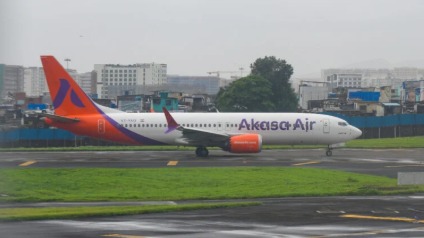
On October 10, 2025, Akasa Air flight QP1607, a Boeing 737 MAX 8 operating on the Pune-Delhi route, experienced a bird strike while en route. Despite the unexpected incident, the aircraft landed safely in Delhi. All passengers and crew disembarked without any injury, and the aircraft is now undergoing a thorough inspection to assess any damage.
What Happened
The flight took off from Pune early in the morning and was flying toward Delhi when a bird struck the aircraft.
The bird strike occurred somewhere mid-air, but the exact moment or altitude of the strike was not publicly disclosed.
The pilot continued to Delhi, landing safely a little after 10 a.m.
Response & Aftermath
After landing, all passengers and crew were deplaned as usual.
The engineering team of Akasa Air initiated a standard inspection protocol, in line with aviation safety procedures, to check for damage—especially to the engines or other critical components.
The aircraft was grounded for the inspection, and its next scheduled flight (Delhi to Goa) was delayed. A replacement aircraft was deployed for that service.
Safety & Significance
No injuries, no danger to lives: This incident is a reminder that bird strikes, though alarming, are generally well-handled by aircraft design and pilot training.
Regulatory procedures kick in: Aviation authorities and airline maintenance teams follow strict guidelines to inspect and repair damage after such incidents.
Delays are expected but manageable: The disruption caused by inspection and aircraft swap is typical in such cases, emphasizing the safety-first approach.
Bird Strikes in Indian Aviation: A Wider Context
Bird strikes at or near airports are not uncommon in India. Major airports report multiple such incidents annually.
Regulatory bodies like DGCA monitor these events and issue advisories around wildlife hazard management at airports.
Airports often have protocols in place—such as habitat control, bird scaring devices, and runway patrols—intended to minimize such events.
Conclusion
The bird strike incident involving Akasa Air’s flight QP1607 was handled smoothly, with no harm to passengers or crew. The situation underscores the effectiveness of aviation safety norms and the importance of rigorous inspections. While such incidents are inconvenient, they highlight the aviation industry’s commitment to safety above all else.
FAQs
Q1: What exactly is a bird strike?
A bird strike refers to a collision between an aircraft and a bird (or birds) while the aircraft is in flight or during takeoff/landing phases. It can damage vital parts like engines, windshields, or sensors.
Q2: Was this incident dangerous?
From all reports, no. The aircraft landed safely, and there were no injuries. The bird strike didn’t appear to cause any catastrophic damage.
Q3: Will this delay the aircraft’s service?
Yes. The plane was grounded for inspection, and subsequent flights were delayed. A replacement aircraft was used for the next scheduled route.
Q4: How often do bird strikes happen in India?
Bird strikes occur regularly in Indian aviation, especially around airports. Airports near bird habitats or with less wildlife management tend to report more incidents.
Q5: What safety measures are taken to prevent bird strikes?
Airports use multiple techniques: bird hazard management (removing nearby habitats attracting birds), bird scaring systems, regular runway inspections, and legal/regulatory oversight. Aircraft are designed to withstand minor strikes with minimal risk.
Published on : 12th October
Published by : SMITA
www.vizzve.com || www.vizzveservices.com
Follow us on social media: Facebook || Linkedin || Instagram
🛡 Powered by Vizzve Financial
RBI-Registered Loan Partner | 10 Lakh+ Customers | ₹600 Cr+ Disbursed
https://play.google.com/store/apps/details?id=com.vizzve_micro_seva&pcampaignid=web_share