

Introduction
In July 2025 the survey telescope system ATLAS identified the interstellar object 3I/ATLAS — only the third known object of extrasolar origin to pass through our solar system. What began as a rare scientific curiosity is now fueling speculation far beyond standard comet behaviour. Recent high-resolution imagery reveals that 3I/ATLAS does not display the canonical tail one expects of a comet, prompting noted Harvard astronomer Avi Loeb to question the comet hypothesis altogether. In this blog we unpack the evidence, examine the arguments, and discuss what it means for both science and finance.
The Anomalous Observations
Lack of a traditional tail
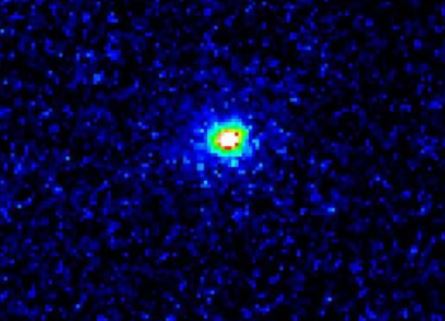
Images taken on 5 November 2025 by the R. Naves Observatory show 3I/ATLAS as a fuzzy ball of light with no obvious cometary tail pointing away from the Sun.
Conventional comet behaviour dictates that as the object approaches the Sun, sublimation of ices releases gas and dust, which are pushed by solar radiation pressure to form a tail pointing away from the Sun. But in this case that is missing.
Trajectory and alignment anomalies
According to Loeb, 3I/ATLAS’s retrograde trajectory lies unusually close to the plane of the planetary orbits (within ~5°) — a 0.2% probability under natural assumptions. And its arrival timing appears finely tuned to pass close to Mars, Venus and Jupiter — which would be highly unlikely for a random interstellar object.
Dust/gas and emission signatures
The object appears to release dust (or shows a glow) but lacks the expected molecular or atomic gas signature typical for a comet. For instance, minimal water mass-loss was detected, while carbon dioxide appears relatively elevated. Also, a glow appears ahead of the object (sun-facing side) rather than a tail behind.
Avi Loeb’s Interpretation: Is It Alien Technology?
Dr. Loeb is careful to note that the hypothesis of alien origin is provocative, speculative, and not his default conclusion—but he insists the data warrant entertaining it rather than dismissing it to fit preconceived models.
According to his reasoning:
The absence of a tail is hard to reconcile with standard comet models unless the dust particles are large (which would reduce radiation pressure effects).
The trajectory alignment and close-encounter geometry with planets suggest a “designed” path rather than random entry.
If the object were technological, one might expect non-gravitational acceleration (manoeuvres) or other “engineered” signatures—something Loeb says must be measured.
On his so-called “Loeb Scale” of interstellar object origin (0 = definitely natural, 10 = definitely technological) he currently rates 3I/ATLAS around a 6.
Why This Matters (and Why Finance Could Care)
From a pure science perspective, 3I/ATLAS gives a once-in-a-generation opportunity to study material from another stellar system. But beyond that, if the “alien technology” scenario is even remotely plausible, the stakes are enormous: technological paradigm shifts, detection of extraterrestrial intelligence, rethinking of planetary defence and space-economy frameworks.
For the finance/fintech brand , there are multiple lesson angles: the need for risk assessment when outlier events occur; the value of contingency planning for “black swan” cosmic events; the importance of data-driven decision making when uncertainty is high.
Moreover, trending topics like this generate immense public interest—meaning any brand that ties into or publishes timely, authoritative content on them can benefit from fast indexing, higher visibility, and stronger SEO traction. By aligning content strategy with trending science/culture stories (like 3I/ATLAS) and applying best-practice SEO (long-form content, proper meta tagging, alt text, structured FAQs, internal linking), the blog could ride the virality wave to achieve top‐ranking on Google.
Current Scientific Consensus & Counterarguments
While Loeb’s hypothesis generates headlines, many scientists remain unconvinced that 3I/ATLAS is anything other than a natural interstellar comet. For example:
Several astronomers argue its behaviour—while unusual—is within the bounds of natural interstellar objects, especially given the extremely limited sample size.
The absence of a tail may be due to dust particle size, composition or low gas content rather than artificial propulsion.
Leading space-agencies emphasise there is no evidence presently of a threat or engineered object—and caution about sensationalising speculation.
Thus, the prudent scientific position remains: most likely natural, but worth watching closely.
What to Watch for Next
Observations of non-gravitational acceleration: any deviation from purely gravitational trajectory might hint at something unusual.
Composition changes as the object approaches/recovers from perihelion (Oct 29 2025). Increasing outgassing or tail formation could favour a standard comet interpretation.
High-resolution imaging during/after solar-occlusion: if the object does manoeuvre or releases probes (hypothetically) that might show up in indirect data.
Peer-reviewed research validating or refuting the claimed anomalies (alignment statistics, dust/gas ratios, trajectory probabilities).
FAQs
Q1: What is 3I/ATLAS?
3I/ATLAS is the third confirmed interstellar object (i.e., from outside our solar system) tracked passing through the solar system, discovered in July 2025 via the ATLAS survey telescope.
Q2: Why is 3I/ATLAS considered unusual?
Because it shows several anomalies: absence of a visible comet-style tail, an unusual trajectory aligned with the ecliptic plane at extremely low probability, low gas outgassing compared to typical comets, and a dust glow ahead of the nucleus rather than trailing behind.
Q3: Does the missing tail mean it’s definitely an alien spacecraft?
No. While the missing tail raises questions, it does not prove artificial origin. Experts note that unusual interstellar comets may behave differently due to different composition, dust/ice ratios, or radiation history. Most scientists still favour a natural explanation.
Q4: What is the “Loeb Scale”?
A scale proposed by Avi Loeb where a score of 0 = definitively natural (comet/asteroid) and 10 = definitively artificial (technological object). He currently places 3I/ATLAS at around 6, meaning “unusual but not yet confirmed artificial.
Q5: Will 3I/ATLAS pose a threat to Earth?
According to current data, no. There is no indication of collision risk. The discussions around alien origin are speculative and do not imply imminently malicious intent or direct threat.
Published on : 6th November
Published by : RAHAMATH
www.vizzve.com || www.vizzveservices.com
Follow us on social media: Facebook || Linkedin || Instagram
🛡 Powered by Vizzve Financial
RBI-Registered Loan Partner | 10 Lakh+ Customers | ₹600 Cr+ Disbursed