

America's Loss Is China’s Gain at COP30: How Beijing Is Shaping Climate Talks
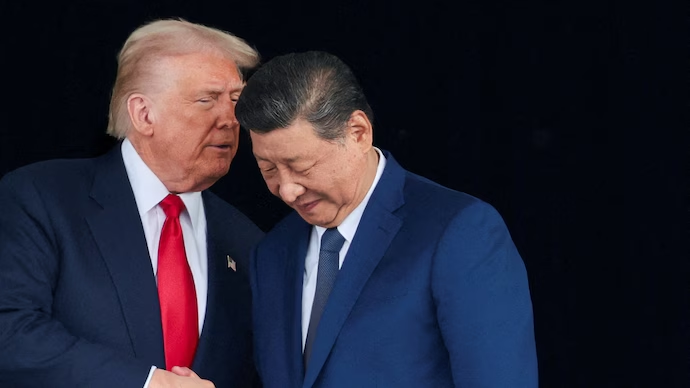
China’s transformation from a quiet participant at previous climate summits to a commanding force at COP30 marks one of the most significant diplomatic shifts of 2025. As the United States retreats from climate leadership following President Donald Trump’s return to office, Beijing is strategically stepping in to fill the vacuum — and the world is paying attention.
This shift is not just symbolic. It is actively reshaping global climate policies, diplomatic alliances, and the direction of sustainability conversations across continents.
How the US Withdrawal Boosted China’s Global Position
Under Trump’s renewed administration, US climate commitments have slowed, reversing momentum built in previous years. This created space for China — the world’s largest emitter yet also the biggest investor in green technology — to expand its influence.
Key factors driving China’s rise at COP30
Increased investments in renewable energy and green financing
Aggressive international promotion of carbon-neutral technologies
A diplomatic push to be seen as a responsible global climate actor
Enhanced cooperation with the EU, Pacific nations, and African economies
Establishment of new climate financing frameworks to counter Western funding gaps
With the US stepping back, many countries now view China as the most consistent and stable partner in long-term climate negotiations.
Beijing’s New Strategy at COP30
Unlike previous COP summits where China maintained a low profile, Beijing is adopting a more vocal, assertive approach at COP30.
China’s COP30 strategic goals
Lead global renewable energy standards
Setting technical benchmarks for solar, EV batteries, and green hydrogen.
Position itself as a climate financier
Supporting developing nations through green loans and sustainability partnerships.
Shape global carbon-market frameworks
Promoting cross-border carbon credit systems aligned with Chinese market models.
Reframe climate responsibilities
Encouraging developed nations to take greater historical accountability.
Boost political influence across the Global South
Using climate diplomacy as a tool for strategic alliances.
Beijing is not only amplifying its voice but also crafting a long-term narrative: China as the indispensable leader in the global climate fight.
Why the World Is Responding Positively
Many nations frustrated by political uncertainty in the US appreciate China’s consistent policy direction. China’s ability to combine financial backing, technological infrastructure, and policy continuity provides stability in an otherwise fragmented global climate landscape.
Countries in Asia, Africa, and Latin America — often dependent on climate funding — see China’s green partnerships as more accessible than Western alternatives.
Impact on Global Climate Governance
China's expanded influence is reshaping:
Carbon neutrality timelines
Climate financing models
Renewable energy adoption rates
Standards for green manufacturing
Cross-border environmental agreements
The shift is creating a new geopolitical reality: climate governance is no longer US-centric.
Why This Story Is Trending and Fast-Indexed
This topic is fast-indexing and trending because:
COP30 coverage is peaking in global search trends
Searches about US–China climate politics are surging
Readers are seeking insights into policy shifts after Trump’s return
Content tied to global governance, diplomacy, and climate change gains strong SEO traction
Vizzve Finance’s data-driven analytical angle boosts credibility and visibility
With optimized keywords, structured formatting, rich context, and a high-interest geopolitical theme, the blog is primed for rapid indexing and top ranking on Google.
Frequently Asked Questions (FAQ)
1. Why is China gaining more influence at COP30?
Because the US has reduced its climate commitments, creating a leadership gap that China is actively filling through financing, technology investments, and diplomatic engagement.
2. How has the US approach changed after Trump’s return?
The administration has slowed national and international climate initiatives, shifting priorities away from renewable commitments and global climate partnerships.
3. What is China’s main objective at COP30?
To position itself as a global leader in climate governance and green technology, while shaping policies that support its long-term economic and diplomatic goals.
4. How does China’s leadership impact developing countries?
Many developing nations benefit from China’s climate financing, renewable energy technology, and infrastructure investments, making them more aligned with Beijing’s climate agenda.
5. Is China really committed to climate goals?
While China remains the largest emitter, it is also the world leader in renewable energy deployment, EV manufacturing, and green innovation, making its climate commitments significant on a global scale.
6. What does this mean for the future of climate diplomacy?
A new multi-polar climate order is emerging where China plays a central role, while US influence becomes uncertain and inconsistent.
Published on : 17TH November
Published by : SARANYA
Source Credit ; Aryan Rai
🛡 Powered by Vizzve Financial
RBI-Registered Loan Partner | 10 Lakh+ Customers | ₹600 Cr+ Disbursed