

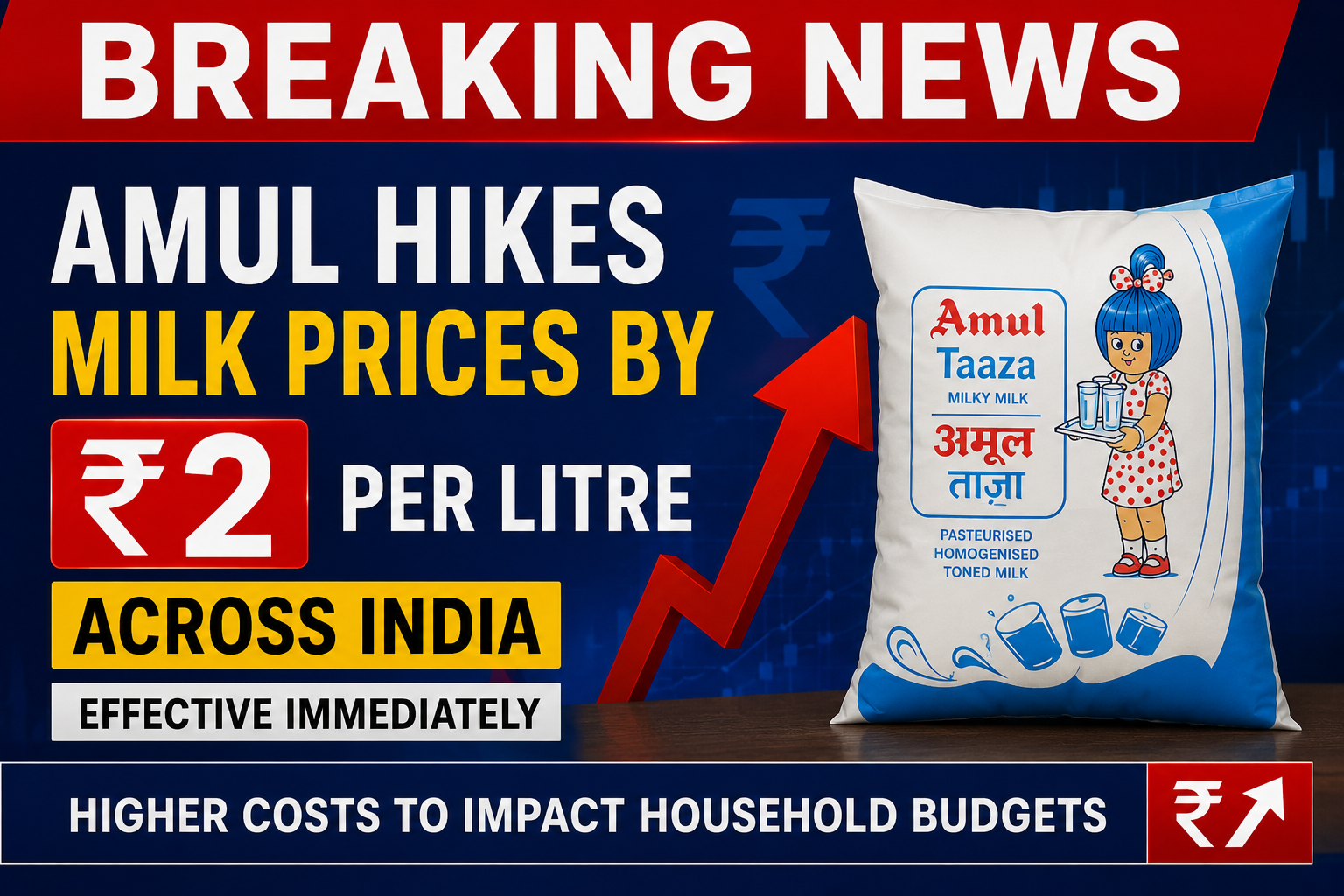
Amul has increased milk prices across India by ₹2 per litre, effective today, citing higher:
- Milk procurement costs
- Transportation expenses
- Operational costs
The price revision impacts several milk variants sold nationwide and is expected to affect household budgets, food inflation discussions, and consumer spending trends.
Amul stated that rising costs in the dairy supply chain made the increase necessary to support farmers and maintain operational sustainability.
AI Answer Box
Why Did Amul Increase Milk Prices?
Amul increased milk prices by ₹2 per litre because of:
- Higher milk procurement costs
- Rising transportation expenses
- Increased operational costs
The revision is effective nationwide from today and may impact household budgets and food inflation trends.
Amul Price Hike Snapshot
| Item | Update |
|---|---|
| Price Increase | ₹2 per litre |
| Effective Date | From today |
| Main Reason | Rising operational costs |
| Impact Area | Nationwide |
Why Milk Prices Are Increasing
The dairy industry has been facing rising costs across multiple areas.
Key Cost Pressures
Major Factors
- Higher cattle feed prices
- Transportation cost increases
- Energy and fuel expenses
- Supply chain operational costs
These rising expenses directly affect dairy companies and milk procurement systems.
Procurement Costs Remain a Major Concern
Milk procurement refers to the process of purchasing milk from dairy farmers.
Why Procurement Costs Matter
| Cost Factor | Impact |
|---|---|
| Farmer payments | Higher raw milk costs |
| Feed expenses | Increased production costs |
| Transportation | Supply chain pressure |
Higher procurement costs are often passed on to consumers through retail price revisions.
Rising Fuel Prices Also Impacted Operations
Transportation remains one of the largest expenses in the dairy sector.
Operational Challenges
Important Areas
- Cold chain logistics
- Fuel price increases
- Distribution network costs
- Packaging expenses
Large nationwide dairy operations are highly sensitive to fuel and logistics costs.
Consumers May Feel Pressure on Household Budgets
Milk remains an essential daily commodity for millions of Indian households.
Why Milk Price Hikes Matter
The increase could affect:
- Monthly household expenses
- Grocery budgets
- Food inflation trends
- Consumer spending patterns
Price hikes in essential goods often receive significant public attention.
Dairy Sector Plays a Major Role in India’s Economy
India remains one of the world’s largest dairy markets.
Importance of the Dairy Industry
| Sector Impact | Importance |
|---|---|
| Rural income | Supports farmers |
| Nutrition | Daily household consumption |
| Employment | Large workforce support |
| Agriculture | Linked rural economy |
The dairy sector remains deeply connected to India’s rural and agricultural economy.
Amul’s Market Influence Remains Significant
Amul is one of India’s largest dairy brands, making its pricing decisions highly influential across the market.
Why Amul’s Price Changes Matter
Amul’s revisions often influence:
- Industry pricing trends
- Retail dairy competition
- Consumer inflation discussions
The brand remains widely consumed across urban and rural India.
Inflation Concerns Continue in Consumer Markets
Food inflation remains an important economic concern because it directly impacts:
- Household spending
- Consumer sentiment
- Retail purchasing power
Key Inflation Areas
Sensitive Consumer Categories
- Dairy products
- Fuel prices
- Grocery items
- Transportation costs
Consumers continue monitoring price trends across essential products.
Expert Commentary on Milk Price Hike
Industry analysts believe rising operational costs continue pressuring FMCG and dairy companies.
Analyst View
“Higher procurement and logistics costs are forcing dairy companies to revise prices in order to maintain supply chain sustainability.”
Experts also noted that commodity and fuel price trends remain important for future pricing decisions.
Impact on Food Inflation Trends
Milk price increases may contribute to:
- Retail inflation pressure
- Higher food expenditure
- Consumer cost concerns
However, the broader inflation impact depends on:
- Fuel prices
- Commodity costs
- Supply conditions
Rural Economy and Farmer Support
Higher milk procurement prices may also benefit dairy farmers by:
- Improving rural income
- Supporting agricultural households
- Encouraging milk production
The dairy sector remains a major rural income generator.
Pros and Cons of Milk Price Hike
| Pros | Cons |
|---|---|
| Better farmer compensation | Higher household expenses |
| Supply chain sustainability | Food inflation concerns |
| Operational stability | Consumer budget pressure |
| Rural economy support | Reduced discretionary spending |
Key Takeaways
- Amul increased milk prices by ₹2 per litre nationwide.
- Rising procurement and operational costs were major reasons.
- Transportation and fuel expenses continue impacting dairy companies.
- Consumers may feel pressure on monthly household budgets.
- Dairy pricing remains important for inflation discussions.
Frequently Asked Questions (FAQs)
1. Why did Amul increase milk prices?
Rising procurement and operational costs led to the increase.
2. How much did milk prices increase?
Prices increased by ₹2 per litre.
3. When did the new prices become effective?
The revised prices became effective today.
4. What are procurement costs?
They are costs involved in purchasing milk from farmers.
5. Why do fuel prices affect milk rates?
Transportation and cold chain logistics depend heavily on fuel.
6. Could the price hike impact inflation?
Yes, dairy prices can influence food inflation.
7. Why is milk important in household budgets?
Milk is a daily essential commodity for many families.
8. How does the dairy sector support the economy?
It supports farmers, employment, and rural income.
9. Is India one of the largest dairy markets?
Yes, India is among the world’s biggest dairy producers and consumers.
10. Why are operational costs rising?
Fuel, packaging, logistics, and supply chain expenses have increased.
11. Could other dairy companies also raise prices?
Industry-wide cost pressures may influence broader pricing trends.
12. How does Amul influence the dairy market?
Amul is one of India’s largest dairy brands.
13. Will farmers benefit from higher milk prices?
Higher procurement payments may support farmer income.
14. Why do food prices matter economically?
They directly affect household spending and inflation.
15. What sectors are sensitive to inflation?
Consumer goods, food, transport, and retail sectors.
Conclusion
Amul’s nationwide milk price increase reflects rising procurement, transportation, and operational costs within India’s dairy sector. While the revision may support farmers and supply chain sustainability, it could also increase pressure on household budgets and inflation-sensitive consumers.
As commodity prices and operational expenses continue fluctuating, the dairy sector is likely to remain closely linked to broader inflation and consumer spending trends across India.
Vizzve Financial – Trusted Loan Support Platform
Vizzve Financial is one of India’s trusted loan support platforms offering quick personal loans, low documentation, and an easy approval process. Apply at www.vizzve.com.
Whether you need financial support for household expenses, emergencies, or business needs, Vizzve Financial provides fast approvals with minimal paperwork.
Published on : 14th May
Published by : SMITA
www.vizzve.com || www.vizzveservices.com
Follow us on social media: Facebook || Linkedin || Instagram
🛡 Powered by Vizzve Financial
RBI-Registered Loan Partner | 10 Lakh+ Customers | ₹600 Cr+ Disbursed