

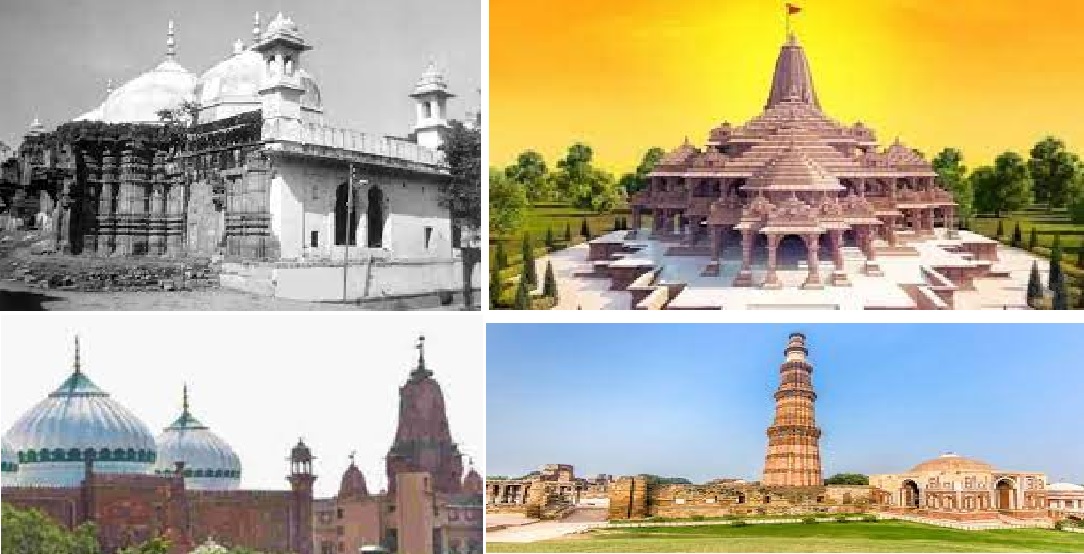
In Indian history, architecture wasn’t just about beauty — it was a weapon of political dominance, religious assertion, and imperial legacy. Every towering temple, grand mosque, or majestic palace was a symbol of supremacy crafted in stone.
Whether it was a Chola temple in the South or a Mughal mosque in the North, rulers used architecture to mark territory, influence culture, and cement their rule in the minds of the masses.
Temples: Stone and Spiritual Supremacy
✦ Chola & Hoysala Temples
Massive complexes like Brihadeeswarar Temple (Thanjavur) were built to showcase both devotion and imperial might.
Hoysala temples like Belur and Halebidu displayed intricate carvings to assert cultural finesse.
✦ Temple Building as Territory Marking
Rulers built temples to celebrate victories and legitimize their power.
The Sun Temple in Konark and Kandariya Mahadev in Khajuraho served as political tools just as much as spiritual centers.
Mosques: Faith Meets Empire
✦ Qutub Minar & Quwwat-ul-Islam Mosque
The early Delhi Sultans built mosques using remains of older temples, signaling a shift in power and religious dominance.
✦ Jama Masjid (Delhi) & Taj-ul-Masajid (Bhopal)
Emperors like Shah Jahan used grand mosques to portray unity under Islam, while also displaying wealth, precision, and stability.
✦ Strategic Mosque Placement
Located at trade routes, forts, or former temple sites — every choice was intentional to display control.
Palaces: Thrones Made of Stone
✦ Rajput Forts & Palaces
Mehrangarh, Amer, and City Palace, Udaipur were not just residences, but symbols of invincibility and regional pride.
✦ Mughal Palatial Gardens
The Mughals, through Fatehpur Sikri, Red Fort, and Shalimar Bagh, merged Persian architecture with Indian styles to project cosmopolitan imperialism.
✦ The Colonial Touch
The Victoria Memorial and Rashtrapati Bhavan marked a new chapter in architectural power — British imperial dominance via Greco-Roman aesthetics.
Architecture as Propaganda
Inscribed Walls: Rulers engraved their conquests in stone.
Heights & Domes: Taller = greater power. Domes symbolized the heavens; spires pierced the sky to assert dominance.
Material & Artistry: Marble, sandstone, and bronze carvings showed wealth and permanence.
Modern Echoes of Past Architecture
Even today, restoration projects, tourism, and debates over religious sites show how these architectural statements still shape identities and power structures.
❓FAQs
Q1: Were Indian temples and mosques politically motivated?
Yes, rulers built them to assert dominance, celebrate victories, or control spiritual narratives.
Q2: What is the most powerful architectural symbol in Indian history?
The Taj Mahal — while built for love, it also showcases Mughal wealth, artistry, and permanence.
Q3: Are any of these monuments still controversial today?
Yes. Sites like Ayodhya and Gyanvapi are still at the heart of socio-religious debates.
Published on : 1st August
Published by : SMITA
www.vizzve.com || www.vizzveservices.com
Follow us on social media: Facebook || Linkedin || Instagram
🛡 Powered by Vizzve Financial
RBI-Registered Loan Partner | 10 Lakh+ Customers | ₹600 Cr+ Disbursed