

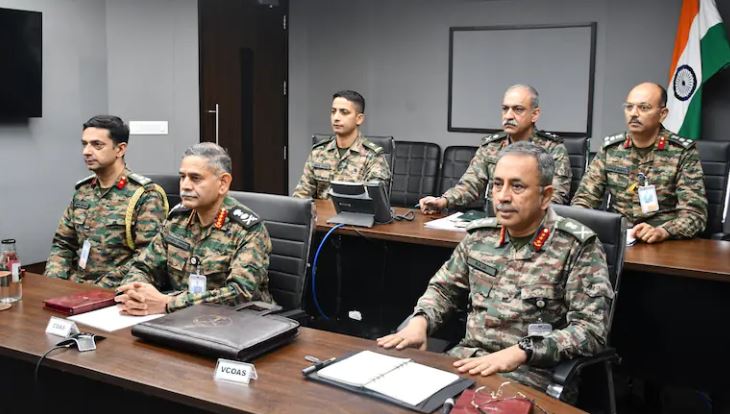
New Delhi, India – In a significant move aimed at strengthening India’s border security posture, the Chief of Army Staff, General [Insert Name], has granted full operational authority to field commanders for taking decisive counteraction against ceasefire violations along the Line of Control (LoC).
This directive comes amid escalating tensions along certain sectors of the India-Pakistan border, where sporadic ceasefire breaches have raised national security concerns. The Army Chief emphasized that ground commanders are best positioned to assess real-time threats and should act swiftly to protect territorial integrity without awaiting further clearance from higher command.
“Commanders on the ground have full authority to respond appropriately to any ceasefire violation or cross-border aggression,” the Army Chief stated during a press briefing.
Why This Matters
India and Pakistan had agreed to a renewed ceasefire pact in February 2021, but recent incidents have raised doubts over its sustainability. The Army's decision to decentralize authority underscores a shift toward proactive defense, ensuring rapid responses to any hostile provocation.
Military analysts view this as a reaffirmation of India’s zero-tolerance approach to infiltration, shelling, and any form of border aggression. With this mandate, local commanders now have the green light to retaliate instantly, aiming to curb escalations before they spiral out of control.
Ground-Level Autonomy: A Strategic Move
Delegating operational autonomy is not just tactical—it’s strategic. It allows the Indian Army to act faster, maintain pressure, and adapt swiftly to evolving threats, especially in volatile border regions like Jammu & Kashmir.
This move is expected to:
-
Deter enemy forces from breaching the ceasefire
-
Improve operational readiness
-
Reduce delays in counteraction
-
Enhance commander confidence and morale
FAQ: Army Chief's Full Authority Order Explained
1. What did the Army Chief announce?
The Indian Army Chief gave full authority to field commanders to take immediate counteraction in response to ceasefire violations or cross-border aggression.
2. Why was this directive issued now?
It follows recent ceasefire breaches along the Line of Control and growing tensions that require quick, decisive military responses.
3. Does this mean India is ending the ceasefire pact?
No. India remains committed to the ceasefire agreement, but this move ensures violations are addressed promptly to maintain national security.
4. Will this lead to escalation with Pakistan?
The goal is deterrence. By empowering commanders to respond immediately, the Indian Army aims to prevent future violations, not escalate conflict.
5. How will this impact security in border areas?
It is expected to strengthen frontline defense, reduce delays in engagement, and assure civilians of improved protection.
Pulished on : May-11-25 By : Abhishek Rana