

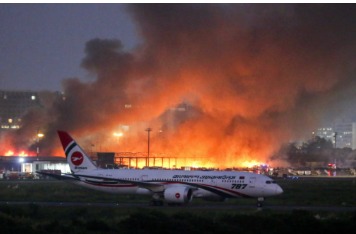
A massive fire at Dhaka’s Hazrat Shahjalal International Airport (HSIA) cargo complex has sent shockwaves through Bangladesh’s apparel industry — the backbone of the country’s economy. With preliminary estimates pointing to losses of around $1 billion, this disaster could become one of the biggest logistical setbacks in recent years for the global garment supply chain.
🔥 The Incident
On October 18, 2025, a huge blaze erupted at the import-cargo section of the HSIA in Dhaka. The fire destroyed large volumes of goods stored for export — including raw materials, finished garments, and product samples. Flight operations were temporarily halted, and emergency teams worked overnight to contain the fire.
While the cause of the fire is still under investigation, initial reports indicate that a short circuit or warehouse mismanagement may have triggered the blaze.
💸 Estimated Loss: Nearly $1 Billion
The Bangladesh Garment Manufacturers and Exporters Association (BGMEA) has estimated total damages near $1 billion. The losses account not only for destroyed goods but also for disrupted exports, shipping delays, and lost future orders.
The timing couldn’t have been worse — the fire struck during the peak export season between October and December, when apparel shipments to the U.S. and Europe are at their highest.
🧵 Why This Fire Matters for Bangladesh’s Economy
Bangladesh’s apparel sector contributes nearly 85% of the nation’s total export earnings and employs more than 4 million people, most of them women. The cargo village at HSIA is a key hub that handles over 600 metric tons of garments daily, a number that doubles during festive and holiday seasons.
This fire, therefore, isn’t just a warehouse tragedy — it’s a major economic event.
⚠️ Key Impacts
1. Export Delays & Revenue Hit
Thousands of ready-to-ship garments have been lost. Exporters now face missed delivery deadlines and potential order cancellations, which could result in penalties from international buyers.
2. Supply Chain Disruptions
Factories depending on imported fabrics, accessories, and trims via air cargo are struggling to maintain production schedules. Many are now forced to reroute through slower sea or land freight options.
3. Loss of Buyer Confidence
Repeated industrial fires in Bangladesh have already raised global concerns about warehouse safety and reliability. This latest incident could shake buyer confidence further, pushing some brands to diversify sourcing away from Bangladesh.
4. Future Orders at Risk
The destruction of product samples is a silent blow. Samples are key for securing future contracts — losing them means losing future business.
5. Employment Concerns
Any slowdown in production directly impacts the livelihoods of millions of workers who depend on steady export orders.
🏗️ Recovery & Response
The BGMEA has begun collecting detailed loss data from affected factories through an online reporting system. The government has ordered a full investigation and promised fast-track measures to restore cargo operations.
Exporters have been advised to use alternative facilities and re-route shipments through other terminals to minimize further disruption. Insurance companies are also assessing claims, though many exporters worry that their coverage may not fully compensate for business interruptions.
🧭 The Road Ahead
Rebuilding buyer trust and restoring logistics efficiency will be critical. Bangladesh needs to:
Strengthen warehouse safety and fire protocols.
Introduce backup logistics systems to prevent total dependency on a single hub.
Offer financial and policy support for affected exporters.
The government and industry must act quickly to ensure this tragedy doesn’t lead to a long-term erosion of global confidence in Bangladesh’s apparel supply chain.
📊 In Perspective
The HSIA fire serves as a wake-up call for Bangladesh’s export sector. It highlights how fragile supply chains can be when infrastructure safety, oversight, and contingency planning are neglected.
With billions of dollars and millions of jobs at stake, the apparel industry’s resilience will depend on how swiftly — and strategically — it recovers from this disaster.
FAQs
Q1: Where did the fire occur?
At the cargo complex of Hazrat Shahjalal International Airport, Dhaka.
Q2: What is the estimated loss?
Initial estimates put the loss at around $1 billion in goods and export disruptions.
Q3: Which industries were affected most?
Primarily the garment and textile sectors, which depend heavily on air exports.
Q4: How is the government responding?
Authorities have launched a probe and are coordinating relief, insurance, and export rerouting measures.
Q5: Will this affect global apparel prices?
Yes, short-term disruptions may cause minor apparel price increases in Western markets.
Published on : 20th October
Published by : SMITA
www.vizzve.com || www.vizzveservices.com
Follow us on social media: Facebook || Linkedin || Instagram
🛡 Powered by Vizzve Financial
RBI-Registered Loan Partner | 10 Lakh+ Customers | ₹600 Cr+ Disbursed
https://play.google.com/store/apps/details?id=com.vizzve_micro_seva&pcampaignid=web_share