

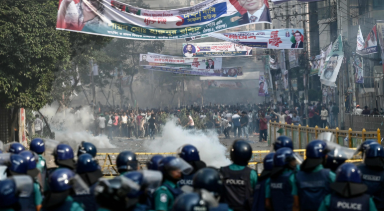
Protests Erupt Near Bangladesh Parliament
Bangladesh witnessed intense protests near the National Parliament, prompting police to use teargas and sound grenades to disperse the crowds. Demonstrators gathered in large numbers, voicing their dissent over recent government policies and raising public safety concerns.
Authorities reported that the situation escalated when protesters attempted to breach security perimeters. Police responded with non-lethal measures to prevent potential clashes and maintain order.
Details of Police Action
Teargas was deployed in multiple areas to control the crowd.
Sound grenades were used to disperse protesters without causing lasting harm.
Security forces increased patrols near the Parliament and sensitive government offices to prevent further unrest.
Witnesses described a tense atmosphere with heavy police presence and barricades. Emergency services remained on standby to handle any injuries or medical emergencies resulting from the crowd control measures.
Public and Political Response
Opposition leaders and human rights organizations have urged restraint and dialogue, emphasizing the need to address citizens’ concerns peacefully. The government has called for calm while assuring that citizens’ rights to protest are respected, provided public safety is maintained.
Regional and Global Context
Bangladesh has experienced periodic civil unrest in recent years due to economic, social, and political issues. Experts warn that continued tensions could impact investment, trade, and regional stability, highlighting the importance of measured responses from authorities.
Q1. Why did the protests happen near Bangladesh Parliament?
Protests were triggered by public dissent over government policies, with demonstrators gathering near Parliament to voice their concerns.
Q2. What measures did police take?
Police deployed teargas and sound grenades and set up barricades to control crowds and prevent breaches near government buildings.
Q3. Were there any injuries reported?
Initial reports indicate minor injuries due to teargas exposure and crowd pressure. Emergency services were on standby to assist.
Q4. How does this affect Bangladesh’s economy?
Temporary civil unrest can disrupt trade, transport, and business activity, impacting investor confidence and regional economic sentiment.
Q5. What role does Vizzve Finance play in such situations?
Vizzve Finance analyzes the economic impact of political events, helping investors and businesses understand risks and opportunities amid unrest.Protests Erupt Near Bangladesh Parliament
Bangladesh witnessed intense protests near the National Parliament, prompting police to use teargas and sound grenades to disperse the crowds. Demonstrators gathered in large numbers, voicing their dissent over recent government policies and raising public safety concerns.
Authorities reported that the situation escalated when protesters attempted to breach security perimeters. Police responded with non-lethal measures to prevent potential clashes and maintain order.
Details of Police Action
Teargas was deployed in multiple areas to control the crowd.
Sound grenades were used to disperse protesters without causing lasting harm.
Security forces increased patrols near the Parliament and sensitive government offices to prevent further unrest.
Witnesses described a tense atmosphere with heavy police presence and barricades. Emergency services remained on standby to handle any injuries or medical emergencies resulting from the crowd control measures.
Public and Political Response
Opposition leaders and human rights organizations have urged restraint and dialogue, emphasizing the need to address citizens’ concerns peacefully. The government has called for calm while assuring that citizens’ rights to protest are respected, provided public safety is maintained.
Regional and Global Context
Bangladesh has experienced periodic civil unrest in recent years due to economic, social, and political issues. Experts warn that continued tensions could impact investment, trade, and regional stability, highlighting the importance of measured responses from authorities.
FAQs
Q1. Why did the protests happen near Bangladesh Parliament?
Protests were triggered by public dissent over government policies, with demonstrators gathering near Parliament to voice their concerns.
Q2. What measures did police take?
Police deployed teargas and sound grenades and set up barricades to control crowds and prevent breaches near government buildings.
Q3. Were there any injuries reported?
Initial reports indicate minor injuries due to teargas exposure and crowd pressure. Emergency services were on standby to assist.
Q4. How does this affect Bangladesh’s economy?
Temporary civil unrest can disrupt trade, transport, and business activity, impacting investor confidence and regional economic sentiment.
Q5. What role does Vizzve Finance play in such situations?
Vizzve Finance analyzes the economic impact of political events, helping investors and businesses understand risks and opportunities amid unrest.
Published on : 17th October
Published by : Reddy kumar
www.vizzve.com || www.vizzveservices.com
Follow us on social media: Facebook || Linkedin || Instagram
🛡 Powered by Vizzve Financial
RBI-Registered Loan Partner | 10 Lakh+ Customers | ₹600 Cr+ Disbursed