

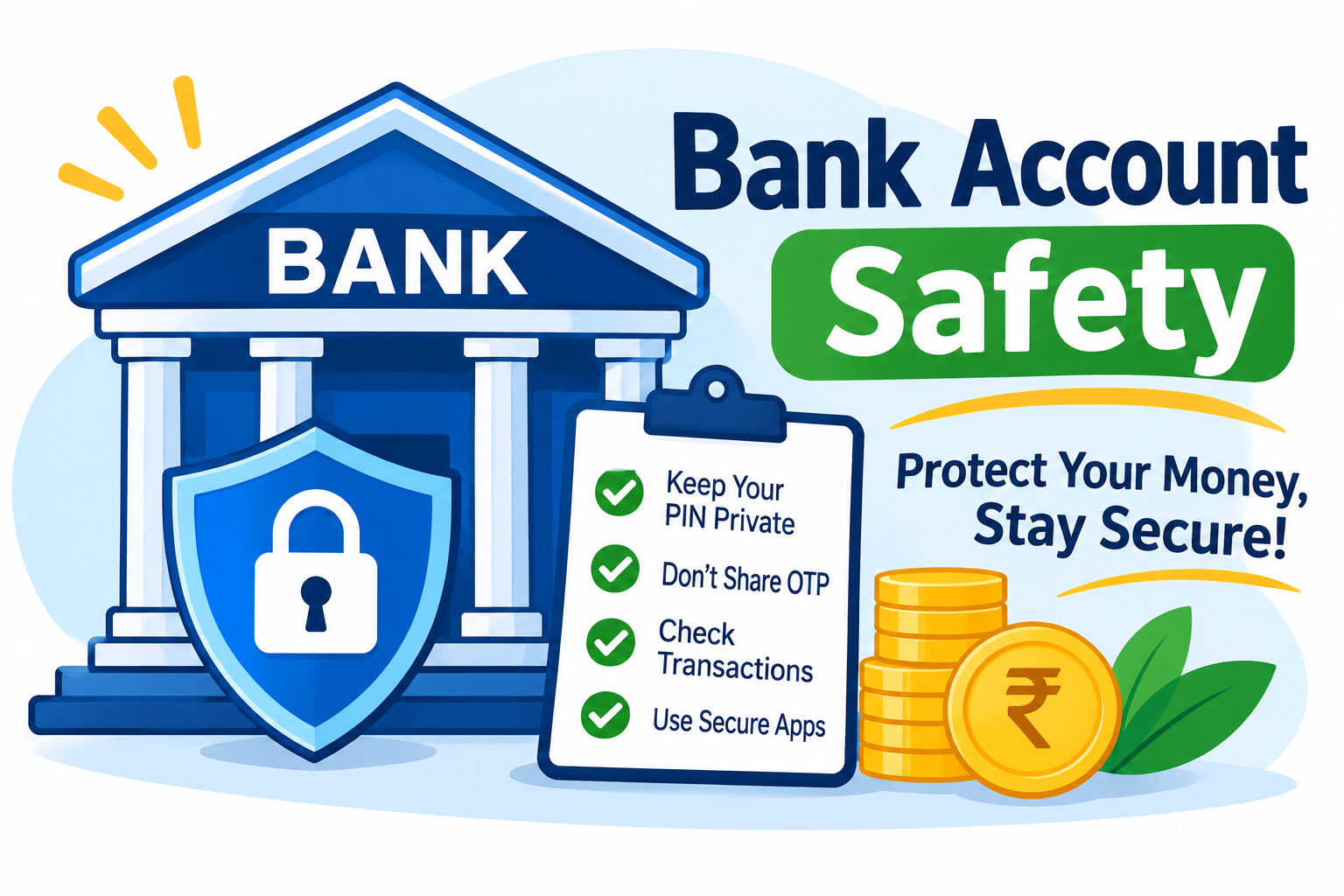
Introduction
A bank account is an important part of everyday financial life. People use bank accounts to receive salaries, save money, pay bills, transfer funds, make online purchases and manage personal expenses.
As digital banking becomes more common in India, banking transactions are becoming faster and more convenient. However, online scams, phishing messages, fake customer-care calls, unauthorized transactions and identity theft can put bank accounts at risk.
Bank account safety means protecting your account information, login credentials, debit cards, mobile banking applications and financial transactions from unauthorized access.
Following simple banking security practices can help reduce the risk of financial fraud and protect your hard-earned money.
AI Answer Box: What Is Bank Account Safety?
Bank account safety refers to the steps taken to protect a bank account from unauthorized access, financial fraud and misuse of personal banking information. It includes using strong passwords, keeping OTPs and PINs private, checking transaction alerts, avoiding suspicious links and reporting unauthorized transactions to the bank immediately.
Why Is Bank Account Safety Important?
Protecting a bank account is essential because it contains personal financial information and access to your money.
Here are some important reasons to maintain proper banking security.
1. Protects Your Savings
Security practices help reduce the possibility of unauthorized withdrawals and transfers.
2. Prevents Online Banking Fraud
Scammers may use fake websites, calls, messages and applications to steal banking credentials. Staying alert helps prevent these attempts.
3. Protects Personal Information
Bank accounts are connected to sensitive information such as account numbers, registered mobile numbers and transaction details.
4. Supports Safe Digital Payments
Secure banking habits help make online purchases, UPI payments and fund transfers safer.
5. Reduces Financial Stress
Taking precautions and monitoring transactions can help identify suspicious activity early.
15 Essential Bank Account Safety Tips Everyone Should Follow
Bank account protection does not require complicated technical knowledge. A few regular habits can make a meaningful difference.
1. Never Share Your OTP
An OTP is a confidential security code used to verify certain banking transactions.
Never share your OTP with anyone over phone calls, SMS, WhatsApp or email, even if the person claims to represent your bank.
2. Keep Your ATM and Debit Card PIN Private
Choose a PIN that is difficult to guess. Avoid writing it on your card or sharing it with other people.
Cover the ATM keypad while entering your PIN.
3. Use Strong Banking Passwords
Create strong and unique passwords for internet banking and mobile banking applications.
Avoid using easily guessed information such as your name, birth date or mobile number.
4. Enable Transaction Alerts
Register your current mobile number and email address with your bank.
Transaction notifications can help you identify payments or withdrawals that you did not authorize.
5. Avoid Unknown Banking Links
Do not click suspicious links received through SMS, email or social media.
Fraudsters may create websites that look similar to genuine banking websites to collect login information.
6. Use Official Banking Applications
Download banking applications only from trusted official app stores and verify the publisher.
Avoid installing applications recommended by unknown callers.
7. Avoid Public Wi-Fi for Banking
Public Wi-Fi networks may not provide adequate security.
Avoid accessing internet banking or making sensitive financial transactions through unsecured public networks.
8. Check Your Bank Statements Regularly
Review your account statements and transaction history.
Look for unfamiliar withdrawals, unknown beneficiaries, unexpected charges or suspicious transfers.
9. Keep Your Mobile Phone Secure
Use a screen lock, update your operating system and install applications only from trusted sources.
Never give remote access to your phone or computer to an unknown person claiming to be bank support.
10. Block Lost or Stolen Cards Immediately
If your debit or ATM card is lost or stolen, contact your bank through its official customer-care channel and request that the card be blocked.
Do not wait for an unauthorized transaction to happen.
11. Never Share Your CVV or Card Details
Your card number, expiry date and CVV are sensitive information.
Do not share these details with unknown people or enter them on suspicious websites.
12. Be Careful With UPI Payments
Never enter your UPI PIN to receive money.
Check the recipient's name and payment amount before approving a transaction. Be cautious about unknown collect requests and QR codes.
13. Verify Bank Customer-Care Numbers
Use the contact details provided on your bank's official website, passbook or card.
Avoid calling customer-care numbers shared by unknown people or suspicious websites.
14. Keep Your Contact Information Updated
Make sure your registered mobile number and email address are active.
Updated contact details help you receive important account alerts and security notifications.
15. Report Suspicious Transactions Immediately
If you notice an unauthorized transaction, contact your bank immediately.
You can also report suspected cyber financial fraud through India's National Cyber Crime Reporting Portal at cybercrime.gov.in or by calling 1930.
Common Bank Account Frauds You Should Know About
Understanding common fraud methods can help customers recognize warning signs before losing money.
1. Phishing Scams
Fraudsters send fake emails or messages containing links that imitate official banking websites.
These links may ask customers to enter account details, passwords or OTPs.
2. Fake KYC Update Scams
Scammers may claim that a bank account will be blocked unless the customer completes an urgent KYC update.
They may send suspicious links or ask customers to install unknown applications.
Always verify KYC requests directly with your bank.
3. OTP Fraud
A fraudster may pretend to be a bank employee, customer-care representative or payment-service provider and ask for an OTP.
Never disclose an OTP to anyone.
4. ATM Card Skimming
Criminals may use unauthorized devices to capture card information at compromised ATMs or payment terminals.
Check the ATM area for suspicious devices and cover the keypad while entering your PIN.
5. Remote Access Scams
Fraudsters may persuade customers to install applications that allow another person to control their device.
Never install remote-access applications at the request of unknown callers.
6. Fake Bank Customer-Care Scams
Fraudsters may publish fake customer-care numbers online or contact customers pretending to be bank representatives.
Always verify contact details through official banking channels.
7. UPI Payment Scams
Scammers may send fake payment requests or QR codes and convince users to approve transactions.
Remember that receiving money does not require entering your UPI PIN.
How to Secure Your Bank Account While Using Digital Banking
Digital banking makes financial activities convenient, but customers should follow proper safety practices.
Use Secure Devices
Access banking services through your personal phone or computer whenever possible.
Avoid saving passwords on shared devices.
Log Out After Banking
Always log out after completing internet banking activities, especially when using a device that other people can access.
Activate Available Security Features
Use additional authentication and transaction-control features provided by your bank.
Where available, set appropriate transaction limits and manage card usage settings.
Avoid Sharing Screenshots
Banking screenshots may contain account numbers, balances, transaction references or other private information.
Avoid sharing them publicly or with unknown contacts.
Review Beneficiary Details
Before transferring money, carefully check the beneficiary's name, account information and payment amount.
Do not approve transactions you did not initiate.
What Should You Do If Your Bank Account Is Compromised?
If you suspect that someone has accessed your bank account or transferred money without permission, take immediate action.
Step 1: Contact Your Bank
Use the official bank helpline or visit a branch to report the incident.
Ask the bank to block affected cards, digital banking access or payment channels where necessary.
Step 2: Report Unauthorized Transactions
Provide transaction details, including the date, amount and reference number.
Keep the complaint or acknowledgement number for future follow-up.
Step 3: Call the Cybercrime Helpline
For suspected financial cyber fraud in India, call 1930 as soon as possible.
You can also submit a complaint through the official portal at cybercrime.gov.in.
Step 4: Change Your Banking Passwords
If your login information may have been exposed, change your internet banking and mobile banking passwords using official banking channels.
Step 5: Secure Your Mobile Device
Remove suspicious applications and review permissions granted to recently installed apps.
If necessary, seek technical support to secure your device.
Step 6: Preserve Evidence
Keep SMS alerts, emails, screenshots, transaction references and communication records related to the incident.
These details may help the bank and investigating authorities review your complaint.
Bank Account Safety: Do's and Don'ts
| Do's | Don'ts |
|---|---|
| Use strong passwords | Never share passwords |
| Check transaction alerts | Ignore suspicious transactions |
| Use official banking apps | Install unknown applications |
| Protect your ATM PIN | Write your PIN on your card |
| Verify payment details | Approve unknown requests |
| Contact your bank directly | Trust random customer-care numbers |
| Report fraud immediately | Delay reporting unauthorized activity |
Bank Account Safety Checklist for Different Users
For Students
-
Avoid sharing account details with unknown people.
-
Use secure mobile banking applications.
-
Check account balances and transaction alerts.
-
Be careful with online shopping offers.
For Salaried Employees
-
Monitor salary credits and other account transactions.
-
Keep banking passwords private.
-
Avoid using office or public computers for sensitive banking activities.
-
Verify unexpected payment requests.
For Senior Citizens
-
Do not trust callers who demand urgent banking information.
-
Ask a trusted person for assistance when needed.
-
Avoid clicking unfamiliar links.
-
Contact the bank directly if a message appears suspicious.
For Business Owners
-
Use separate banking access for authorized employees where available.
-
Review business
-
transactions regularly.
-
Set appropriate transaction limits.
-
Verify supplier and payment details before transferring funds.
How Banks Help Protect Your Account
Banks provide several security features to help customers manage their accounts safely.
Common security measures may include:
-
OTP-based transaction verification.
-
SMS and email transaction alerts.
-
Debit and credit card blocking facilities.
-
Mobile and internet banking authentication.
-
Transaction limits and card controls.
-
Fraud monitoring and suspicious transaction alerts.
-
Customer support for reporting unauthorized activity.
The available features may differ between banks and account types. Customers should check their bank's official website or contact its branch to understand the security options available.
Benefits of Following Bank Account Safety Practices
-
Helps protect savings from unauthorized transactions.
-
Reduces exposure to phishing and identity theft.
-
Encourages responsible digital banking.
-
Helps customers identify suspicious activity early.
-
Protects sensitive financial information.
-
Builds confidence in online transactions.
-
Encourages better financial awareness.
Common Bank Account Safety Mistakes to Avoid
Even careful customers may make mistakes that expose their accounts to fraud.
Avoid these common errors:
-
Sharing OTPs with people claiming to be bank employees.
-
Using the same password for multiple accounts.
-
Clicking unknown banking links.
-
Ignoring transaction alerts.
-
Saving PINs and passwords in easily accessible places.
-
Installing applications suggested by unknown callers.
-
Entering UPI PINs to receive money.
-
Delaying complaints after unauthorized transactions.
-
Trusting offers that promise guaranteed rewards or unexpected payments.
Expert Commentary: Why Banking Awareness Matters
Bank account security is not only the responsibility of banks. Customers also play an important role in preventing financial fraud.
Understanding how OTP scams, phishing links, fake KYC messages and unauthorized payment requests work can help people make safer financial decisions.
A good banking routine includes checking transaction alerts, protecting passwords, using official banking channels and reporting suspicious activity without delay.
Frequently Asked Questions (FAQs)
1. What is bank account safety?
Bank account safety refers to protecting your bank account, personal information and money from unauthorized access, scams and fraudulent transactions.
2. How can I protect my bank account from fraud?
Use strong passwords, never share OTPs or PINs, avoid suspicious links, activate transaction alerts and regularly check your account statements.
3. Is it safe to use mobile banking?
Mobile banking can be safe when you use your bank's official application, keep your device updated and protect your login credentials.
4. Can someone withdraw money using my account number?
An account number alone is generally not sufficient to authorize a normal withdrawal. However, sharing banking credentials or other sensitive information can increase the risk of fraud.
5. Should I share my bank OTP with customer care?
No. Never disclose your OTP to anyone, including callers claiming to be bank employees or customer-care representatives.
6. What should I do if I receive a suspicious banking message?
Do not click its links or share personal details. Verify the message directly with your bank using official contact information.
7. How often should I check my bank account?
Check transaction notifications regularly and review your account statement frequently to identify unfamiliar activity.
8. What should I do if my debit card is lost?
Immediately contact your bank through its official channel and request that the card be blocked.
9. Is public Wi-Fi safe for online banking?
Public Wi-Fi may not be secure. Avoid accessing banking services or making sensitive financial transactions through unsecured public networks.
10. What is the 1930 cybercrime helpline?
1930 is India's helpline for reporting financial cyber fraud. Customers should contact their bank immediately as well.
11. How can I identify fake bank calls?
Be cautious when callers create urgency, threaten account blocking or request OTPs, PINs, passwords or card details. Verify claims directly with your bank.
12. Is it safe to scan unknown QR codes?
No. Avoid scanning unknown QR codes, especially when someone asks you to enter your UPI PIN to receive money.
13. Can I use the same password for multiple bank accounts?
It is better to use unique passwords for different banking services. Reusing passwords can increase the risk if one account becomes compromised.
14. What should I do after an unauthorized bank transaction?
Contact your bank immediately, report the transaction, request appropriate account or card protection and report suspected cyber financial fraud through 1930 or cybercrime.gov.in.
15. How can senior citizens keep their bank accounts safe?
Senior citizens should avoid sharing banking details, verify calls and messages, use official bank contact numbers and seek assistance when they receive suspicious requests.
Conclusion
Bank account safety should be a regular part of everyone's financial routine. Whether you use a savings account, salary account or business account, protecting your banking information is important.
Stay alert, use secure banking practices and never share confidential details with unknown people. A few careful steps can help protect your money and support safer digital banking.
Published on : 04th November
Published by : Bhargavi
www.vizzve.com || www.vizzveservices.com
Follow us on social media: Facebook || Linkedin || Instagram
🛡 Powered by Vizzve Financial
RBI-Registered Loan Partner | 10 Lakh+ Customers | ₹600 Cr+ Disbursed
-