

Introduction
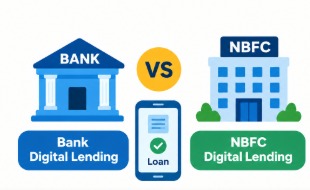
Digital lending has made borrowing money easier in India. Today, individuals, salaried employees, self-employed professionals and small business owners can apply for loans online without visiting a bank branch. Two major sources of digital loans are banks and Non-Banking Financial Companies (NBFCs).
Although both banks and NBFCs offer digital lending services, they differ in their business models, eligibility criteria, loan products, deposit facilities and regulatory requirements. Understanding these differences can help borrowers compare loan offers and make informed financial decisions.
In this guide, we explain the meaning of bank and NBFC digital lending, their key differences, benefits, risks and the factors to consider before applying for an online loan.
What Is Bank Digital Lending?
Bank digital lending refers to the process of applying for, processing and receiving a loan through a bank's website, mobile application or authorised digital lending platform.
Banks use digital technologies to verify customer information, assess creditworthiness, approve applications and disburse funds.
Features of bank digital lending
- Online loan applications and digital KYC.
- Access to personal, home, vehicle and business loans, depending on the bank.
- Interest rates and eligibility criteria based on the bank's lending policies.
- Digital loan tracking and repayment facilities.
- Access to the bank's existing customer services through online banking.
What Is NBFC Digital Lending?
An NBFC, or Non-Banking Financial Company, is a financial institution that provides services such as loans and investments but does not have all the banking powers of a bank.
NBFC digital lending allows customers to apply for loans through an NBFC's website, mobile application or an authorised lending partner.
Features of NBFC digital lending
- Online loan applications and digital verification.
- Personal loans, vehicle finance, business loans and other products, depending on the NBFC.
- Eligibility and credit assessment based on the lender's policies.
- Digital repayment options and loan management services.
- Loan products designed for different customer and business requirements.
Not every lending app is an NBFC. Some apps act as Lending Service Providers (LSPs) that connect borrowers with regulated lenders.
Bank vs NBFC Digital Lending: Key Differences
| Basis | Bank Digital Lending | NBFC Digital Lending |
|---|---|---|
| Institution | A licensed bank | A non-banking financial company |
| Main services | Deposits, payments and loans | Loans and other permitted financial services |
| Savings accounts | Offered by eligible banks | Generally not offered as bank savings accounts |
| Loan products | Personal, home, vehicle and business loans | Personal, vehicle, business and other specialised loans |
| Interest rates | Depend on the bank, borrower and loan type | Depend on the NBFC, borrower and loan type |
| Eligibility | Based on the bank's lending policy | Based on the NBFC's lending policy |
| Approval time | Varies by application and product | Varies by application and product |
| Digital process | Website, mobile banking and lending partners | Website, mobile apps and lending partners |
| Regulation | Regulated by the RBI and other applicable laws | Regulated by the RBI and other applicable laws, where applicable |
The actual interest rate, processing fee, loan amount and approval time depend on the specific lender and borrower. Neither banks nor NBFCs always offer faster or cheaper loans.
Benefits of Bank Digital Lending
1. Convenient online applications
Customers can apply for eligible loans through digital banking services without making repeated branch visits.
2. Multiple financial services
Banks may provide loans alongside savings accounts, fixed deposits, payment services and other banking facilities.
3. Existing customer relationship
An existing bank customer may be able to use pre-filled information or receive a pre-approved offer, subject to the bank's terms and eligibility checks.
4. Digital repayment facilities
Borrowers can often view loan details, check outstanding balances and make repayments through online banking.
Benefits of NBFC Digital Lending
1. Different loan options
NBFCs may specialise in vehicle finance, consumer finance, small-business loans or other specific lending segments.
2. Alternative eligibility models
Some NBFCs may assess applications using different credit policies or additional information. Approval is never guaranteed.
3. Digital application process
Many NBFCs support online applications, electronic documentation and digital loan servicing.
4. Financing for varied requirements
Depending on the lender, NBFCs may offer products for customers or businesses with different borrowing needs.
Bank vs NBFC: Interest Rates and Charges
Interest rates are an important factor when comparing digital loans. However, the lowest advertised interest rate may not represent the total cost of borrowing.
Before accepting a loan, compare:
- Annual Percentage Rate (APR): The annualised cost of credit, including applicable loan charges.
- Processing fee: The amount charged for processing the loan.
- Loan tenure: The repayment period.
- Monthly EMI: The amount payable each month.
- Late payment charges: Charges that may apply if you miss a payment.
- Foreclosure or prepayment charges: Applicable charges for early repayment, subject to the loan terms and regulations.
For example, a loan with a lower interest rate but a higher processing fee may cost more overall than another loan with a slightly higher rate.
Always review the Key Facts Statement (KFS), APR and repayment schedule before accepting a digital loan.
RBI Rules for Bank and NBFC Digital Lending
The Reserve Bank of India (RBI) regulates banks and relevant NBFCs under their applicable regulatory frameworks. Digital lending requirements also apply to regulated lenders using lending apps and service providers.
The RBI's Digital Lending Directions, 2025, issued on May 8, 2025, set out requirements for regulated entities engaged in digital lending.
Important borrower protections include:
- Clear disclosure of loan terms and applicable charges.
- Disclosure of the lender's identity.
- A Key Facts Statement for applicable retail and MSME term loans.
- Appropriate borrower consent for collecting and using personal data.
- Compliance with applicable rules for lending service providers.
- Grievance redressal arrangements.
- Transparent loan disbursement and repayment practices.
Using a digital lending app does not remove the regulated lender's responsibilities. Borrowers should verify the actual bank or NBFC providing the loan rather than relying only on an app's brand name.
Risks of Digital Lending
Digital lending is convenient, but borrowers should remain alert to potential risks.
Common risks
- Hidden or poorly understood fees.
- Fraudulent apps impersonating legitimate lenders.
- Excessive access to personal information.
- Unaffordable EMIs and multiple outstanding loans.
- Harassment or inappropriate recovery practices.
How to borrow safely
- Verify the lender's legal name and regulatory status.
- Check whether the app is operated by the lender or an authorised lending service provider.
- Read the KFS, loan agreement and privacy policy.
- Compare the APR and total repayment amount.
- Avoid apps that demand unnecessary permissions or promise guaranteed approval.
- Never pay suspicious upfront charges to an unknown person promising loan approval.
- Borrow only an amount you can repay comfortably.
How to Choose Between a Bank and an NBFC
Consider the following factors before applying:
- Loan purpose: Identify whether you need a personal, home, vehicle or business loan.
- Total borrowing cost: Compare the APR, fees and total repayment amount.
- Eligibility: Review the lender's income, credit score and documentation requirements.
- Repayment flexibility: Understand the EMI schedule and applicable prepayment conditions.
- Lender credibility: Verify the regulated lender and its grievance redressal process.
- Data privacy: Check how your personal and financial information will be used.
A bank and an NBFC may both offer suitable loans. Compare actual offers rather than choosing solely based on the institution's category.
Frequently Asked Questions (FAQs)
1. What is the difference between bank and NBFC digital lending?
Banks offer loans as part of their banking services, while NBFCs provide loans and other permitted financial services without having all the powers of a bank.
2. Are NBFCs regulated by the RBI?
Many NBFCs are regulated by the RBI. Their regulatory obligations depend on their category and applicable laws.
3. Are bank digital loans cheaper than NBFC loans?
Not always. Compare the APR, processing fees and total repayment amount for each offer.
4. Do NBFCs provide instant loans?
Some NBFCs offer quick digital processing, but approval and disbursement times vary.
5. Can I get a digital loan with a low credit score?
Some lenders may consider applicants with lower credit scores, but approval, interest rates and loan amounts depend on their policies and the borrower's overall profile.
6. Is an NBFC lending app the same as an NBFC?
No. An app may belong to an NBFC or may act as a service provider for a separate regulated lender.
7. Are digital loans safe in India?
They can be used safely when the borrower verifies the lender, reviews the loan documents and uses legitimate channels.
8. What is APR in digital lending?
APR represents the annualised cost of a loan, including applicable charges, calculated according to the relevant rules.
9. What is a Key Facts Statement?
A KFS is a standardised document that summarises important loan terms, costs and repayment details.
10. Can an NBFC accept savings deposits?
An NBFC cannot offer a bank savings account. Only eligible NBFCs authorised to accept public deposits may accept such deposits under applicable rules.
11. Do banks and NBFCs check credit scores?
They commonly use credit information as part of their assessment, alongside income, repayment capacity and other relevant factors.
12. Can a digital loan be repaid early?
Early repayment may be permitted, subject to the loan agreement and applicable rules on prepayment charges.
13. What should I check before accepting an online loan?
Check the lender's identity, APR, processing fees, EMI, total repayment, privacy policy and grievance redressal details.
14. Who should I contact if a digital lender harasses me?
Contact the lender's grievance officer first and preserve relevant evidence. You can also use the RBI's applicable complaint mechanism or report suspected fraud through the appropriate official channels.
15. Can a bank or NBFC guarantee loan approval?
Legitimate lenders assess applications against their eligibility and underwriting policies. Be cautious of anyone promising guaranteed approval in exchange for an upfront payment.
Conclusion
Bank vs NBFC digital lending is an important comparison for anyone planning to borrow money online. Both can provide convenient access to credit, but their loan products, eligibility rules, interest rates and charges vary by lender.
Before applying, compare the APR, EMI, processing fees and total repayment amount. Verify the actual regulated lender, read the loan documents carefully and choose a repayment plan that fits your budget. Responsible borrowing begins with understanding the full cost and conditions of a loan.
Published on : 2nd October
Published by : MONISHA
www.vizzve.com || www.vizzveservices.com
Follow us on social media: Facebook || Linkedin || Instagram
🛡 Powered by Vizzve Financial
RBI-Registered Loan Partner | 10 Lakh+ Customers | ₹600 Cr+ Disbursed