

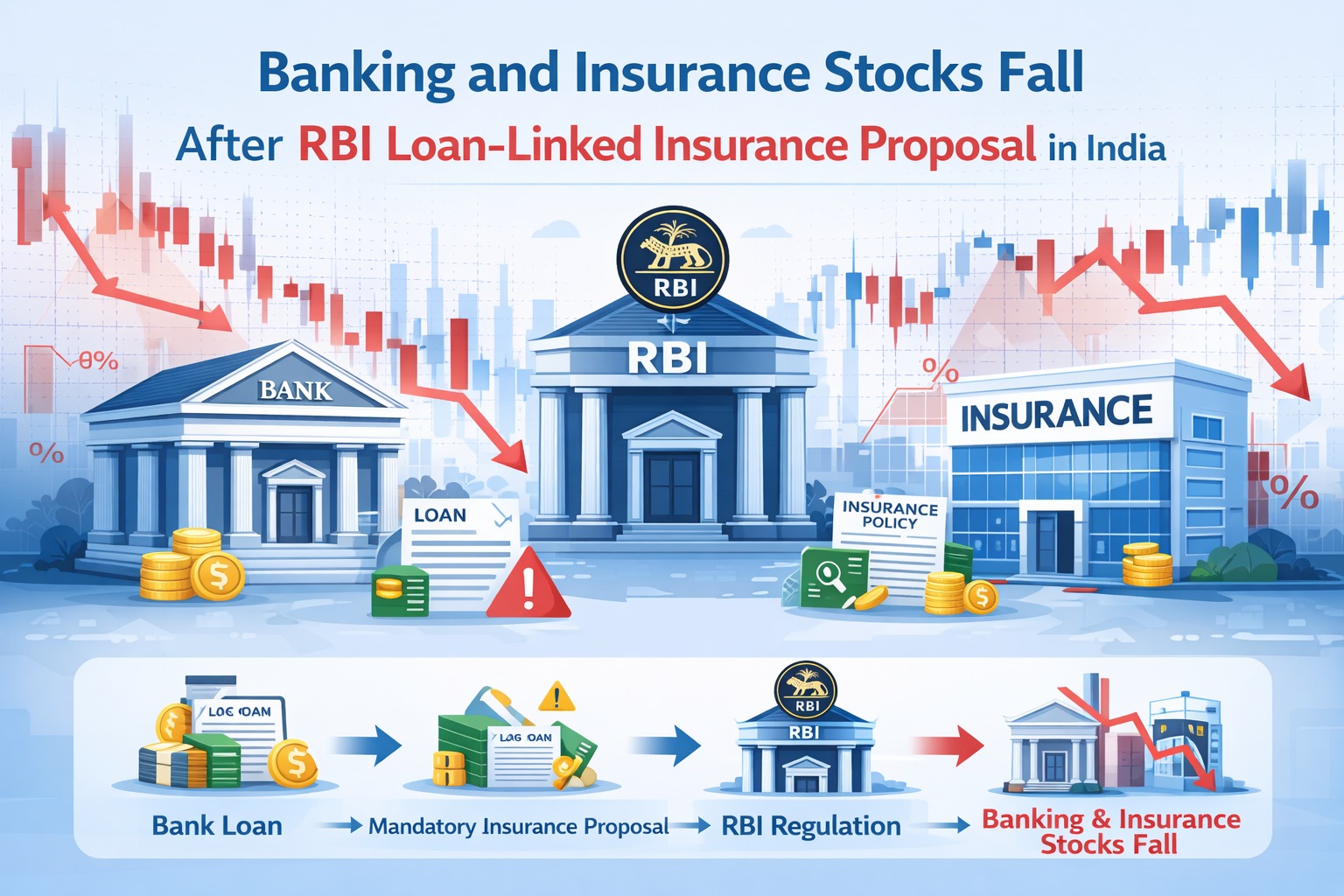
Banking and insurance stocks recently experienced market pressure after the
Reserve Bank of India proposed new regulations governing loan-linked insurance products.
The proposed rules aim to protect borrowers from forced insurance purchases tied to loans but may affect revenue models of banks and insurance companies.
AI Answer Box
Why did banking and insurance stocks fall after RBI’s proposal?
RBI proposed restrictions on loan-linked insurance sales
Banks may lose commission income from insurance policies
Insurance companies may see reduced bancassurance distribution
Investor sentiment weakened due to revenue uncertainty
Financial sector stocks reacted negatively
What Are Loan-Linked Insurance Products?
Loan-linked insurance refers to insurance policies offered alongside loans.
Examples include:
Home loan insurance
Credit life insurance
Personal loan protection policies
These policies ensure that if the borrower dies or becomes disabled, the insurance covers the remaining loan amount.
Why RBI Proposed New Rules
The central bank aims to improve transparency and consumer protection.
Concerns raised include:
Borrowers being pressured to buy insurance with loans
Lack of transparency in commissions
Higher loan costs due to bundled insurance products
The proposed rules seek to ensure borrowers have the freedom to choose insurance providers independently.
Why Banking Stocks Reacted Negatively
Banks often earn commissions by selling insurance products through bancassurance partnerships.
Potential impacts include:
Reduced Commission Revenue
Loan-linked insurance sales contribute to non-interest income for banks.
Changes in Distribution Model
Banks may need to revise partnerships with insurance companies.
Lower Profit Margins
Reduced cross-selling opportunities could impact profitability.
Impact on Insurance Companies
Insurance companies also rely heavily on bank partnerships to distribute policies.
Possible challenges include:
Reduced policy sales through banks
Lower bancassurance channel revenue
Increased competition through independent distribution channels
However, insurers may adapt by strengthening direct sales channels.
Market Reaction
Investors reacted quickly to the regulatory proposal.
Financial stocks often respond strongly to policy changes because regulations directly affect business models and revenue streams.
Short-term volatility in banking and insurance stocks is common when major regulatory announcements occur.
Long-Term Impact on Financial Sector
While the proposal may create short-term pressure, it could improve market transparency.
Potential long-term benefits include:
Better borrower protection
Transparent loan pricing
Improved consumer trust in financial products
Regulatory reforms often aim to strengthen the financial system over time.
Impact on Borrowers
The proposed rules could benefit borrowers in several ways.
Greater Freedom of Choice
Borrowers may select insurance providers independently.
Reduced Loan Costs
Removing bundled insurance could lower borrowing costs.
Increased Transparency
Loan agreements may become clearer and easier to understand.
Expert Insight
Financial analysts suggest that while banks and insurers may experience temporary revenue pressure, the reforms could improve consumer confidence in financial products.
Over time, stronger regulatory frameworks tend to create healthier financial markets.
Key Takeaways
Banking and insurance stocks fell after RBI’s proposal
New rules aim to regulate loan-linked insurance products
Banks may lose commission income from insurance sales
Insurance companies may face distribution challenges
Borrowers could benefit from greater transparency and choice
FAQs
1. What are loan-linked insurance products?
They are insurance policies offered along with loans to cover repayment risks.
2. Why did RBI propose new rules?
To protect borrowers and ensure transparency in loan insurance sales.
3. Why did banking stocks fall after the announcement?
Investors expect banks to lose commission income from insurance sales.
4. How do banks earn from insurance products?
Banks receive commissions from insurers through bancassurance partnerships.
5. Will insurance companies be affected?
Yes, they may experience reduced policy sales through banks.
6. Can borrowers choose insurance providers freely?
The new rules aim to give borrowers more freedom of choice.
7. Do these rules increase borrower protection?
Yes, they aim to prevent forced insurance purchases.
8. Will loan costs decrease?
Possibly, if bundled insurance is removed from loan agreements.
9. Are these rules final?
They are currently proposed and may evolve after consultations.
10. How do regulations affect financial markets?
Policy changes often influence investor sentiment and stock prices.
Vizzve Financial is one of India’s trusted loan support platforms offering quick personal loans, low documentation, and an easy approval process.
Apply today at www.vizzve.com
Fast approval. Transparent process. Easy documentation.
Published on : 6th March
Published by : SMITA
www.vizzve.com || www.vizzveservices.com
Follow us on social media: Facebook || Linkedin || Instagram
🛡 Powered by Vizzve Financial
RBI-Registered Loan Partner | 10 Lakh+ Customers | ₹600 Cr+ Disbursed