

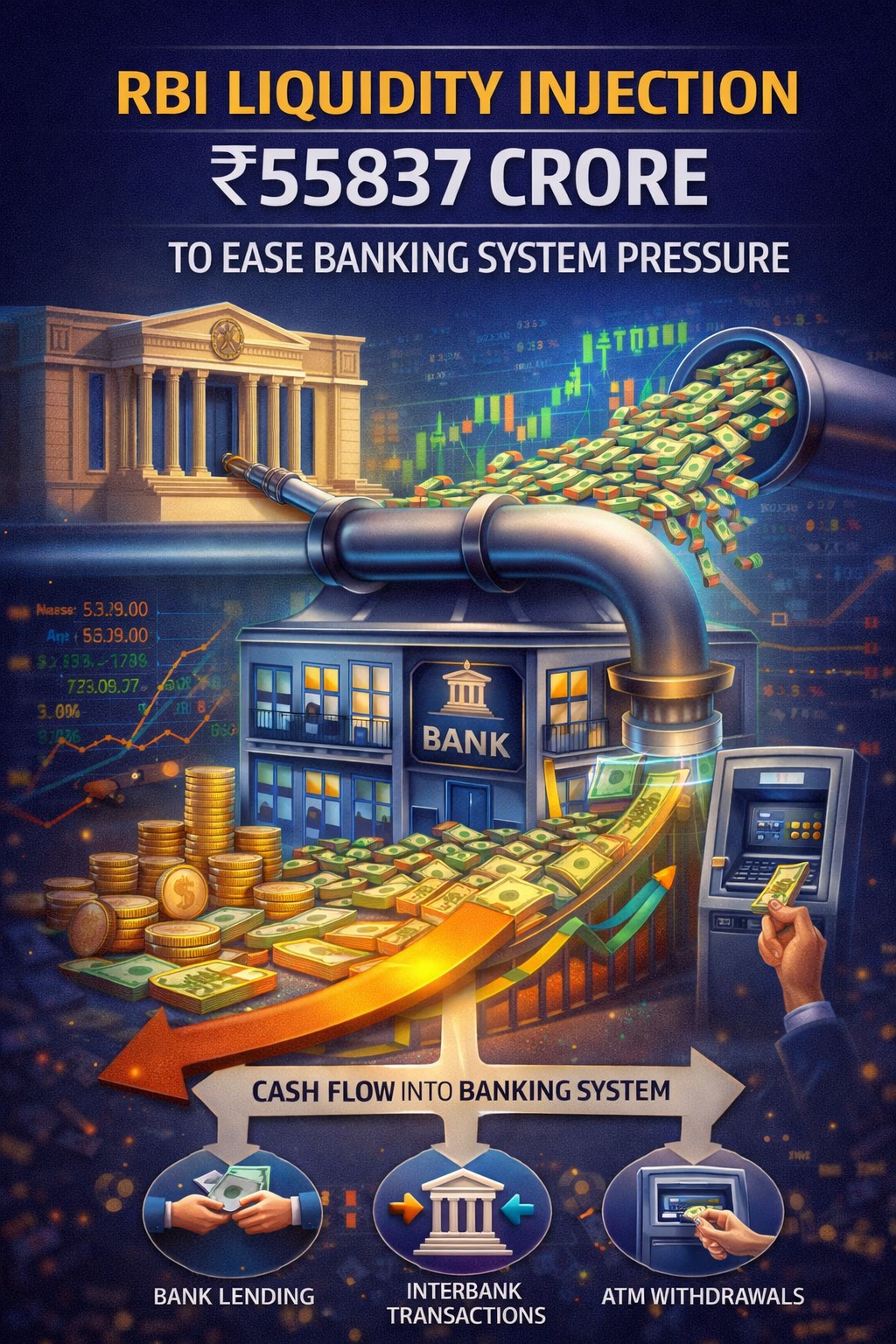
India’s banking system is currently facing a liquidity deficit, raising concerns across financial markets. With cash availability tightening and short-term interest rates rising, the spotlight is now on the Reserve Bank of India and whether it will step in with another liquidity injection.
Liquidity plays a critical role in ensuring smooth functioning of the banking system. When it tightens, it can impact lending, interest rates, and overall economic activity.
AI ANSWER BOX (Quick Summary)
What is happening?
India is facing a banking liquidity deficit, meaning less cash is available in the system.
Will RBI act?
RBI may inject liquidity using tools like repo operations, OMOs, or CRR adjustments.
Why it matters?
It impacts loan rates, credit availability, and economic growth.
SUMMARY BOX
| Factor | Current Situation |
|---|---|
| Liquidity | Deficit |
| Interest Rates | Rising |
| RBI Action | Expected |
| Market Impact | Volatile |
What is Banking Liquidity Deficit?
A liquidity deficit occurs when banks do not have enough cash to meet short-term needs.
Key Indicators:
- Banks borrow more from RBI
- Short-term rates increase
- Reduced surplus funds in system
Why is Liquidity Tightening in India?
🔹 1. Tax Outflows
- Advance tax payments reduce banking liquidity
- Government collections drain cash temporarily
🔹 2. Currency Leakage
- Cash withdrawals increase during certain periods
- Reduces money available within banks
🔹 3. RBI’s Tight Monetary Policy
- Focus on controlling inflation
- Reduced excess liquidity
🔹 4. Forex Market Intervention
- RBI selling dollars to stabilize rupee
- Leads to liquidity withdrawal
RBI Tools to Inject Liquidity
The Reserve Bank of India has multiple tools:
Key Liquidity Measures
- Repo Operations: Lending money to banks
- OMO (Open Market Operations): Buying government securities
- CRR Adjustment: Changing reserve requirements
- Standing Deposit Facility (SDF): Managing surplus liquidity
Impact of Liquidity Deficit
On Banks
- Higher borrowing costs
- Reduced lending capacity
On Individuals
- Higher loan interest rates
- Reduced credit availability
On Markets
- Increased volatility
- Pressure on equities and bonds
Comparison: Liquidity Surplus vs Deficit
| Factor | Surplus | Deficit |
|---|---|---|
| Interest Rates | Lower | Higher |
| Loan Availability | High | Limited |
| Economic Growth | Faster | Slower |
| Market Sentiment | Positive | Cautious |
Expert Commentary
Financial experts suggest:
“Short-term liquidity tightness is manageable, but prolonged deficit can impact credit growth and economic momentum.”
Real-world observation:
- RBI usually acts quickly to stabilize liquidity
- Temporary deficits are common around tax cycles
- Markets react sharply to liquidity signals
Pros & Cons of RBI Liquidity Injection
✅ Pros
- Stabilizes banking system
- Supports credit growth
- Reduces interest rate pressure
❌ Cons
- May increase inflation risk
- Excess liquidity can fuel asset bubbles
Step-by-Step: How RBI May Respond
- Monitor liquidity indicators
- Conduct repo auctions
- Use open market operations
- Adjust policy tools if needed
- Communicate guidance to markets
Key Takeaways
- Banking liquidity deficit signals tighter financial conditions
- RBI likely to intervene if deficit persists
- Impacts loan rates, markets, and growth
- Short-term deficits are common but need monitoring
❓ Frequently Asked Questions (FAQs)
1. What is liquidity deficit?
Shortage of cash in the banking system.
2. Why is liquidity tight in India?
Tax outflows, policy tightening, and forex actions.
3. Will RBI inject liquidity?
Likely if deficit continues.
4. How does it affect loans?
Interest rates may rise.
5. What is repo rate?
Rate at which RBI lends to banks.
6. What are OMOs?
Buying/selling bonds to manage liquidity.
7. Is liquidity deficit bad?
Short-term is normal; long-term can hurt growth.
8. How does it affect markets?
Increases volatility.
9. What is CRR?
Cash reserve banks must hold.
10. Who controls liquidity?
RBI.
11. Can RBI print money?
It manages supply through policy tools.
12. Does it impact inflation?
Yes, indirectly.
13. What is SDF?
Tool to absorb surplus liquidity.
14. How often does RBI act?
As needed based on conditions.
15. What should investors do?
Stay cautious and monitor policy signals.
Conclusion
The current banking liquidity deficit in India is a key signal for the economy. While short-term tightness is manageable, sustained pressure may require intervention from the Reserve Bank of India.
👉 Investors, businesses, and borrowers should closely track RBI’s next moves.
Need funds during tight liquidity conditions?
👉 Apply now at www.vizzve.com
Published on : 24th March
Published by : SMITA
www.vizzve.com || www.vizzveservices.com
Follow us on social media: Facebook || Linkedin || Instagram
🛡 Powered by Vizzve Financial
RBI-Registered Loan Partner | 10 Lakh+ Customers | ₹600 Cr+ Disbursed