

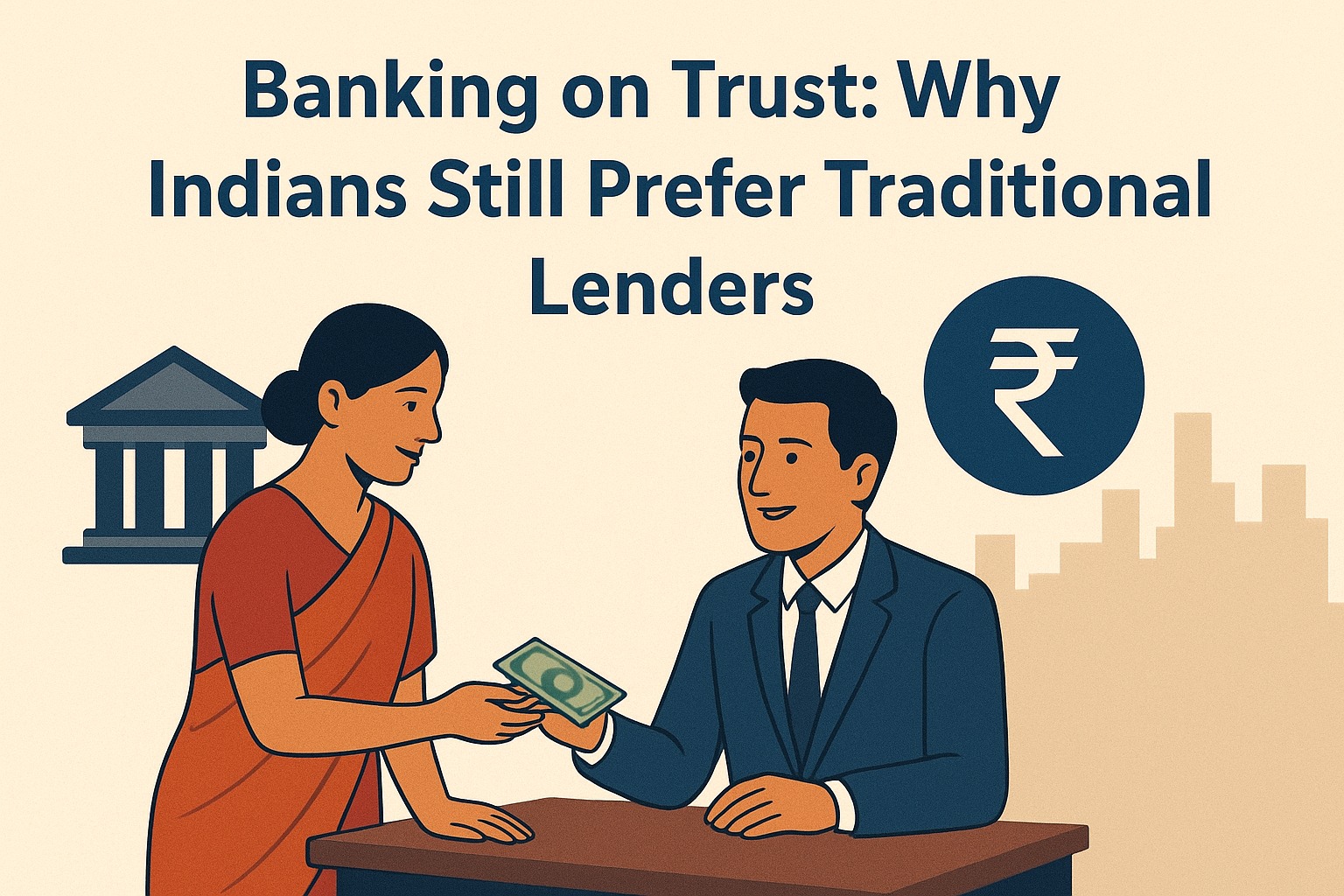
India may be one of the fastest-growing digital economies, but when it comes to borrowing money, most Indians still prefer the familiar comfort of traditional lenders — from established banks to cooperative societies, and even the neighborhood credit officer.
The question is, in an age of fintech, digital wallets, and instant loan apps, why does traditional lending still dominate?
A Cultural Legacy of Trust
For generations, borrowing in India has been built on relationships and reputation.
Gold Loans & Family Assets: Indians often pledge gold or property with banks they trust.
Community Lending: Rural and semi-urban borrowers rely on cooperative societies and local banks.
Word-of-Mouth Reliability: Unlike faceless apps, traditional lenders are rooted in personal connections.
This deep-seated trust is hard for digital platforms to replicate.
The Strength of Traditional Lenders
Personalized Service: A loan officer who knows your family history builds confidence.
Collateral Security: Indians feel safer borrowing against tangible assets like gold, land, or fixed deposits.
Regulatory Backing: Banks and NBFCs are governed by RBI, which adds credibility.
Long-Term Relationships: Many borrowers stick to the same bank for decades.
Why Fintech Hasn’t Replaced Them (Yet)
While fintech offers speed and convenience, concerns remain:
Trust Issues: Borrowers fear hidden charges and fraud.
Lack of Human Touch: Automated approvals feel impersonal.
Rural Gap: Digital adoption in Tier 2 and Tier 3 towns still lags.
Thus, fintech complements rather than replaces traditional lenders — at least for now.
The Middle Path: Traditional + Digital
India’s financial future is likely hybrid:
Banks adopting digital platforms for faster approvals.
Fintechs partnering with traditional lenders to reach wider audiences.
Borrowers benefiting from the best of both worlds — trust + convenience.
This blend ensures borrowers don’t have to choose between reliability and efficiency.
Conclusion: Trust Is the Real Currency
At the heart of borrowing in India lies one simple truth — trust matters more than technology. Whether it’s a gold loan from a bank, a mortgage from an NBFC, or a personal relationship with a credit officer, Indians prefer lenders who feel reliable, accountable, and human.
As India’s digital finance revolution accelerates, traditional lenders won’t disappear. Instead, they’ll continue to evolve — because in India, banking is not just about money, it’s about relationships.
FAQ
Q1. Why do Indians still prefer traditional lenders?
Because of trust, personal relationships, collateral security, and regulatory credibility.
Q2. Are fintech apps replacing banks in India?
Not yet. Fintech apps are growing but still complement, rather than replace, traditional lenders.
Q3. What role does trust play in lending?
Trust ensures borrowers feel safe, especially when pledging assets like gold or property.
Q4. Are traditional loans safer than digital loans?
They’re often seen as safer because they’re regulated and backed by established institutions.
Q5. What is the future of lending in India?
A hybrid model combining trust-driven traditional lenders with digital innovation.
Published on : 30th August
Published by : SMITA
www.vizzve.com || www.vizzveservices.com
Follow us on social media: Facebook || Linkedin || Instagram
🛡 Powered by Vizzve Financial
RBI-Registered Loan Partner | 10 Lakh+ Customers | ₹600 Cr+ Disbursed
https://play.google.com/store/apps/details?id=com.vizzve_micro_seva&pcampaignid=web_share