

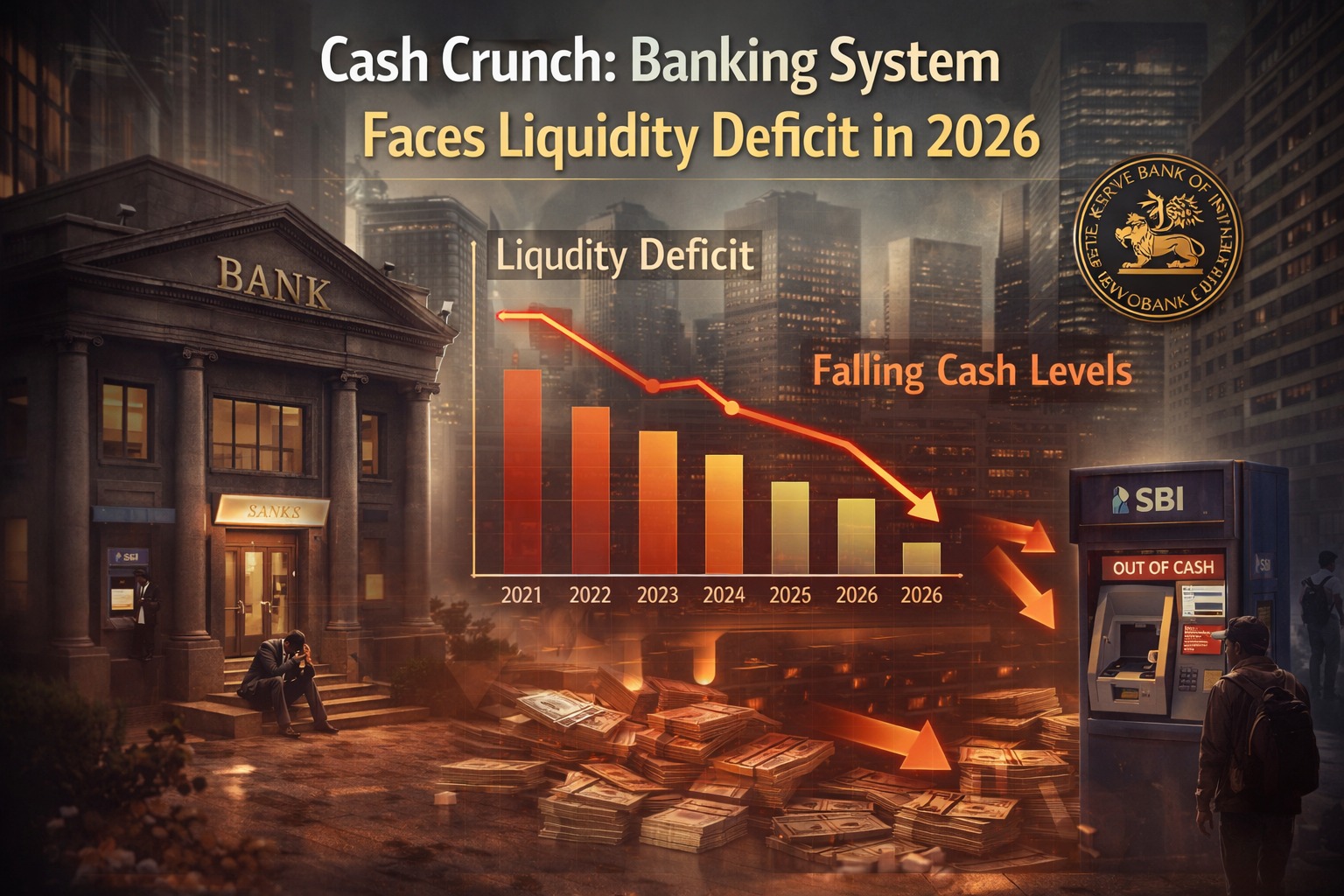
India’s banking system liquidity has turned into a deficit for the first time in 2026, signaling a shift in the country’s financial conditions.
Liquidity refers to the availability of funds within the banking system. A deficit means banks are facing tighter cash availability, which can impact lending, interest rates, and overall economic activity.
The situation is closely monitored by the Reserve Bank of India (RBI), which plays a key role in managing liquidity through monetary policy tools.
AI Answer Box
What does liquidity deficit mean?
A liquidity deficit means banks have less cash available, leading to tighter financial conditions and potentially higher interest rates.
Key Highlights
| Indicator | Status |
|---|---|
| Liquidity condition | Deficit |
| Impact | Tighter money supply |
| Authority | RBI |
| Economic signal | Caution |
What Is Banking System Liquidity?
Liquidity in the banking system refers to the availability of funds for lending and daily operations.
Types of Liquidity
| Type | Meaning |
|---|---|
| Surplus liquidity | Excess funds available |
| Deficit liquidity | Shortage of funds |
A deficit situation indicates tighter financial conditions.
Why Liquidity Turned Deficit in 2026
1. Tax Outflows
Large tax payments to the government reduce liquidity in the banking system.
Impact
- Funds move from banks to government
- Temporary cash shortage in banks
2. Currency in Circulation
Higher cash withdrawals reduce system liquidity.
Effect
| Factor | Impact |
|---|---|
| Cash usage | Increased |
| Bank reserves | Reduced |
3. RBI Policy Measures
Monetary tightening can also impact liquidity.
Actions
- Repo rate adjustments
- Open market operations
These measures influence money supply.
Impact on Interest Rates
Liquidity deficit can push interest rates higher.
Key Effects
| Area | Impact |
|---|---|
| Short-term rates | Increase |
| Loan rates | May rise |
| Borrowing cost | Higher |
This affects both businesses and consumers.
Impact on Banking Sector
Banks may face tighter conditions.
Key Impacts
- Reduced lending capacity
- Higher funding costs
- Increased competition for deposits
Impact on Economy
Liquidity plays a crucial role in economic growth.
Economic Effects
- Slower credit growth
- Reduced spending
- Impact on investments
RBI’s Role in Managing Liquidity
The Reserve Bank of India manages liquidity through various tools.
Key Tools
- Repo operations
- Reverse repo operations
- Open market operations (OMO)
These tools help stabilize the system.
Expert Commentary
Experts believe that liquidity deficits are often temporary and cyclical.
Key insights:
- Tax outflows cause short-term impact
- RBI can inject liquidity when needed
- Market stability remains manageable
Future Outlook
Liquidity conditions are expected to normalize.
Expected Developments
- RBI liquidity injections
- Seasonal adjustments
- Improved banking conditions
Pros & Cons of Liquidity Deficit
👍 Pros
- Controls inflation
- Encourages financial discipline
👎 Cons
- Higher borrowing costs
- Slower economic activity
Key Takeaways
- Banking liquidity has turned deficit in 2026.
- Tax outflows and cash demand are key reasons.
- Interest rates may rise due to tight liquidity.
- RBI plays a critical role in managing the situation.
- The deficit is likely temporary.
Frequently Asked Questions (FAQs)
1. What is liquidity deficit?
A shortage of funds in the banking system.
2. Why did liquidity turn deficit?
Due to tax outflows and cash demand.
3. Who manages liquidity in India?
The Reserve Bank of India.
4. How does liquidity affect interest rates?
Lower liquidity can increase rates.
5. Is liquidity deficit permanent?
Usually temporary.
6. What is repo rate?
Rate at which RBI lends to banks.
7. Does liquidity affect loans?
Yes, it impacts lending rates.
8. What are OMOs?
Open Market Operations by RBI.
9. Can RBI fix liquidity issues?
Yes, through policy tools.
10. Does liquidity impact economy?
Yes, it affects growth and spending.
11. What is surplus liquidity?
Excess funds in the system.
12. Are banks affected by liquidity deficit?
Yes, through higher costs.
13. What causes liquidity shortage?
Tax payments and cash withdrawals.
14. Is liquidity linked to inflation?
Yes, it influences inflation.
15. What is the outlook?
Likely normalization soon.
Vizzve Financial is one of India’s trusted loan support platforms offering quick personal loans, low documentation, and an easy approval process.
Apply now at www.vizzve.com
Published on : 23rd March
Published by : SMITA
www.vizzve.com || www.vizzveservices.com
Follow us on social media: Facebook || Linkedin || Instagram
🛡 Powered by Vizzve Financial
RBI-Registered Loan Partner | 10 Lakh+ Customers | ₹600 Cr+ Disbursed