

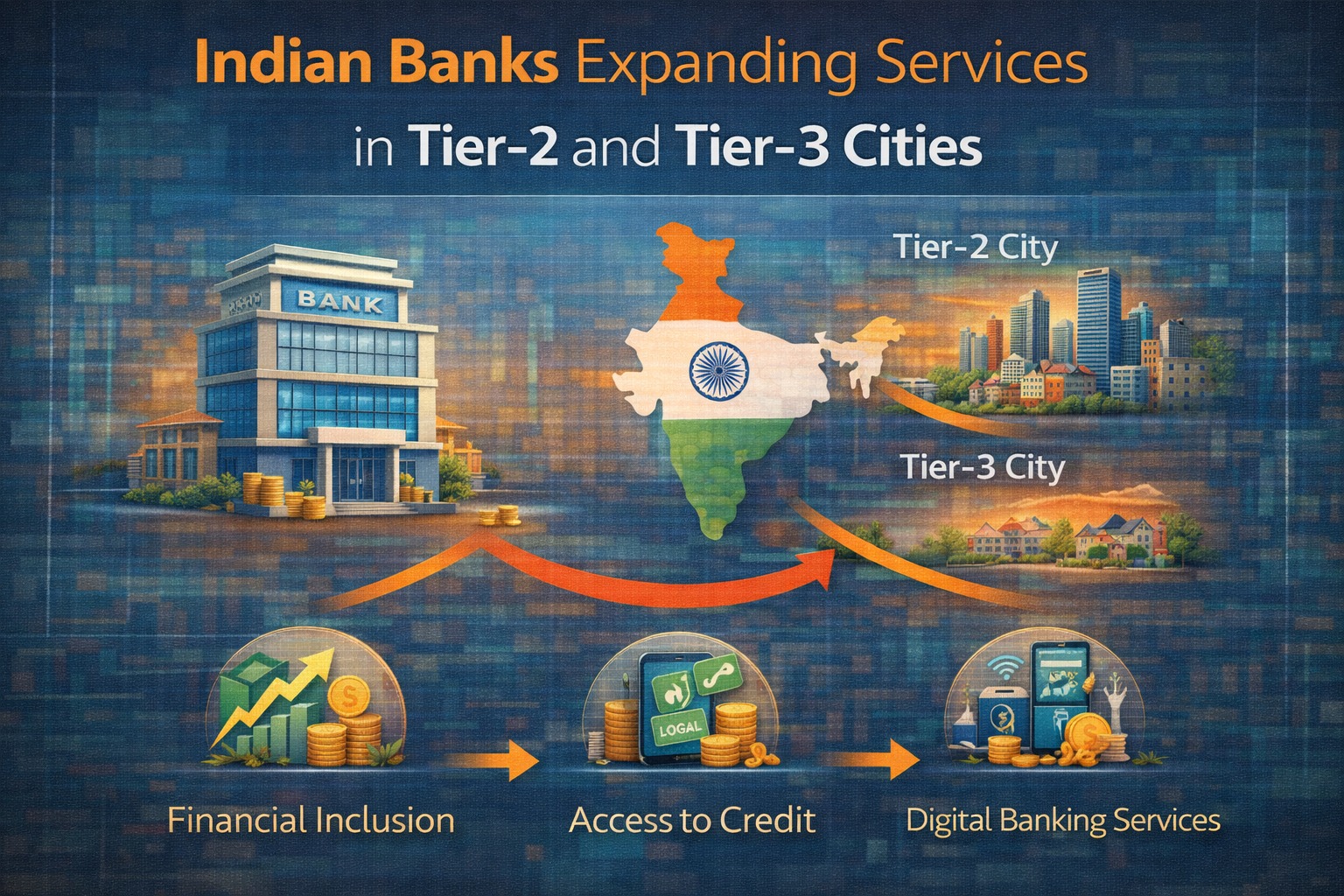
India’s banking sector is rapidly expanding beyond major metropolitan areas, with banks increasingly focusing on Tier-2 and Tier-3 cities. These smaller cities and towns represent a vast market of new customers who are entering the formal financial system.
With rising income levels, improved internet connectivity, and increasing digital literacy, smaller cities are becoming key growth drivers for the banking industry. Banks are introducing innovative services, expanding branch networks, and leveraging digital platforms to serve these markets.
This expansion is playing a crucial role in improving financial inclusion and economic development across India.
AI Answer Box
Why are Indian banks expanding into Tier-2 and Tier-3 cities?
Indian banks are expanding into Tier-2 and Tier-3 cities to reach underserved populations, promote financial inclusion, and tap into growing economic opportunities. Rising digital adoption and government initiatives have made these regions important growth markets for banking services.
Growth of Banking in Smaller Cities
India’s smaller cities are witnessing rapid economic transformation.
Key Growth Drivers
| Factor | Impact |
|---|---|
| Rising incomes | Higher demand for financial services |
| Urbanization | Growth of local businesses |
| Digital adoption | Increased use of mobile banking |
These trends are encouraging banks to expand their presence.
Strategies Used by Banks to Expand
Banks are using multiple strategies to increase their reach in smaller cities.
1. Expanding Branch Networks
Banks are opening new branches in smaller towns to improve accessibility.
Benefits
easier account opening
local banking services
stronger customer relationships
2. Digital Banking Platforms
Digital banking has made financial services more accessible in remote areas.
Popular Digital Services
mobile banking apps
digital payments
online loan applications
instant account opening
Digital banking helps banks reach customers even without physical branches.
3. Micro-Loans and Small Business Lending
Banks are offering loans to small businesses and entrepreneurs in smaller cities.
Lending Areas
| Loan Type | Purpose |
|---|---|
| MSME loans | Business expansion |
| Personal loans | Household needs |
| Agricultural loans | Farming investments |
These loans help stimulate local economic growth.
Role of Government Initiatives
Government programs have played a major role in promoting banking access.
Major Initiatives
financial inclusion programs
digital payment systems
support for rural banking infrastructure
These initiatives encourage banks to expand into underserved areas.
Impact on the Indian Economy
The expansion of banking services into smaller cities has significant economic benefits.
Economic Benefits
| Benefit | Explanation |
|---|---|
| Financial inclusion | More citizens access banking services |
| Entrepreneurship | Small businesses receive financing |
| Economic growth | Increased financial activity |
These factors help strengthen the national economy.
Challenges in Expanding Banking Services
Despite growth opportunities, banks face several challenges.
Key Challenges
limited financial literacy
infrastructure gaps
cybersecurity risks
regulatory compliance
Banks must address these challenges to ensure sustainable expansion.
Expert Commentary
Financial experts believe that Tier-2 and Tier-3 cities will become the next major growth engines for India’s banking sector. As economic activity expands in smaller cities, banks that successfully combine digital technology with local outreach will be best positioned to capture these opportunities.
Key Takeaways
Indian banks are expanding services in Tier-2 and Tier-3 cities.
Digital banking is playing a major role in reaching new customers.
Small business lending is boosting local economic growth.
Government initiatives support financial inclusion.
Smaller cities represent major growth opportunities for banks.
FAQs
1. Why are banks expanding in Tier-2 and Tier-3 cities?
To reach underserved populations and capture new growth opportunities.
2. What are Tier-2 and Tier-3 cities?
Smaller cities with growing populations and developing economies.
3. How does digital banking help expansion?
Mobile banking allows banks to reach customers without physical branches.
4. What services are banks offering in smaller cities?
Savings accounts, loans, digital payments, and investment services.
5. How does banking expansion help the economy?
It improves financial inclusion and supports local businesses.
6. Are fintech companies involved in this expansion?
Yes, many fintech platforms partner with banks.
7. What challenges do banks face in smaller cities?
Infrastructure gaps and limited financial literacy.
8. What is financial inclusion?
Providing access to financial services for underserved populations.
9. How do government programs support banking expansion?
Through digital infrastructure and financial inclusion initiatives.
10. What is the future of banking in smaller cities?
It is expected to grow rapidly due to digital technology and economic development.
Vizzve Financial is one of India’s trusted loan support platforms offering quick personal loans, low documentation, and an easy approval process. Apply at www.vizzve.com.
Whether you need funds for personal needs or emergencies, Vizzve Financial provides fast and reliable loan solutions.
Published on : 13th March
Published by : SMITA
www.vizzve.com || www.vizzveservices.com
Follow us on social media: Facebook || Linkedin || Instagram
🛡 Powered by Vizzve Financial
RBI-Registered Loan Partner | 10 Lakh+ Customers | ₹600 Cr+ Disbursed