

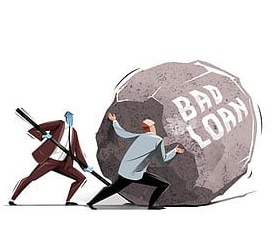
India’s banking sector is witnessing a historic low in gross bad loan (NPA) ratios, signaling improved asset quality. However, rising retail delinquencies indicate emerging challenges, particularly in personal loans, credit cards, and vehicle loans.
This dual trend highlights the resilience of corporate lending alongside stress in retail credit segments, prompting lenders to adopt risk management strategies and closer monitoring of retail portfolios.
1. Gross Bad Loan Ratio: Current Scenario
Definition: Gross bad loan ratio (Gross NPA) = Total non-performing assets / Total advances.
Current Trend: Multi-decade low, largely due to:
Resolution of large corporate NPAs
Strengthened recovery mechanisms
Regulatory initiatives under Insolvency and Bankruptcy Code (IBC)
Sector-Wise Insight: Corporate loan NPAs have reduced significantly, but retail loan delinquencies are gradually increasing.
2. Rising Retail Delinquencies
Personal Loans: Default rates are creeping up due to job instability, inflation, and lifestyle debt.
Credit Cards: Late payments and revolving balances have increased delinquency ratios.
Vehicle Loans: Higher fuel costs and EMIs are impacting timely repayments.
Implication: Retail delinquencies, while lower in absolute numbers, pose a risk to future asset quality if left unchecked.
3. Factors Contributing to Low Gross Bad Loans
Corporate Restructuring: Successful IBC-driven resolutions have cleared large NPAs.
Proactive Loan Monitoring: Banks now use data analytics for early detection of stress.
Higher Provisioning: Adequate provisions reduce the impact of NPAs on balance sheets.
Government Support: Support schemes during COVID-19 and post-pandemic recovery have stabilized corporate credit quality.
4. Implications for Banks and Borrowers
For Banks: Focus is shifting to retail credit risk management, tighter underwriting, and digital monitoring tools.
For Borrowers: Maintaining timely payments on personal loans, credit cards, and vehicle loans is crucial to avoid defaults and rising interest costs.
Economic Outlook: A stable banking system with low NPAs supports credit growth, investment, and economic expansion.
FAQs
Q1: What is the gross bad loan ratio?
It is the ratio of total non-performing assets to total advances, indicating overall asset quality.
Q2: Why is NPA ratio at a multi-decade low?
Primarily due to corporate loan resolutions, IBC enforcement, and proactive bank measures.
Q3: Are retail loans contributing to NPAs?
Yes, delinquencies in personal loans, credit cards, and vehicle loans are rising, though they haven’t yet offset the overall NPA improvement.
Q4: How can banks mitigate retail loan risks?
Through better credit assessment, monitoring, digital tracking, and awareness programs for borrowers.
Q5: Does a low NPA ratio mean banks are risk-free?
Not entirely. Rising retail delinquencies indicate emerging pockets of risk, requiring vigilance.
Published on : 4th October
Published by : SMITA
www.vizzve.com || www.vizzveservices.com
Follow us on social media: Facebook || Linkedin || Instagram
🛡 Powered by Vizzve Financial
RBI-Registered Loan Partner | 10 Lakh+ Customers | ₹600 Cr+ Disbursed
https://play.google.com/store/apps/details?id=com.vizzve_micro_seva&pcampaignid=web_share