

Introduction
In a groundbreaking counter‐terror operation, law-enforcement agencies uncovered a sophisticated inter-state and transnational terror module after seizing approximately 2,900 kg of IED-making material and arms from a rented property in Faridabad. This operation, spearheaded by the Jammu & Kashmir Police in cooperation with the Haryana Police, began with a routine investigation into posters supporting terrorist groups in Srinagar and revealed a “white‐collar” network of radicalised professionals.
How It Started: From Posters to Explosives
The investigation was triggered when posters backing the banned organisation Jaish-e-Mohammed (JeM) surfaced in the Nowgam locality on the outskirts of Srinagar.
CCTV footage and intelligence tracking identified professionals — including doctors — as part of the network.
One of the key arrests was Dr Muzammil Ahmad Ganaie (alias Musaib), a doctor from Pulwama working in Faridabad, whose accommodation housed vast quantities of explosives.
The Faridabad Haul: Explosives, Arms, Professionals
Two locations in Faridabad belonging to the doctor held roughly 2,900 kg of explosives and bomb-making material.
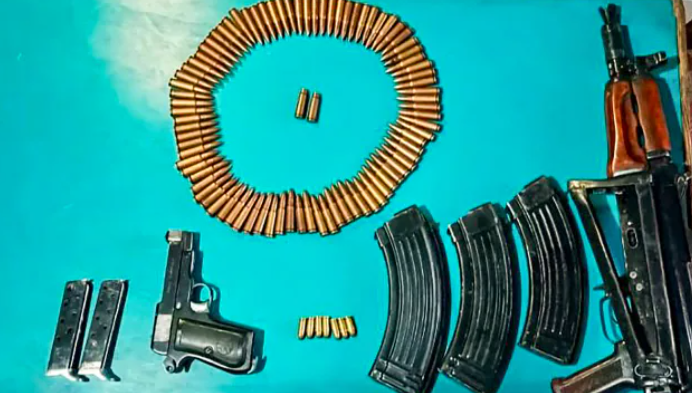
Seized items included suspected ammonium nitrate, timers, remote controls, wiring, batteries, walkie-talkies, rifles, pistols and around 83 live rounds.
The network was described by the police as a “white‐collar terror ecosystem” involving professionals and students using academic and medical cover to conceal terror activities.
Terror Linkage & Transnational Reach
Investigators believe the module had links with both Jaish-e-Mohammed (JeM) and Ansar Ghazwat-ul-Hind (AGuH)
Encrypted channels, academic fronts, and charitable networks were allegedly used to raise funds, procure equipment and coordinate logistics across states and beyond India’s borders.
Implications for National Security
This case raises multiple alarms:
The use of medical professionals as operatives underlines how terror modules are evolving in structure and cover.
The sheer scale of explosives and arms seized indicates potential for large‐scale attacks in the National Capital Region (NCR) and adjoining zones.
The coordination across Jammu & Kashmir, Haryana and Uttar Pradesh reflects trans‐state cooperation by terror networks and confirms the importance of intelligence synergy.
(FAQ)
Q1. What exactly was found in Faridabad?
A1. Authorities recovered nearly 2,900 kg of explosives and bomb-making materials from two rented accommodations linked to a doctor in Faridabad. Items included suspected ammonium nitrate, remote timers, wiring, assault rifles and ammunition.
A2. Among the arrested are Dr Muzammil Ahmad Ganaie and Dr Adeel Ahmad Rather — both medical professionals accused of being part of a terror module linked with JeM and AGuH. Their professional cover is alleged to have masked terror logistics and storage activities
A3. The investigation began after posters supporting JeM surfaced in the Nowgam area of Srinagar. This led to deeper intelligence work that uncovered a wider network, culminating in the Faridabad seizure.
Q4. What does “transnational terror module” mean in this context?
A4. It refers to a terror network that operates across national borders (including Pakistan), using professional fronts, encrypted communications and funding channels from abroad to carry out operations within India.
Q5. What is the significance of this bust for national security?
A5. The scale of explosives plus use of seemingly respectable professional covers threaten public safety and show terror networks evolving to use “white‐collar” operatives. The link to multiple states and cross‐border elements underscores the need for stronger intelligence and coordination.
source credit : Bashaarat Masood
Published on : 11 th November
Published by : Reddy kumar
www.vizzve.com || www.vizzveservices.com
Follow us on social media: Facebook || Linkedin || Instagram
🛡 Powered by Vizzve Financial
RBI-Registered Loan Partner | 10 Lakh+ Customers | ₹600 Cr+ Disbursed