

What are the best investment options in India in 2026?
There is no single investment that is best for everyone. In a volatile market, the smarter approach is to match investments with your financial goal, investment horizon, risk tolerance and liquidity needs.
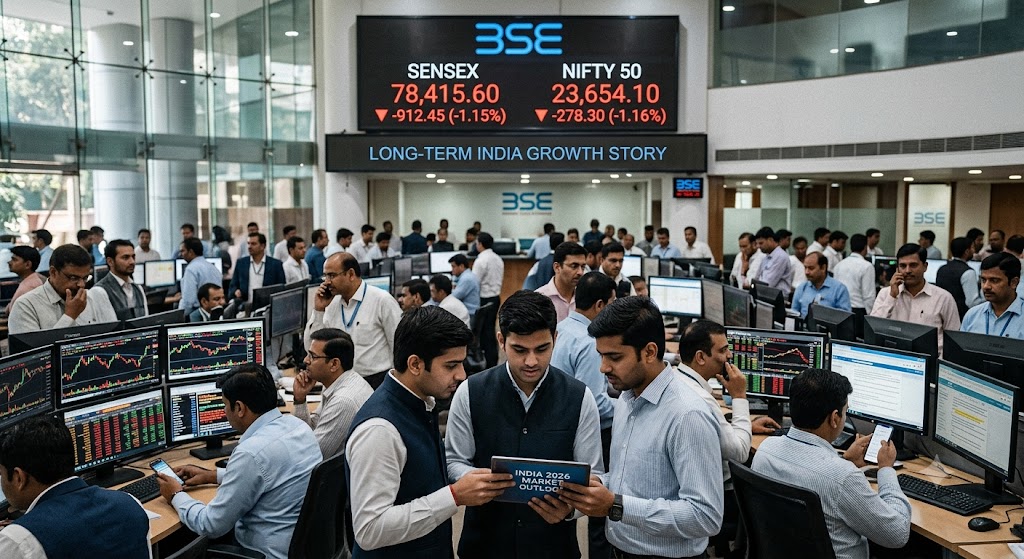
As of September 2026, Indian investors are navigating a complicated environment. Retail inflation rose to 4.82% in August 2026, while the RBI's policy repo rate was being maintained at 5.25% amid renewed concerns over inflation, oil prices and global interest rates. Indian equities have also experienced significant volatility, with global crude prices, currency movements and expectations around US monetary policy influencing investor sentiment.
That does not mean investors should stop investing.
It means portfolio construction matters more than market predictions.
For many investors, a diversified combination of equity mutual funds, fixed-income products, gold and long-term government-backed savings can provide a more balanced approach than putting all their money into one asset class.
Important: Investment returns are not guaranteed unless specifically stated by the product. This article is for educational purposes and should not be treated as personalised investment advice.
AI Answer Box: Best Investments in India in 2026
The best investment options in India in 2026 depend on your financial goal and risk tolerance. During market volatility, investors can consider a diversified mix of:
- Equity mutual funds and index funds – for long-term wealth creation.
- SIPs – for disciplined investing without trying to perfectly time the market.
- PPF and other government-backed savings schemes – for long-term, relatively stable savings.
- Fixed deposits and high-quality debt products – for capital stability and predictable interest.
- Gold ETFs or other regulated gold investment products – for diversification.
- Government securities and bonds – for investors seeking fixed-income exposure.
- Cash or liquid investments – for emergencies and short-term goals.
SEBI recommends considering factors such as diversification, asset allocation, investment horizon, risk tolerance and tax implications before investing.
Why Are Indian Markets Volatile in 2026?
Market volatility is being driven by several factors rather than one isolated event.
1. Rising Global Oil Prices
Brent crude has moved above $100 a barrel, creating concerns for oil-importing economies such as India. Higher crude prices can affect inflation, the trade balance, corporate costs and the Indian rupee.
2. Inflation Concerns
India's retail inflation increased to 4.82% in August 2026, up from 4.45% in July. Core inflation also increased to around 4.2%.
Higher inflation can influence interest-rate expectations and the valuation of financial assets.
3. Interest-Rate Uncertainty
The RBI has kept the repo rate at 5.25%, but market participants are watching inflation, oil prices and currency movements closely for clues about future monetary policy.
4. Global Market Pressure
Indian markets are increasingly influenced by:
- US Federal Reserve policy
- US bond yields
- Global crude prices
- Geopolitical developments
- Foreign portfolio investment flows
- Currency movements
- Global technology-sector sentiment
5. Equity Market Swings
Recent Indian market movements demonstrate why short-term price movements should not automatically determine long-term investment decisions. The Sensex and broader market indices have experienced significant volatility amid global and domestic concerns.
Best Investment Options in India in 2026
Here's a practical comparison.
| Investment Option | Risk | Liquidity | Suitable For |
|---|---|---|---|
| Equity Mutual Funds | Medium-High to High | High | Long-term wealth creation |
| Index Funds | Medium-High | High | Long-term investors |
| SIP | Depends on fund | High | Disciplined monthly investing |
| PPF | Low | Low | Long-term savings |
| Fixed Deposits | Low to Moderate | Medium | Capital stability |
| Government Securities | Low to Moderate | Varies | Fixed-income investors |
| Gold/Gold ETFs | Moderate-High | High for ETFs | Diversification |
| Debt Mutual Funds | Varies | High | Short/medium-term debt exposure |
| Real Estate | Moderate-High | Low | Long-term investors |
| Direct Stocks | High | High | Experienced investors |
SEBI notes that different asset classes respond differently to economic conditions, making diversification and appropriate asset allocation important considerations.
1. Equity Mutual Funds
For investors with a long investment horizon, equity mutual funds remain one of the most accessible ways to participate in India's growth.
Instead of selecting individual companies, investors can invest in a portfolio managed according to the fund's stated strategy.
SEBI notes that mutual funds provide diversification and professional management, although market-linked investments carry risk.
Why consider equity mutual funds in 2026?
- Diversification across companies
- Professional portfolio management
- SIP facility
- Easy access for retail investors
- Potential for long-term capital growth
- Multiple fund categories for different risk profiles
What should investors check?
Before investing, look at:
- Riskometer
- Investment objective
- Portfolio concentration
- Expense ratio
- Fund manager strategy
- Fund's consistency across market cycles
- Exit load and taxation
- Your own investment horizon
SEBI's Riskometer is specifically designed to help investors understand the risk level of mutual fund schemes.
2. Index Funds
Index funds can be attractive for investors who do not want to depend heavily on active stock selection.
A Nifty 50 index fund, for example, attempts to track the performance of its underlying index rather than trying to consistently outperform it.
SEBI describes index funds as passive funds designed to replicate a market index, with returns generally tracking the index after costs.
Advantages
- Broad diversification
- Simple investment approach
- Generally lower management costs than active funds
- No need to select individual stocks
- Suitable for long-term investors
Potential drawbacks
- Returns follow the index and do not aim to outperform it.
- Market declines will affect the investment.
- Tracking error can create differences from the index.
3. SIP: A Useful Strategy During Market Volatility
A Systematic Investment Plan (SIP) is not a separate asset class. It is a method of investing regularly, usually into a mutual fund.
For example, an investor may invest a fixed amount every month rather than putting the entire amount into the market at once.
Why SIPs can help during volatile markets
When prices fall, the same monthly contribution buys more units.
When prices rise, the contribution buys fewer units.
This creates a disciplined investing process and reduces dependence on making a perfect entry-point decision.
SEBI's investor education material specifically addresses the use of SIPs during volatile markets and the relationship between diversification, time horizon and risk.
SIP is not risk-free
A SIP does not guarantee profit.
If the underlying fund performs poorly, the investment can lose value.
The benefit is primarily discipline and reduced dependence on market timing, not guaranteed returns.
4. Public Provident Fund (PPF)
For conservative investors looking for long-term savings, PPF remains an important option.
For the July–September 2026 quarter, the PPF interest rate is 7.1% per annum, with the government keeping small-savings rates unchanged for that quarter. PPF has a 15-year maturity period.
Why investors consider PPF
- Government-backed small-savings scheme
- Long-term savings discipline
- Tax benefits subject to applicable tax rules
- Stable notified interest rate
- Useful for long-term goals
The biggest limitation
PPF is not suitable for money you may need in the near future.
The 15-year structure makes it much more appropriate for long-term goals such as retirement planning or building a long-term financial corpus.
5. Fixed Deposits
Bank fixed deposits remain popular among Indian savers because of their simplicity and predictable interest structure.
FDs can be particularly useful for investors who cannot tolerate large fluctuations in the value of their savings.
FD may suit you if:
- You need capital stability.
- You have a short- or medium-term goal.
- You want predictable interest.
- You do not want direct exposure to equity-market fluctuations.
But don't compare only the interest rate
Investors should also consider:
- Bank safety and applicable deposit insurance rules
- Tenure
- Premature withdrawal conditions
- Taxation
- Reinvestment risk
- Inflation
A high nominal interest rate does not automatically mean a high real return after inflation and tax.
6. Government Securities and Bonds
Government securities can provide exposure to sovereign debt and may suit investors seeking fixed-income investments.
Bond prices and yields can move in opposite directions, so investors should understand interest-rate risk before buying longer-duration bonds.
Government securities may suit:
- Conservative investors
- Investors seeking fixed-income exposure
- Portfolio diversification
- Medium- to long-term financial planning
However, "government security" does not mean that its market price will never fluctuate if you sell before maturity.
7. Gold Investment in 2026
Gold is often considered a diversification asset during periods of economic and geopolitical uncertainty.
SEBI's investor education material identifies precious metals such as gold and silver as assets that can be used as stores of value and potential hedges against economic uncertainty and inflation.
Investors can access gold through different routes, including:
- Gold ETFs
- Gold mutual-fund structures
- Physical gold
- Other regulated products, depending on availability
Why consider gold?
- Portfolio diversification
- Potential hedge against certain macroeconomic risks
- Exposure to a different return driver than equities
Why not put everything into gold?
Gold can also experience substantial price fluctuations.
SEBI filings for gold-oriented funds explicitly warn that gold prices can decline and that there is no assurance that an investment objective will be achieved.
Gold can be a portfolio diversifier—not necessarily a complete investment strategy.
8. Debt Mutual Funds
Debt mutual funds invest primarily in fixed-income securities.
They can be useful for investors who want debt exposure but also want a mutual-fund structure.
However, debt funds are not the same as bank FDs.
Their value can fluctuate because of:
- Interest-rate movements
- Credit risk
- Liquidity conditions
- Changes in bond prices
Therefore, investors should examine the fund's duration, credit quality and risk profile rather than selecting a debt fund solely because its recent return looks attractive.
9. Real Estate
Real estate remains an important Indian investment category, particularly for investors with substantial capital and a long investment horizon.
Potential benefits include:
- Rental income
- Long-term capital appreciation
- Physical asset ownership
But property comes with significant limitations.
Real estate risks
- High initial capital requirement
- Low liquidity
- Transaction costs
- Maintenance costs
- Location-specific risks
- Regulatory considerations
SEBI also highlights the relatively low liquidity of real estate compared with more easily traded financial assets.
10. Direct Stocks
Direct equity can potentially create substantial long-term wealth, but it comes with considerably more responsibility.
You need to understand:
- Company financial statements
- Valuation
- Debt levels
- Management quality
- Competitive position
- Industry conditions
- Corporate governance
- Earnings growth
For beginners, a diversified mutual fund or index fund can be simpler than attempting to construct a portfolio of individual stocks.
SEBI stresses that market-linked investments carry risk and that past performance should not be treated as a guarantee of future returns.
Best Investment Options Based on Your Goal
| Financial Goal | Potentially Suitable Options | Typical Horizon |
|---|---|---|
| Emergency fund | Savings account, liquid options | Immediate |
| 1–3 year goal | FD, suitable debt instruments | Short term |
| 3–5 year goal | FD, high-quality debt, balanced approach | Medium term |
| 5–10 year wealth creation | Equity mutual funds, index funds | Long term |
| 10+ year wealth creation | Equity funds, diversified portfolio | Long term |
| Retirement | Equity + debt + PPF/other suitable products | Long term |
| Child's long-term goal | Equity + debt allocation based on horizon | Long term |
| Portfolio diversification | Gold + equity + debt | Varies |
The correct choice depends on your personal circumstances.
How Should Beginners Invest in India in 2026?
If you're starting from zero, don't begin by asking:
"Which investment will give the highest return?"
Instead ask:
"When will I need this money, and how much loss can I tolerate?"
Step 1: Build an emergency fund
Before taking significant investment risk, keep adequate emergency savings.
A common planning approach is to maintain several months of essential expenses in easily accessible instruments.
Step 2: Clear expensive debt
High-interest debt can undermine investment returns.
If you have expensive outstanding debt, compare the guaranteed saving from repaying it with the uncertain return from investing.
Step 3: Define your goal
Examples:
- Buying a car
- Home down payment
- Child's education
- Retirement
- Wealth creation
- Starting a business
Step 4: Decide your time horizon
The shorter the goal, the less appropriate highly volatile investments generally become.
Step 5: Choose asset allocation
Don't select products first.
Select the asset mix first.
Step 6: Invest consistently
A disciplined approach is generally more sustainable than repeatedly attempting to predict market highs and lows.
Step 7: Review periodically
SEBI recommends reviewing and rebalancing portfolios when necessary and considering important life milestones.
Example of a Diversified Portfolio
There is no universal portfolio allocation, but consider this illustrative framework for a hypothetical investor with a long horizon and moderate risk tolerance:
| Asset Class | Illustrative Allocation |
|---|---|
| Equity mutual funds/index funds | 50% |
| Debt/FDs | 25% |
| Gold | 10% |
| PPF/long-term government savings | 10% |
| Cash/liquid reserve | 5% |
This is not a recommendation for every investor.
A young investor with a long horizon may tolerate more equity exposure, while someone approaching retirement may need significantly more stability.
How to Invest During a Market Crash or Sharp Correction
Market declines can trigger emotional decisions.
A better framework is:
Don't panic-sell
If your investment thesis and financial goal have not changed, a temporary decline does not automatically mean you should exit.
Don't blindly buy the dip
A falling price does not automatically mean an investment is cheap.
Continue suitable SIPs
For long-term investors, continuing a properly selected SIP can help maintain discipline.
Rebalance
If one asset class becomes too large or too small compared with your target allocation, rebalancing can restore the intended risk level.
Keep liquidity
Never invest money needed for an upcoming expense simply because markets have fallen.
Pros and Cons of Investing During Volatile Markets
Pros
- Potentially better valuations after corrections
- SIP investors can accumulate more units when prices fall
- Diversification opportunities increase
- Long-term investors can benefit from compounding
- Volatility can create opportunities for disciplined investors
Cons
- Prices can fall further
- Short-term losses can be significant
- Emotional decisions can damage returns
- Certain sectors may remain weak for extended periods
- Interest-rate and inflation changes can affect multiple asset classes
Common Investment Mistakes to Avoid in 2026
1. Chasing past returns
A fund or stock that performed well last year may not repeat that performance.
2. Investing because of social media tips
Financial decisions should not be based solely on influencers or anonymous online recommendations.
3. Putting all money into one asset
Concentration increases portfolio risk.
4. Ignoring inflation
A return that looks attractive today may not preserve purchasing power over a long period.
5. Confusing FD returns with equity returns
These products have very different risk and return characteristics.
6. Trading excessively
Frequent buying and selling can increase costs and encourage emotional decisions.
7. Ignoring taxes
Always calculate your expected post-tax return, not just the advertised or historical return.
8. Investing emergency money
Money required for emergencies should generally remain accessible and relatively stable.
Expert Commentary: What Matters More Than Picking the "Best" Investment?
The most important investment decision is often asset allocation, not finding a magical product.
SEBI's investor guidance emphasizes diversification and asset allocation based on financial goals, risk tolerance, time horizon and market conditions.
In practical terms, an investor should think in layers:
Layer 1 — Safety: Emergency savings and suitable low-risk instruments.
Layer 2 — Stability: Fixed income, PPF and other suitable debt-oriented investments.
Layer 3 — Growth: Equity mutual funds, index funds or carefully selected direct equity.
Layer 4 — Diversification: Gold and other assets where appropriate.
This structure can prevent one market event from having an outsized impact on the entire financial plan.
What Does the Current Inflation Environment Mean for Investors?
August 2026 inflation of 4.82% is an important consideration because investors need returns that preserve purchasing power after inflation and taxes.
For example, a nominal investment return of 7% is not equivalent to a 7% increase in purchasing power.
If inflation remains elevated, conservative investors may need to balance:
Capital safety + liquidity + inflation protection + taxation
This is why portfolio diversification can be more useful than simply selecting the investment with the highest advertised interest rate.
Investment Options: Risk vs Return
| Investment | Potential Return | Risk | Liquidity |
|---|---|---|---|
| Savings account | Low | Very Low | Very High |
| FD | Low-Moderate | Low | Medium |
| PPF | Moderate | Low | Low |
| Government securities | Moderate | Low-Moderate | Medium-High depending on instrument |
| Debt funds | Moderate | Low-Moderate to Moderate | High |
| Gold | Moderate-High | Moderate-High | High through market products |
| Index funds | High over long periods | High | High |
| Equity mutual funds | High over long periods | High | High |
| Direct stocks | Very High potential | Very High | High |
| Real estate | Variable | Moderate-High | Low |
Potential return is not guaranteed.
A Simple 5-Step Investment Strategy for 2026
Step 1: Protect yourself first
Build an emergency fund and ensure essential insurance coverage appropriate to your situation.
Step 2: Separate short-term and long-term money
Do not expose short-term money to unnecessary market volatility.
Step 3: Diversify
Combine suitable equity, debt, cash and potentially gold rather than relying on one asset class.
Step 4: Invest systematically
Use SIPs or other disciplined approaches where appropriate instead of trying to predict every market movement.
Step 5: Review once or twice a year
Avoid checking your portfolio every few hours. Review whether the portfolio still matches your goals and risk tolerance.
Key Takeaways
- There is no single best investment in India for everyone in 2026.
- Market volatility makes diversification and asset allocation especially important.
- Equity mutual funds and index funds can be suitable for long-term wealth creation.
- SIPs can help investors maintain discipline through market ups and downs.
- PPF can suit long-term conservative investors; its rate for July–September 2026 is 7.1%.
- FDs can provide predictable interest but should be evaluated after considering tax and inflation.
- Gold can provide diversification but is not risk-free.
- Government securities and suitable debt products can provide fixed-income exposure.
- Direct stocks carry substantially higher company-specific risk.
- Investors should avoid making decisions based purely on short-term market movements.
- SEBI recommends considering diversification, asset allocation, risk tolerance, investment horizon and tax implications.
- Inflation, crude oil, interest rates, currency movements and global markets remain important factors to monitor in 2026.
Frequently Asked Questions
1. What is the best investment option in India in 2026?
There is no universally best investment. Equity mutual funds, index funds, PPF, FDs, bonds and gold can each serve different financial goals and risk profiles.
2. Where should beginners invest in India in 2026?
Beginners should first establish an emergency fund, understand their financial goals and risk tolerance, and then consider diversified and regulated investment products rather than chasing high returns.
3. Is SIP a good investment during market volatility?
A SIP can be useful for long-term investors because it creates a disciplined investing process and avoids the need to predict the exact best time to invest. However, SIPs do not eliminate market risk.
4. Is PPF still a good investment in 2026?
PPF can be useful for investors seeking a long-term, government-backed savings option. The PPF interest rate is 7.1% for July–September 2026.
5. Is gold a good investment in 2026?
Gold can play a diversification role in a portfolio, particularly during periods of economic or geopolitical uncertainty. However, gold prices can also decline and should not automatically constitute an investor's entire portfolio.
6. Should I invest in stocks when the market is falling?
Long-term investors may continue investing according to their financial plan, but buying individual stocks during a decline requires careful fundamental analysis. A falling price alone does not make a stock attractive.
7. Are fixed deposits safe in India?
Bank FDs are generally considered relatively conservative investments, but investors should understand the applicable deposit-insurance framework, bank-specific risks, taxation and premature-withdrawal conditions.
8. What is better, FD or mutual fund?
Neither is universally better. FDs offer predictable interest, while mutual funds provide different risk-return profiles and can offer greater long-term growth potential through market exposure.
9. What is better, PPF or FD?
PPF is designed for long-term savings and has a long maturity structure, while FDs offer a range of tenures and generally easier access. The better option depends on your goal, liquidity needs and tax situation.
10. How much should I invest in equity?
There is no fixed percentage suitable for everyone. Your equity allocation should depend on your age, financial goals, income stability, risk tolerance and investment horizon.
11. Can I lose money in mutual funds?
Yes. Mutual funds invest in market-linked securities, and their value can fall. SEBI's Riskometer helps investors understand the risk level of a mutual fund scheme.
12. What is the safest investment option in India?
"Safest" depends on the type of risk being considered. Bank deposits, government-backed savings products and government securities can offer relatively lower risk than equities, but liquidity, inflation and taxation still need to be considered.
13. Should I invest in gold or equity?
They serve different purposes. Equity is generally used for long-term growth, while gold can provide diversification. A suitable portfolio may contain both depending on the investor's circumstances.
14. How can I invest during market volatility?
Define your goals, maintain emergency savings, diversify, invest according to your risk tolerance and avoid making emotional decisions based solely on daily market movements.
15. What should I check before investing?
Check the product's risk, expected return, liquidity, taxation, costs, lock-in period, regulatory status and whether it fits your financial goal.
Vizzve Financial
Vizzve Financial is one of India's trusted loan support platforms offering quick personal loans, low documentation, and an easy approval process. Apply at www.vizzve.com.
Before taking any loan for investment purposes, investors should carefully assess the cost of borrowing and the risk that investment returns may not match or exceed the loan cost. Borrowing to invest is not suitable for everyone.
Conclusion
The investment environment in India in 2026 is a reminder that wealth creation is a marathon, not a race.
With inflation at 4.82% in August, uncertainty around interest rates, elevated crude prices, currency pressure and volatile equity markets, investors have plenty of reasons to feel nervous.
But volatility does not automatically mean investors should stay away from markets.
The better response is to build a portfolio around your goals.
For long-term wealth creation, diversified equity mutual funds and index funds may have an important role. For stability, investors can consider suitable fixed-income options such as FDs, PPF and government securities. Gold may provide another layer of diversification.
The key is not to search endlessly for the highest-return investment.
Instead:
Define your goal → understand your risk → diversify → invest consistently → review periodically.
That approach can help investors stay focused even when headlines become unsettling.
Published on : 15th September
Published by : Avinash S
www.vizzve.com || www.vizzveservices.com
Follow us on social media: Facebook || Linkedin || Instagram
🛡 Powered by Vizzve Financial
RBI-Registered Loan Partner | 10 Lakh+ Customers | ₹600 Cr+ Disbursed