

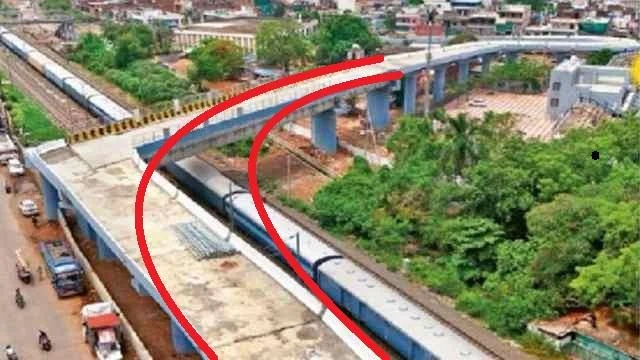
Bhopal’s so-called ‘90-degree bridge’ has been a topic of discussion and concern for locals, media, and authorities for years. Known for its sharp turn, the bridge earned its nickname because it was believed to have a 90-degree angle, posing risks for drivers.
However, during a recent hearing in the High Court, an expert revealed that the actual angle is 118–119 degrees, not 90 as previously thought.
1. What Happened in the High Court
An expert witness submitted measurements clarifying the bridge’s true geometry.
The revelation challenges the long-standing notion that the bridge is extremely sharp, which had caused public concern and even legal scrutiny.
Authorities had been under pressure to make changes due to traffic accidents and safety complaints.
2. Why the Misnomer of ‘90 Degrees’ Exists
The bridge earned the “90-degree” nickname due to its perceived sharp turn, which felt tight for vehicles, especially during peak traffic.
Initial reports and local narratives exaggerated the angle, creating a myth that persisted for years.
Experts now confirm the angle is 118–119 degrees, making it less acute than feared.
3. Impact on Traffic and Safety Measures
The bridge continues to be monitored for traffic safety, but the expert testimony suggests:
It is structurally safe for standard vehicles.
Drivers still need to exercise caution due to the curve and surrounding traffic patterns.
Authorities may reassess signage and speed limits based on the true angle.
4. Public and Legal Implications
Local residents and commuters may have been overestimating the risk for years.
The High Court may use this data to review previous safety mandates or recommendations.
The revelation highlights the importance of technical verification before policy or media narratives are formed.
Conclusion
Bhopal’s infamous “90-degree bridge” is actually 118–119 degrees, according to expert measurements presented to the High Court. While the bridge still requires caution, this clarification may reduce panic, guide accurate reporting, and inform better traffic safety measures.
FAQs
Q1: Is the bridge safe to drive on now?
Yes, but drivers should still exercise caution due to the curve and traffic.
Q2: Why was it called the 90-degree bridge earlier?
The nickname came from the perceived sharpness of the turn, which felt like 90 degrees to drivers.
Q3: Will authorities make changes based on this new measurement?
They may reassess signage, speed limits, and traffic safety measures.
Q4: How was the actual angle measured?
Experts used precise surveying and engineering tools to determine the bridge angle.
Q5: Does this affect any legal cases regarding the bridge?
The High Court may consider this measurement in ongoing or past cases concerning traffic safety.
Published on : 12th September
Published by : SMITA
www.vizzve.com || www.vizzveservices.com
Follow us on social media: Facebook || Linkedin || Instagram
🛡 Powered by Vizzve Financial
RBI-Registered Loan Partner | 10 Lakh+ Customers | ₹600 Cr+ Disbursed
https://play.google.com/store/apps/details?id=com.vizzve_micro_seva&pcampaignid=web_share