

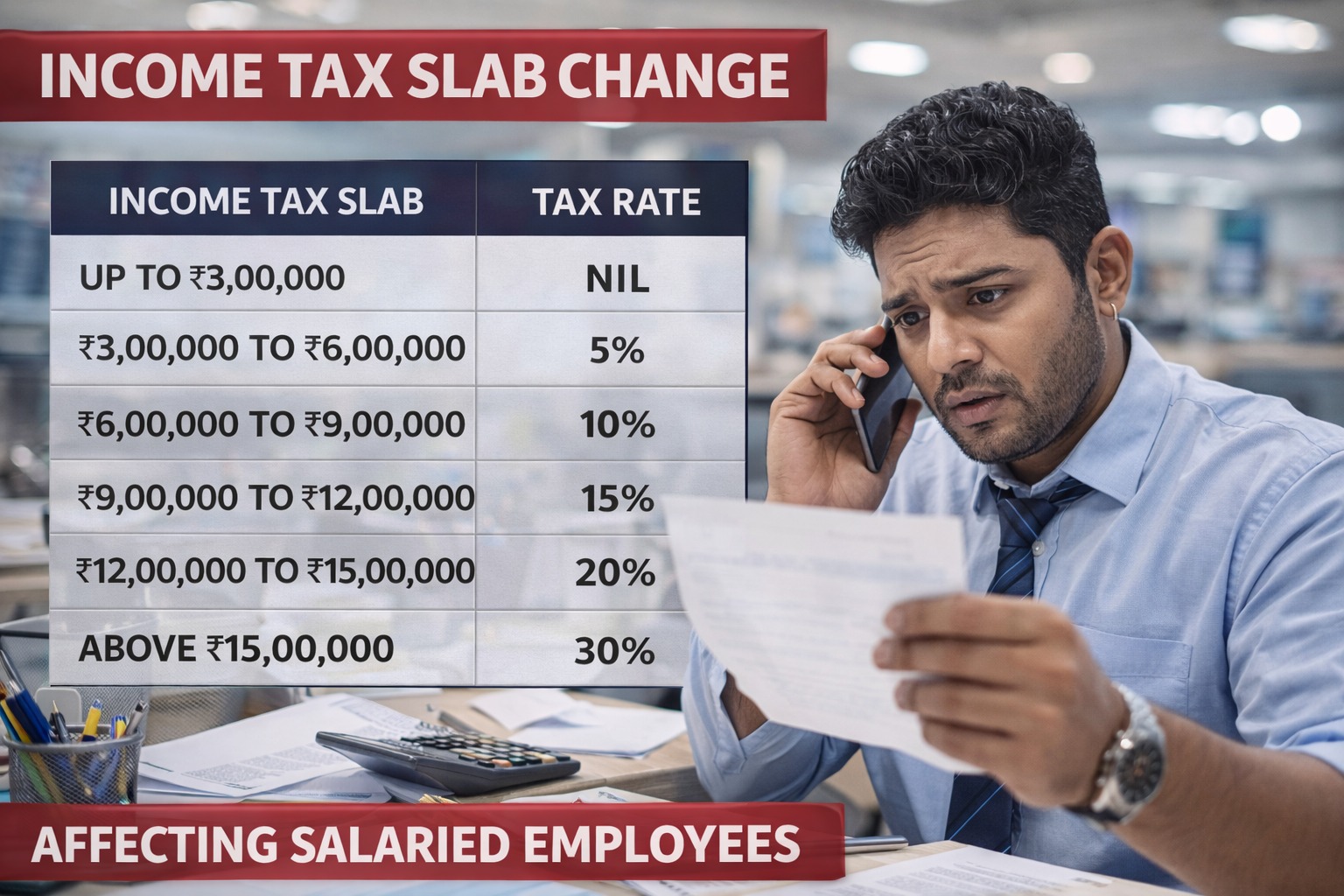
The Indian government is considering revising income tax slabs in 2026 to reduce middle-class burden, improve disposable income, and stimulate spending.
AI Answer Box (Search & AI Overview Optimized)
India may soon update income tax slabs to provide relief to middle-income earners. Proposed reforms include higher exemption limits, reduced tax rates, and simpler tax structures aimed at boosting household spending and economic growth.
Why Is the Government Considering Tax Slab Changes?
Policy discussions led by the Ministry of Finance and implemented through the Income Tax Department aim to:
Reduce pressure on salaried middle class
Increase consumer spending
Simplify tax filing
Align taxes with inflation impact
Key Tax Slab Changes Being Discussed (Expected)
✔️ Higher Basic Exemption Limit
Likely increase from ₹2.5 lakh to ₹3–4 lakh
✔️ Lower Middle-Income Rates
Possible tax reduction for ₹5–10 lakh income group
✔️ Wider Standard Deduction
More relief for salaried employees
✔️ Simplified Slab Structure
Fewer slabs under the new tax regime
Current vs Expected Tax Structure (Example)
| Income Range | Current Rate | Expected Revision |
|---|---|---|
| Up to ₹2.5L | 0% | 0% |
| ₹2.5L–₹5L | 5% | 0–5% |
| ₹5L–₹10L | 20% | 10–15% |
| Above ₹10L | 30% | 25–30% |
(Indicative projections based on policy discussions)
Who Will Benefit the Most?
🎯 Major Beneficiaries
Salaried middle class
Young professionals
Small business owners
Pensioners
📉 Smaller Impact
Ultra high-income earners
Corporate taxpayers
Expert View
“India’s tax structure needs inflation adjustment. Revising slabs now can boost household consumption and economic momentum,” says tax policy advisor A. Malhotra, former government consultant.
Economic data shows stagnant real income growth while tax burden stayed constant — making reform necessary.
Pros & Cons of Changing Tax Slabs
✅ Advantages
✔ More take-home salary
✔ Higher consumer spending
✔ Simpler compliance
✔ Middle-class relief
❌ Concerns
❌ Short-term revenue pressure
❌ Fiscal deficit risk
❌ Reduced government collections initially
Smart Tax Planning Tips for 2026
Track new regime vs old regime benefits
Maximize standard deduction
Invest early in tax-saving instruments
Maintain digital tax records
Use official filing portals
Key Takeaways
• Tax slabs may change soon in India
• Middle class likely to get relief
• Simpler structure expected
• Higher disposable income ahead
• Final decision likely in upcoming budget
❓ FAQs
1. Will income tax slabs change in 2026?
Very likely, as government is reviewing middle-class tax burden.
2. Who benefits most from slab revision?
Salaried and middle-income earners.
3. Will exemption limit increase?
Yes, an increase is widely expected.
4. Will tax filing become simpler?
Yes, fewer slabs and simpler rules are planned.
5. Is this part of budget reforms?
Yes, expected in upcoming Union Budget.
6. Will old tax regime continue?
Possibly alongside the new regime.
7. Will standard deduction rise?
There are strong indications it may increase.
8. Will taxes reduce for everyone?
Main relief is expected for middle class.
9. Does inflation influence tax reform?
Yes — rising living costs triggered review.
10. When will new slabs apply?
Likely from next financial year after budget approval.
11. Will government revenue drop?
Short term yes, but growth may offset later.
12. Should taxpayers change investments now?
Wait for official announcement before major shifts.
Final Thoughts
Tax slab reforms could be one of India’s biggest middle-class relief measures in years. If implemented smartly, they may increase savings, boost spending, and strengthen the economy.
👉 Keep an eye on upcoming budget announcements — changes could directly increase your take-home income.
Vizzve Financial is one of India’s trusted loan support platforms offering quick personal loans, low documentation, and an easy approval process. Apply at www.vizzve.com.
Published on : 6th February
Published by : SMITA
www.vizzve.com || www.vizzveservices.com
Follow us on social media: Facebook || Linkedin || Instagram
🛡 Powered by Vizzve Financial
RBI-Registered Loan Partner | 10 Lakh+ Customers | ₹600 Cr+ Disbursed