

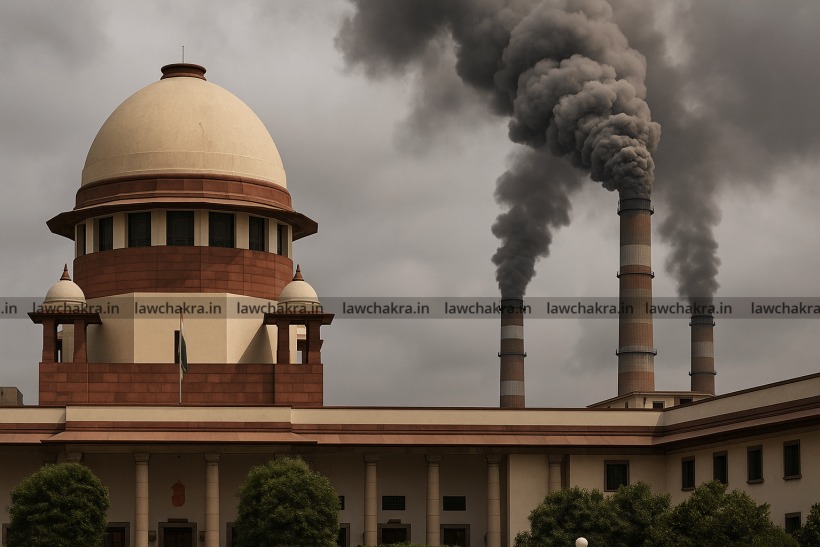
What the Supreme Court Said
In a landmark verdict, the Supreme Court of India ruled that pollution control boards are empowered to:
Seek environmental compensation from industries for past pollution.
Demand bank guarantees to ensure compliance with future environmental norms.
The Court clarified that these powers align with the “Polluter Pays” principle, enabling pollution boards to protect natural resources more effectively.
📜 Why This Ruling Matters
Empowers State Pollution Control Boards (SPCBs) and the Central Pollution Control Board (CPCB) with financial and legal tools to deter violations.
Encourages industries to adopt long-term compliance measures, not just pay fines after damage is done.
Establishes a precedent that goes beyond penalties, integrating proactive compliance assurance via bank guarantees.
🏭 Impact on Industries
Industries found guilty of polluting can now be:
Charged damages for environmental degradation they’ve already caused.
Asked to submit bank guarantees, which will be forfeited if they fail to comply with future safety or pollution norms.
This increases accountability and financial risk for polluting units and raises the cost of non-compliance.
📊 Legal Significance
This SC judgment reinforces:
The right to a clean environment under Article 21 (Right to Life).
The role of environmental regulatory bodies in enforcing sustainable practices.
That environmental protection is not optional, but a legal obligation.
❓ FAQs
Q1: What is the “Polluter Pays” principle?
It means that those who cause environmental harm are responsible for paying the costs of managing it—including remediation and compensation.
Q2: Can the pollution boards demand compensation even if there’s no criminal conviction?
Yes. The ruling enables civil compensation, separate from criminal proceedings.
Q3: What are bank guarantees in this context?
They are financial assurances from industries to the pollution board—held to ensure future compliance with norms.
Q4: Will this affect small businesses too?
Yes, but the amount of damages or guarantees will be proportionate to the scale and severity of pollution caused.
Q5: Is this a new law?
No. It is a clarification of existing powers under environmental regulations, but now formally upheld by the Supreme Court.
Published on : 5th August
Published by : SMITA
www.vizzve.com || www.vizzveservices.com
Follow us on social media: Facebook || Linkedin || Instagram
🛡 Powered by Vizzve Financial
RBI-Registered Loan Partner | 10 Lakh+ Customers | ₹600 Cr+ Disbursed