

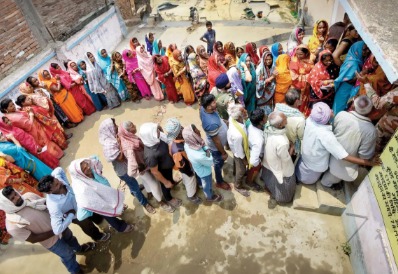
The 2025 Bihar Assembly Election has emerged as one of the most revealing political events of the decade, offering deep insights into how caste equations, voter expectations and alliance strategies are shifting across India. While caste remains a critical factor in electoral politics, the results suggest that traditional vote-banks are no longer working in predictable ways.
Bihar, known for its layered caste structure and coalition-driven politics, once again serves as a microcosm of larger national trends.
1. Caste Still Matters — But the Arithmetic Is Transforming
Caste continues to be a decisive force in Bihar, but the old formulas are weakening. Traditional vote-banks such as the “Muslim-Yadav” combine, upper-caste blocs or single-dominant OBC groups are now intersecting with newer segments like:
Women voters
Youth voters
Extremely Backward Classes (EBCs)
Sub-caste coalitions within OBCs and SC groups
This indicates a shift from singular caste identities to layered caste-plus-issue identities, where voters weigh governance and welfare performance along with caste representation.
2. Women & Youth Are Emerging as New Power Blocs
A defining trend from the 2025 election is the rise of the Mahila-Yuva (women-youth) voter bloc. Parties that focused on:
Employment opportunities
Safety and welfare for women
Skill development
Direct benefit schemes
…were able to expand their support beyond traditional caste lines. This signals a major shift in Indian politics, where demographic groups are gaining leverage equal to caste collectives.
3. Alliance Politics Has Become Highly Fluid
The Bihar election showed a new level of volatility in alliances. Parties re-aligned quickly, formed unexpected coalitions and renegotiated seat-sharing until the final days. Small regional parties also secured more bargaining power.
This suggests:
Alliances are now transactional, not ideological
Caste-based coalition building is being replaced by electoral math plus issue-based strategies
Parties are willing to make bold shifts to stay competitive
Such fluidity is likely to influence alliance negotiations ahead of major national elections.
4. Performance & Welfare Delivery Are Shaping Voter Behaviour
Voters in 2025 demonstrated a clear desire for:
Better job opportunities
Control over inflation
Improvement in infrastructure
Accessible welfare schemes
While caste identity still influences choices, many voters assessed governance performance, especially delivery of welfare and development. This blend of identity plus performance marks a notable evolution in Bihar’s electoral behaviour.
5. Representation Politics Is Expanding Within OBC–EBC–SC Groups
Parties fielded a historically high number of candidates from:
OBCs
Extremely Backward Classes
Dalit communities
Marginalised sub-castes
This diversification was strategic — recognising that these groups no longer vote as monolithic blocs. Representation now matters down to the sub-caste level, and parties are adjusting their social engineering to reflect this complexity.
6. The Bihar Template Could Influence National Elections
The shifts seen in Bihar may indicate broader national trends:
Emphasis on women & youth voters
Greater role of welfare delivery
Fragmenting caste vote-banks
Unpredictable alliance dynamics
Broader representation within backward communities
Political parties in other states may adopt similar strategies as they prepare for the 2026 and 2027 elections.
FAQs
Q1. Does caste still matter in the 2025 Bihar election?
Yes, caste remains central, but traditional caste equations are evolving and intersecting with new voter priorities.
Q2. Why did alliances keep shifting during the election?
Because alliance politics in Bihar has become more strategic and numbers-driven, giving smaller parties more influence.
Q3. Are women and youth really influencing results?
Yes. Women and first-time voters played a major role due to welfare schemes and employment-related expectations.
Q4. Is performance more important now than caste?
Not completely — but voters increasingly balance identity with governance and service delivery.
Q5. Will these trends affect national politics?
Likely yes. The Bihar model shows that demographic blocs and welfare politics may become as important as caste alliances in upcoming elections.
Published on : 14th November
Published by : SMITA
www.vizzve.com || www.vizzveservices.com
Follow us on social media: Facebook || Linkedin || Instagram
🛡 Powered by Vizzve Financial
RBI-Registered Loan Partner | 10 Lakh+ Customers | ₹600 Cr+ Disbursed