

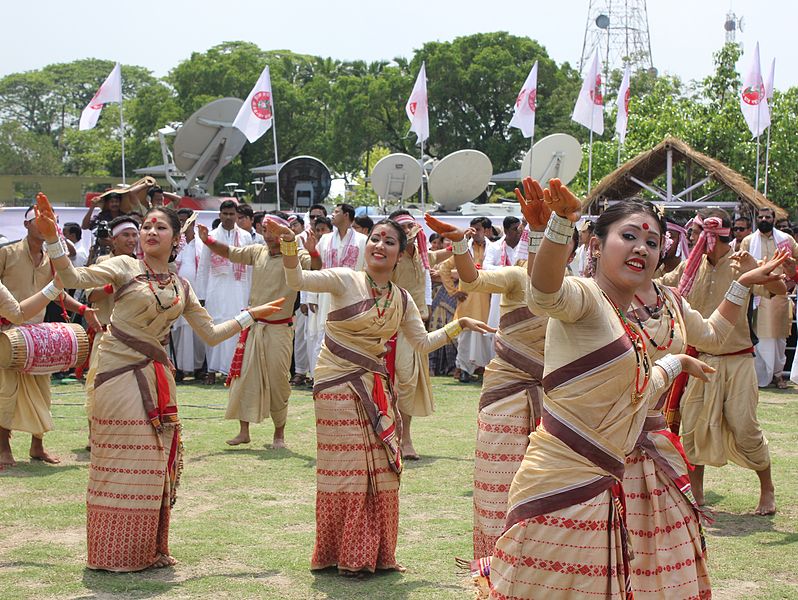
What Is Bihu?
Bihu is not just one festival, but a trinity of seasonal celebrations in Assam that mark the rhythm of agriculture and fertility. It is one of the few festivals in India that intertwines nature, farming, human relationships, and music so deeply.
There are three types of Bihu:
Rongali or Bohag Bihu – Celebrated in April (spring), marking the Assamese New Year and the sowing season
Kongali or Kati Bihu – Celebrated in October, reflecting austerity and hope during the growing season
Bhogali or Magh Bihu – Celebrated in January, during harvest and feasting
Bihu and Fertility – The Spring Celebration of Life
Rongali Bihu is most famous for its themes of fertility, courtship, and joy. Fields are sown, animals are bathed, homes are cleaned, and the youth celebrate with:
Bihu Dance (Mukoli Bihu): Young men and women perform rhythmic, flirtatious dances under the open sky
Bihu Songs (Bihugeet): Songs of love, longing, and nature
Traditional Games & Feasting: Community events that bring people together
Gamosa: Handwoven cloth gifted as a token of respect and identity
Rongali Bihu marks fertility in both the land and relationships—symbolizing hope for a rich harvest and new beginnings.
Magh Bihu – The Harvest Festival
Magh Bihu celebrates abundance and gratitude. Families light bonfires (Meji), feast on traditional dishes like pitha and laru, and mark the end of winter and successful harvests.
Kati Bihu – The Silent Prayer
Kati Bihu is somber and spiritual. Lamps are lit near the Tulsi plant and in paddy fields to protect crops. Farmers pray for their seedlings’ safety—symbolizing hope in hardship.
Bihu’s Agricultural Significance
| Bihu Type | Season | Significance |
|---|---|---|
| Rongali Bihu | Spring (April) | Sowing, new year, fertility, celebration |
| Kati Bihu | Autumn (Oct) | Crop protection, austerity, prayers |
| Magh Bihu | Winter (Jan) | Harvest, feasting, community |
🎵 Bihu Dance & Songs: The Pulse of Assam
Bihu dance and music are recognized as UNESCO intangible cultural heritage. They celebrate:
Love and nature
Gender equality in celebration
Youth expression and tradition
The dhol, pepa, and toka instruments create a rhythm that connects generations, villages, and spirits alike.
FAQs About Bihu
Q1: Is Bihu a Hindu festival?
Not strictly. Bihu is more seasonal and cultural than religious. It unites all communities in Assam, including Hindus, Muslims, Christians, and tribes.
Q2: What food is eaten during Bihu?
During Bohag and Magh Bihu, people enjoy pithas, larus (sweet balls), rice cakes, and meat or fish delicacies. Each type of Bihu has its culinary identity.
Q3: Why is Bihu important to Assam’s identity?
Bihu reflects Assamese heritage, agriculture, and community spirit. It’s a symbol of resilience and joy despite challenges.
Q4: Is Bihu celebrated outside Assam?
Yes. Assamese communities across India and abroad celebrate Bihu in cultural events and gatherings.
Final Thought
Bihu is a festival of soil, soul, and sound. It reminds us that life flows with nature’s rhythm—sometimes joyous, sometimes quiet, but always resilient.
In a modern India chasing speed, Bihu teaches us to pause, dance with the seasons, and honor the hands that feed us.
May your heart always beat with Bihu’s rhythm—of love, land, and light. 🌿
Published on : 2nd August
Published by : SMITA
www.vizzve.com || www.vizzveservices.com
Follow us on social media: Facebook || Linkedin || Instagram
🛡 Powered by Vizzve Financial
RBI-Registered Loan Partner | 10 Lakh+ Customers | ₹600 Cr+ Disbursed