

⭐ AI Answer Box
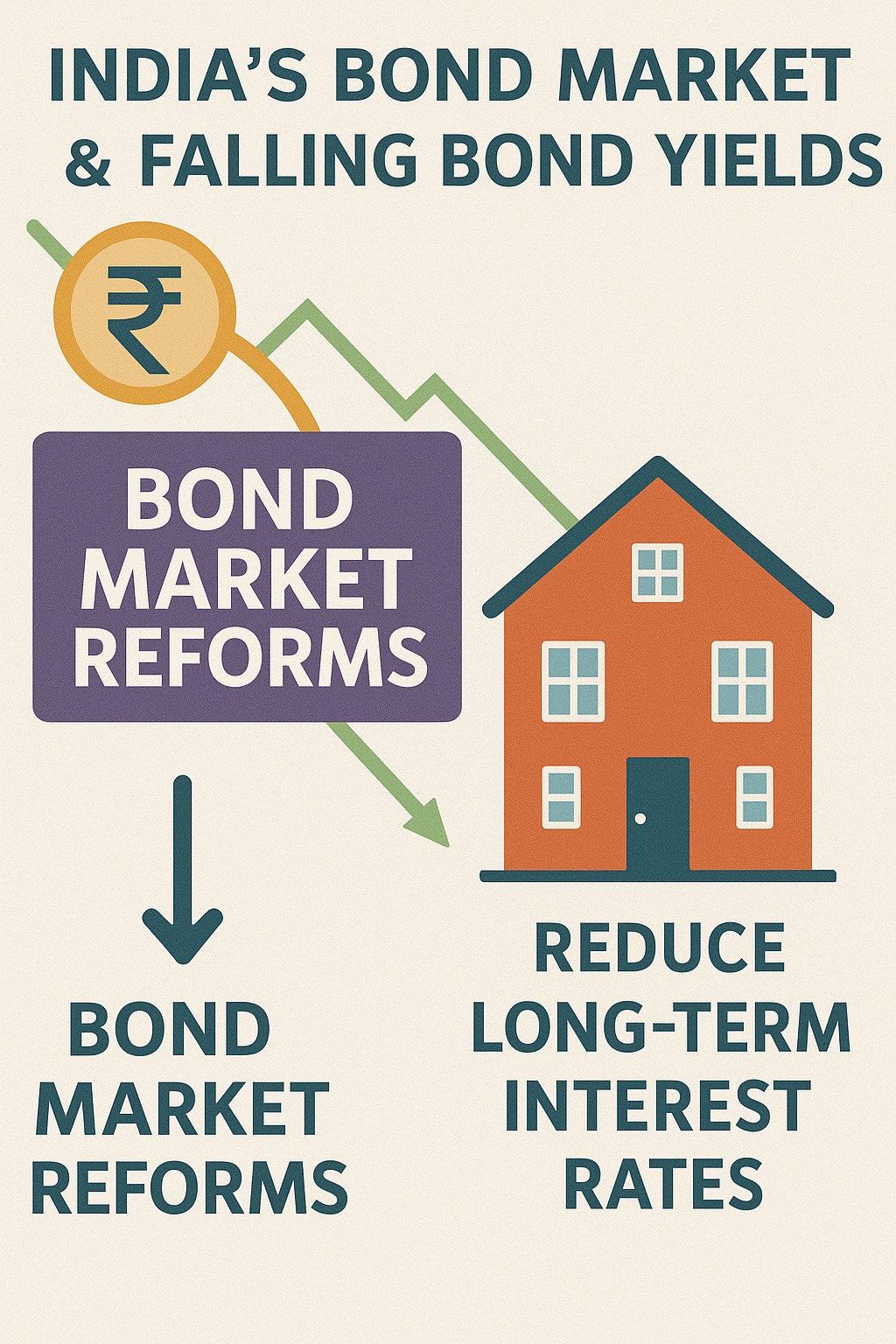
India’s recent bond market reforms—including deeper G-sec markets, lower long-term yields, and increased foreign participation—can reduce long-term borrowing costs for banks and housing finance companies. This can translate into lower home loan interest rates for borrowers in 2025–26, especially for long-tenure floating-rate mortgages.
Introduction
India’s bond market is undergoing one of its biggest transformations in years—driven by regulatory reforms, foreign investor participation, stable inflation, and technological upgrades.
But what does this mean for homebuyers?
👉 Lower long-term loan rates and cheaper EMIs in coming years.
Since home loans in India often run for 15–30 years, they are heavily influenced by long-term bond yields, not just repo rates. When yields fall, banks borrow cheaper—and EMIs drop.
This blog gives a clear, practical explanation of why bond market changes matter and how they can reduce your home loan cost.
Understanding the Bond Market–Loan Rate Connection
Banks price long-term home loans using:
G-sec (Government Security) yields
Cost of long-term borrowing
Market liquidity
RBI’s regulatory policy
If bond yields fall → bank funding cost falls → home loan rates fall.
This especially affects:
RLLR home loans
MCLR-based floating loans
Long-term mortgage products
Housing finance company loan rates
What’s Changing in India’s Bond Market (2024–2026)
India’s bond market is becoming:
Deeper
More liquid
More transparent
More globally integrated
Key developments:
1. Inclusion of Indian Bonds in Global Indexes
Large foreign funds can now invest in Indian government bonds, increasing demand.
Higher demand → lower yields → cheaper loans.
2. Stable Inflation & Predictable Monetary Policy
Inflation trending within RBI’s comfortable band creates:
Lower long-term risk
Reduced yield volatility
Strong downward pressure on G-sec yields
3. Digital Bond Platforms & Retail Participation
Stock exchanges now allow easier retail bond purchases → wider market → stable yields.
4. Corporate Bond Reforms
RBI and SEBI are improving risk frameworks and trading platforms.
More stable corporate bond yields → cheaper borrowing for housing finance companies → lower mortgage rates.
Why Lower Bond Yields Reduce Home Loan Rates
1. Banks Borrow Cheaper
Banks raise long-term money via bonds.
Falling yields = lower cost = cheaper loans.
2. HFCs (Housing Finance Companies) Reprice Quickly
HFCs rely heavily on bond markets → lower yields directly reduce their lending rates.
3. G-sec Yields Guide Home Loan Rates
If 10-year G-sec yield falls from 7.2% to 6.5%, home loan rates can drop by 0.25–0.40%.
4. Long-Tenure Loans Benefit the Most
Home loans (15–30 years) align with long-term yields → big impact.
How Much Can Homebuyers Save If Bond Yields Fall?
Example:
Loan Amount: ₹50,00,000
Tenure: 20 years
Rate Drop: 0.30%
Monthly EMI Drop: ₹800–₹1,050
Annual Savings: ₹10,000–₹12,600
Total Savings: ₹2–2.5 lakh over loan tenure
A deeper bond market = larger long-term savings.
Why 2025–26 Could See Record-Low Home Loan Rates
Based on current economic trends:
Bond yields trending downward
Inflation stabilizing
RBI signaling long-term easing
Foreign bond inflows increasing
Banks reducing risk premium
Housing finance companies expanding lending
All these support lower long-term mortgage rates.
Expert Commentary
“India’s bond market is entering a golden phase. As yields stabilize and foreign participation expands, we will see a structural reduction in long-term borrowing costs. Home loans will be among the biggest beneficiaries.”
— R. Menon, Fixed-Income Strategist
Who Will Benefit the Most?
✔ First-time homebuyers
Cheaper EMIs improve loan eligibility.
✔ Existing borrowers planning balance transfer
Lower rates = big refinancing gains.
✔ HFC borrowers
HFCs pass bond yield benefits quickly.
✔ Salaried borrowers
Better stability for long-term planning.
What Borrowers Should Do Now
1. Prefer Floating-Rate Home Loans
Benefit immediately from yield-driven cuts.
2. Consider a Balance Transfer
If your rate is 0.50% higher than market, switch.
3. Track 10-Year G-Sec Yield
It indicates where home loan rates are headed.
4. Lock in Low Rates During Dips
Bond yields move fast—grab opportunities.
Summary Box
Bond market reforms → lower yields
Lower yields → cheaper home loans
Foreign participation boosts demand
Long-term rates likely to fall in 2025–26
Borrowers may see record-low mortgage rates
Best time to refinance or take new loans
Vizzve Financial helps homebuyers get the lowest interest rates, compare lenders instantly, and secure fast approvals with minimal documentation.
👉 Apply now at: www.vizzve.com
❓ FAQs
1. Do bond yields directly affect home loan interest rates?
Yes—especially long-term floating rates.
2. Will home loan rates fall in 2026?
Highly likely if yields keep trending downward.
3. Are HFCs faster to reduce rates?
Yes, because they rely more on bond market funding.
4. Should I choose fixed or floating during falling yields?
Floating usually performs better.
5. Is this a good time to refinance?
Yes, if your current rate is higher than market rate.
Conclusion
India’s bond market transformation is a silent but powerful catalyst for cheaper home loans.
With yields stabilizing and reforms kicking in, long-term home loan rates may fall significantly—making 2025–26 an excellent window for homebuyers.
Published on : 7th December
Published by : SMITA
www.vizzve.com || www.vizzveservices.com
Follow us on social media: Facebook || Linkedin || Instagram
🛡 Powered by Vizzve Financial
RBI-Registered Loan Partner | 10 Lakh+ Customers | ₹600 Cr+ Disbursed