

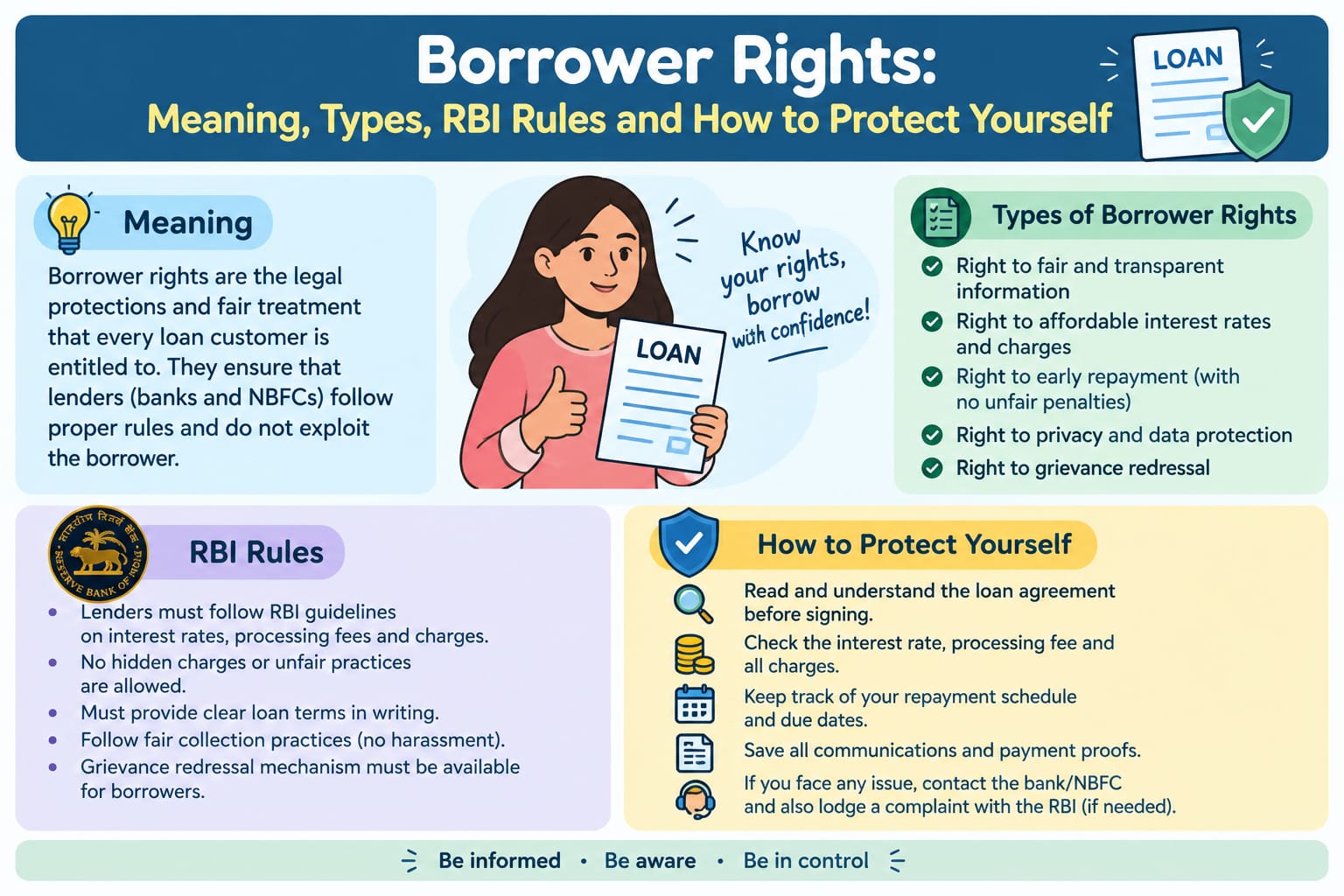
Introduction
Borrowing money through a bank, NBFC, or other regulated lender comes with certain responsibilities—but borrowers also have important rights. Borrower rights help ensure that lenders follow fair, transparent, and lawful practices when offering loans, collecting repayments, handling personal information, and recovering overdue amounts.
Understanding these rights can help borrowers identify unfair practices, review loan terms carefully, and take appropriate action when problems arise.
What Are Borrower Rights?
Borrower rights are the protections and entitlements available to individuals or businesses that take loans from lenders. These rights generally cover areas such as:
- Transparent disclosure of loan terms
- Clear information about interest rates and charges
- Access to loan documents
- Fair treatment during repayment
- Proper communication about overdue payments
- Protection against inappropriate recovery practices
- Privacy and responsible handling of personal information
- Grievance redressal
- Receipt of relevant documents after loan closure
The exact rights and protections can vary depending on the lender, loan type, applicable regulations, and the terms of the loan agreement.
Key Borrower Rights
1. Right to Clear Loan Information
Before accepting a loan, borrowers should receive clear information about important terms, including:
- Loan amount
- Interest rate
- Repayment schedule
- Tenure
- Processing fees
- Other applicable charges
- Penalties or other consequences of default
- Prepayment or foreclosure conditions, where applicable
Borrowers should review these details before signing the loan agreement.
2. Right to Receive Loan Documents
A borrower should retain copies of important loan documents, such as:
- Loan agreement
- Sanction letter
- Repayment schedule
- Statements of account
- Security-related documents, where applicable
- Relevant communications from the lender
These documents can be useful if there is a dispute regarding repayments or charges.
3. Right to Know the Cost of Borrowing
The actual cost of a loan may include more than the advertised interest rate. Depending on the product, borrowers may need to consider processing fees, insurance-related charges, late-payment charges and other applicable costs.
Borrowers should look at the overall cost of the loan rather than considering only the headline interest rate.
4. Right to Fair Recovery Practices
If a borrower misses a payment, a lender may take steps to recover the outstanding amount according to applicable rules and the loan agreement. However, recovery should not involve inappropriate harassment, threats, intimidation, or abusive conduct.
Borrowers should keep records of communications if they believe recovery practices are improper.
5. Right to Privacy
Borrowers provide personal and financial information during the loan application process. Lenders and their representatives are expected to handle such information according to applicable laws and regulatory requirements.
Borrowers should also be cautious about sharing OTPs, passwords, PINs, or other sensitive credentials.
6. Right to Raise a Complaint
If a borrower has a complaint about a lender, the first step is generally to approach the lender's designated grievance-redressal mechanism.
If the issue is not resolved satisfactorily, eligible complaints may be escalated through the applicable regulatory grievance mechanism.
7. Right to Account Information
Borrowers may need accurate information about:
- Outstanding principal
- Interest charged
- Payments received
- Overdue amounts
- Applicable charges
- Remaining loan tenure
Regularly checking loan statements can help borrowers identify errors early.
8. Right to Loan Closure Documents
After completing repayment, borrowers should ensure that the lender completes the applicable closure formalities and provides relevant documents, including release of security where applicable.
For secured loans, borrowers should particularly check that the lender's records and applicable security documentation are properly updated after closure.
Borrower Rights During Loan Recovery
Loan recovery can become stressful when payments are overdue. Borrowers should understand that defaulting on a loan does not mean they lose all rights.
Important points include:
| Area | What Borrowers Should Know |
|---|---|
| Communication | Keep records of calls, messages and notices |
| Outstanding dues | Ask for a clear statement of the amount payable |
| Recovery | Recovery must follow applicable rules |
| Privacy | Avoid sharing sensitive credentials with callers |
| Complaints | Use the lender's grievance mechanism |
| Legal notices | Read and respond appropriately |
| Settlement | Obtain written terms before making a settlement payment |