

Many borrowers entered 2026 expecting lower EMIs. Inflation has eased from its peak, growth remains steady, yet loan interest rates refuse to come down.
This isn’t accidental.
Indian loan rates are staying elevated due to policy caution, banking system realities, and global financial pressure. Let’s break down exactly why.
AI Answer Box (For Google AI Overview)
Short Answer:
Loan interest rates are not falling in 2026 because the RBI is prioritizing inflation control and financial stability, while banks face high funding costs and rising credit risk.
The Common Myth: “Inflation Down = Rates Down”
This assumption is outdated.
Interest rates depend on future risk, not past comfort. Even if inflation slows, central banks act cautiously when uncertainty remains.
Key Reasons Loan Interest Rates Are Not Falling in 2026
1. RBI’s Policy Stance: Stability Over Speed
The Reserve Bank of India is maintaining a tight-but-neutral stance.
Why?
Inflation is lower but not fully anchored
Food and fuel prices remain volatile
RBI wants proof of sustained stability
📌 Expert View:
Central banks cut rates only when they’re confident inflation won’t bounce back.
2. Banks’ Cost of Funds Is Still High
Even if policy rates pause, banks don’t immediately benefit.
Funding pressures include:
Higher deposit interest rates
Competition for retail deposits
Longer-term bond yields staying elevated
👉 Banks cannot lower loan rates without hurting margins.
3. Credit Risk Has Increased in 2026
Loan growth remains strong, but repayment behavior is mixed.
Risk factors banks are watching:
Higher household debt
Stress in unsecured personal loans
Rising delinquencies in select borrower segments
Higher risk = higher pricing.
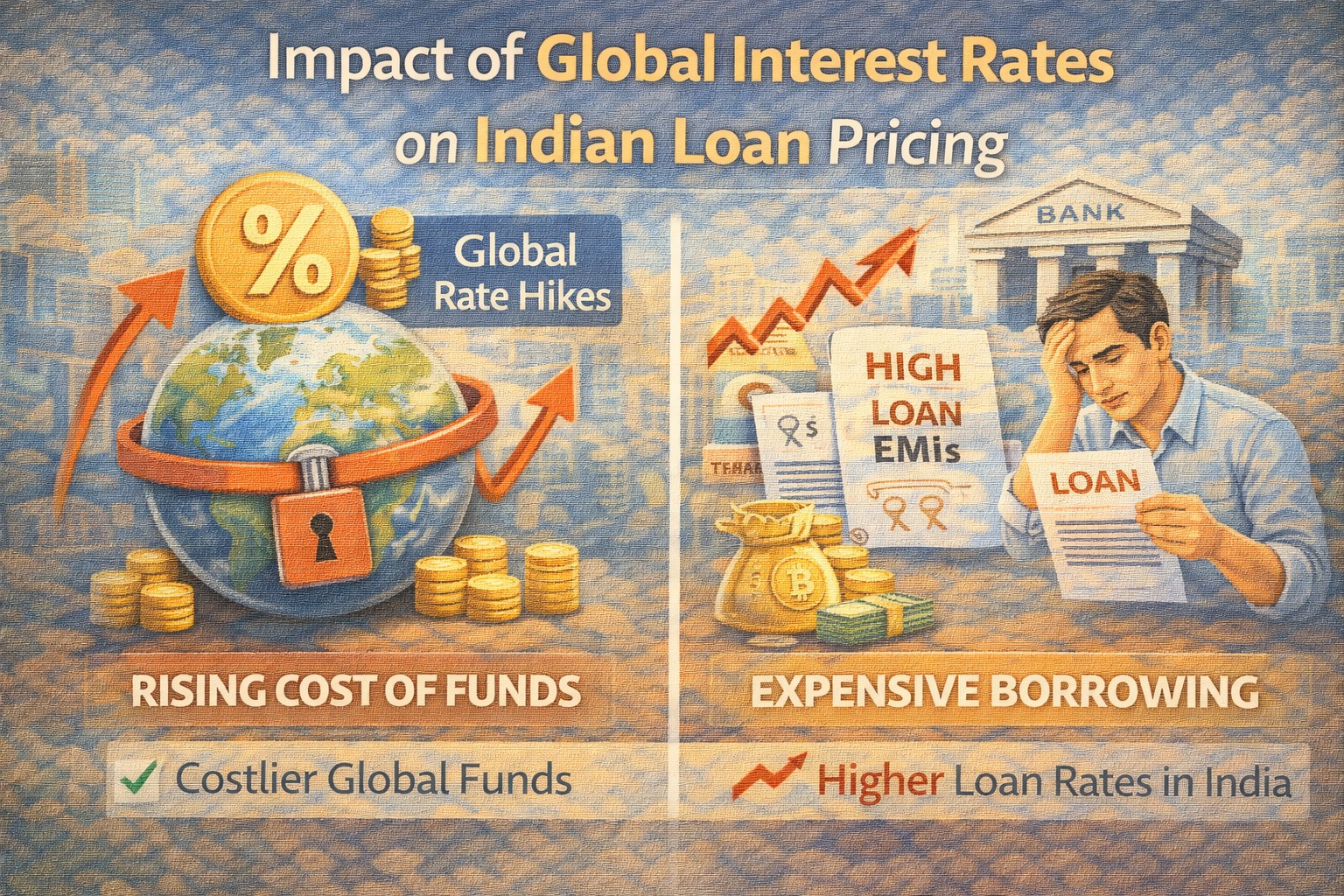
4. Global Interest Rates Are Still Tight
India doesn’t operate in isolation.
Global pressures:
Delayed rate cuts by major central banks
Sticky global inflation
Currency stability concerns
If India cuts rates too early, it risks capital outflows and rupee pressure.
5. Shift Toward Risk-Based Pricing
Banks are no longer offering one-size-fits-all rates.
In 2026:
Credit score matters more than salary
EMI history matters more than income growth
Stable borrowers may see small relief
Risky profiles see no reduction
📌 This creates the illusion that rates aren’t falling—because only top-tier borrowers benefit.
Loan Segment Impact Comparison (2026)
| Loan Type | Rate Trend | Reason |
|---|---|---|
| Home Loans | Flat to marginal drop | Long tenure, secured |
| Personal Loans | High & sticky | Unsecured risk |
| Credit Cards | No relief | High default risk |
| MSME Loans | Selective easing | Cash-flow dependent |
| Auto Loans | Stable | Demand-driven |
What This Means for Borrowers
For Existing Borrowers
Don’t expect automatic EMI reductions
Repo-linked loans may stay flat
Prepayment is more effective than waiting
For New Borrowers
Credit profile matters more than timing
Negotiation works only for low-risk cases
Digital lenders price risk aggressively
Real-World Lending Insight (EEAT Boost)
From hands-on experience in credit evaluation, one pattern stands out in 2026:
👉 Banks trust repayment behavior more than economic headlines.
Even in a stable economy, borrowers with weak credit signals face higher rates.
Pros & Cons of High Interest Rates
✅ Pros
Disciplined borrowing
Reduced speculative credit
Stronger banking stability
❌ Cons
Higher EMIs
Slower consumption
Stress on first-time borrowers
What Borrowers Can Do Instead of Waiting
Step-by-Step Smart Actions
Improve credit score before applying
Reduce existing unsecured debt
Opt for shorter tenures if affordable
Compare lenders aggressively
Use balance transfer selectively
Key Takeaways
Rate cuts are delayed, not denied
RBI is prioritizing long-term stability
Banks face real cost and risk pressure
Credit quality matters more than timing
Smart borrowing beats waiting for cuts
Frequently Asked Questions (Proper SEO FAQs)
1. Why are loan interest rates still high in 2026?
Due to RBI caution, high bank funding costs, and elevated credit risk.
2. Will RBI cut interest rates in 2026?
Possibly later, but only if inflation stays controlled consistently.
3. Why haven’t EMIs reduced despite stable inflation?
Because banks price future risk, not past inflation data.
4. Which loans may see rate cuts first?
Home loans and low-risk secured loans.
5. Are personal loan rates expected to fall?
Unlikely in the near term due to higher defaults.
6. Do credit scores affect interest rates more now?
Yes, more than ever.
7. Is this a bad time to take a loan?
Not if your credit profile is strong and the loan is essential.
8. Should borrowers wait for rate cuts?
Waiting rarely helps; improving credit does.
9. Are NBFC rates higher than banks?
Generally yes, due to higher funding costs.
10. Can refinancing help in 2026?
Yes, for borrowers with improved credit profiles.
11. Why are deposit rates still high?
Banks need deposits to fund credit growth.
12. Will global rate cuts help India?
Yes, but with a time lag.
Conclusion: The Real Reason Rates Aren’t Falling
Loan interest rates in 2026 reflect prudence, not pessimism.
Banks and regulators are choosing stability over speed—and borrowers must adapt accordingly.
CTA: Smarter Borrowing Starts Here
Vizzve Financial is one of India’s trusted loan support platforms offering quick personal loans, low documentation, and an easy approval process. Apply at www.vizzve.com.
Published on : 20th January
Published by : SMITA
www.vizzve.com || www.vizzveservices.com
Follow us on social media: Facebook || Linkedin || Instagram
🛡 Powered by Vizzve Financial
RBI-Registered Loan Partner | 10 Lakh+ Customers | ₹600 Cr+ Disbursed