

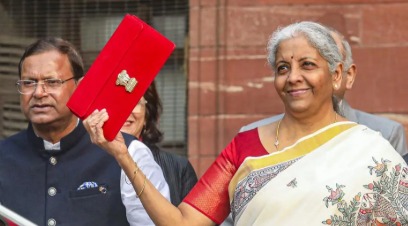
As the Union Budget 2025 approaches, one of the biggest questions on everyone’s mind is — will it make credit more accessible for India’s middle-income families?
With rising living costs, education expenses, and home loan EMIs, affordable credit has become essential for sustaining the financial aspirations of India’s middle class. The government’s focus on inclusive growth and digital finance hints at possible reforms that could make borrowing simpler, cheaper, and more transparent.
Let’s explore what the 2025 Budget might mean for household borrowing, lending institutions, and the overall credit ecosystem.
Why Credit Access Matters for Middle-Income Families
Middle-income households are the backbone of India’s consumption economy — driving demand in housing, automobiles, education, and small businesses. However, they often face challenges like:
Limited access to low-interest credit compared to corporates or rural schemes.
High EMIs due to fluctuating interest rates.
Stringent loan eligibility norms, especially for self-employed individuals.
Credit score dependence, which often sidelines first-time borrowers.
Improving credit access can help these families manage expenses better and boost domestic consumption, a key growth driver for India’s economy.
Possible Budget 2025 Measures to Improve Credit Access
1. Interest Subvention Schemes for Affordable Loans 🏦
The government may announce interest subvention (subsidy) programs to make personal and housing loans cheaper for middle-income borrowers.
Such schemes can directly lower EMIs by 0.5–1%, easing financial pressure on families.
2. Expansion of Credit Guarantee Schemes 🔐
The Credit Guarantee Fund Scheme (CGFS) could be expanded to cover personal loans, education loans, and MSME credit for salaried and self-employed borrowers — minimizing risk for banks and encouraging more lending.
3. Tax Incentives on Loan Interest Payments 💰
To support the growing burden of EMIs, the Budget might raise deduction limits under:
Section 80EE/80EEA (home loan interest)
Section 80E (education loans)
This move could reduce the effective cost of borrowing for middle-class families.
4. Encouraging Digital Credit Platforms 💻
The government may continue promoting digital lending infrastructure, like the Open Credit Enablement Network (OCEN), to help borrowers access credit faster with fewer documents.
This can especially benefit middle-income earners in Tier-2 and Tier-3 cities.
5. Simplified Loan Documentation Norms 🧾
Easing documentation through Aadhaar-linked and GST-verified lending could speed up approvals, particularly for freelancers and gig workers, who often struggle to prove steady income.
6. Boost to Affordable Housing Finance 🏘️
The Budget may allocate more funds toward PMAY (Pradhan Mantri Awas Yojana) and incentivize banks to offer low-cost home loans for middle-income homebuyers.
Expect easier down payment support and reduced processing fees.
Impact on Borrowers
If implemented, these measures could help:
Reduce EMI pressure for home and education loans.
Widen access to credit for self-employed and middle-income earners.
Encourage responsible borrowing via regulated digital platforms.
Strengthen financial inclusion, aligning with India’s $5 trillion economy vision.
Impact on Banks and NBFCs
Banks and NBFCs would benefit from:
Increased loan demand across personal, auto, and education segments.
Lower default risk, thanks to government-backed guarantees.
Expanded opportunities in digital and secured lending markets.
Challenges to Watch For
While policy measures look promising, effective implementation is key.
Lenders must balance growth with credit quality.
Middle-income borrowers need financial literacy to avoid over-leveraging.
Regulators must ensure data privacy and fair lending practices under digital channels.
Expert View: The 2025 Outlook
Economists expect the Budget 2025 to focus on “affordable finance for aspirational India.”
With India’s growing digital ecosystem and focus on economic inclusion, credit democratization could become a central theme — making it easier for middle-income families to fund their goals without financial stress.
FAQ: Budget 2025 and Credit Access
1. Will the government announce new loan schemes for the middle class?
Yes, new interest subvention or credit-linked subsidy schemes are likely.
2. Will home loan EMIs come down in 2025?
If the Budget includes tax incentives or rate-linked benefits, EMIs may reduce.
3. Can self-employed people benefit from these reforms?
Yes, simplified documentation and expanded credit guarantees could help self-employed borrowers access loans easily.
4. How will digital lending change in 2025?
With RBI’s stricter guidelines and government backing, digital loans will become safer and more transparent.
5. What sectors will benefit the most?
Housing, education, personal finance, and small business lending are expected to see maximum growth.
Published on : 8th October
Published by : SMITA
www.vizzve.com || www.vizzveservices.com
Follow us on social media: Facebook || Linkedin || Instagram
🛡 Powered by Vizzve Financial
RBI-Registered Loan Partner | 10 Lakh+ Customers | ₹600 Cr+ Disbursed
https://play.google.com/store/apps/details?id=com.vizzve_micro_seva&pcampaignid=web_share