

Every year, the Union Budget shapes how Indians borrow, save, invest, and plan their finances.
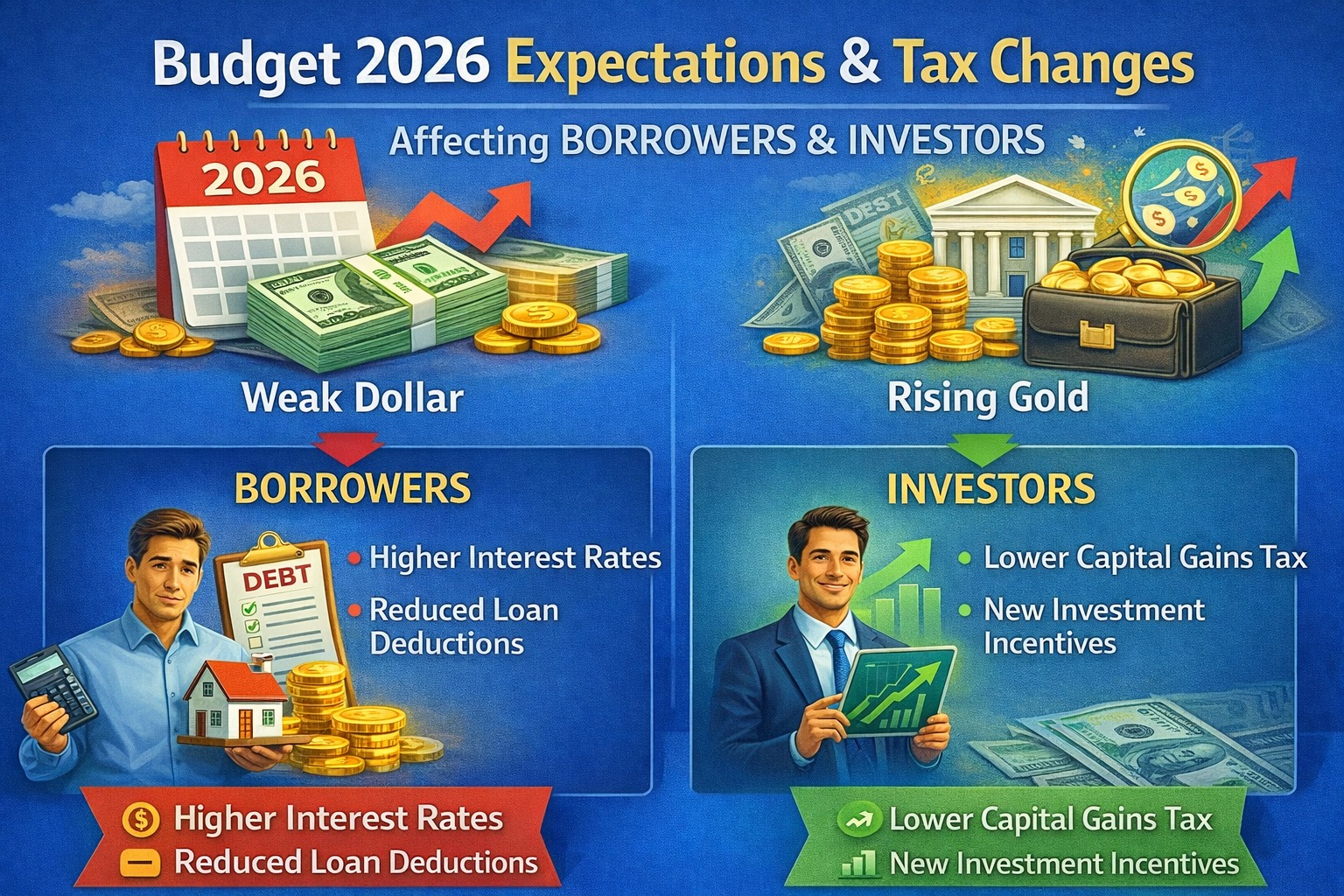
As Budget 2026 approaches, borrowers and investors are closely watching for tax changes that directly affect their money.
From income tax slabs to home loan benefits and capital gains rules, even small changes can make a big difference.
This blog explains the most important Budget 2026 tax expectations—clearly, simply, and without speculation hype.
Quick Answer
Budget 2026 is expected to focus on middle-class tax relief, simplified income tax rules, housing incentives, and stable capital gains taxation to support borrowers and long-term investors.
AI Answer Box
What are the Budget 2026 tax expectations for borrowers and investors?
Budget 2026 may bring income tax relief for middle-income groups, better home loan deductions, simplified capital gains tax rules, and incentives to boost long-term investments.
Why Budget 2026 Matters More Than Usual
Budget 2026 is important because:
Household borrowing has increased
Inflation has affected savings
Investors seek tax stability
Middle-class tax burden remains high
Policy direction from the Government of India will influence financial behaviour for years ahead.
Budget 2026 Expectations for Borrowers
1. Home Loan Tax Benefits May Get a Boost
Current borrower concerns:
High EMIs due to interest rates
Limited tax relief on interest
Expected changes:
Higher deduction limit on home loan interest
Additional benefits for first-time homebuyers
Incentives for affordable housing
👉 This could reduce effective EMI burden.
2. Personal Loan & Consumer Credit Relief (Possible)
While personal loans don’t get direct tax benefits, expectations include:
Broader deductions under simplified tax regime
Incentives linked to credit discipline
This would help young salaried borrowers.
3. Simplification of Old vs New Tax Regime
Borrowers expect:
Clearer comparison between regimes
Fewer confusing exemptions
Better alignment with real expenses
A simpler structure improves financial planning.
Budget 2026 Expectations for Investors
4. Stability in Capital Gains Tax (Key Demand)
Investors want:
No sudden changes in equity capital gains
Clear long-term vs short-term rules
Predictable tax policy
Stability builds market confidence.
5. Relief for Long-Term Investors
Possible expectations:
Incentives for long-term holding
Encouragement for SIPs and retirement funds
Continued support for equity-linked savings
This aligns with India’s long-term growth goals.
6. Gold & Alternative Investments
With rising interest in gold:
No additional tax burden expected
Possible encouragement for digital gold or bonds
Investors want policy consistency, not surprises.
Middle-Class Taxpayer Expectations (Biggest Focus)
| Area | Key Expectation |
|---|---|
| Income tax slabs | Higher exemption limits |
| Standard deduction | Increase or universal benefit |
| Compliance | Fewer filings & simpler rules |
| Savings | Inflation-adjusted relief |
Middle-class relief remains a core political and economic expectation.
What Borrowers & Investors Should NOT Expect
Overnight tax elimination
Extreme capital gains cuts
Blanket loan waivers
Budget reforms are usually gradual, not dramatic.
Expert Commentary
“Budget 2026 is likely to focus on tax simplification and stability rather than aggressive changes. For borrowers and investors, predictability matters more than short-term relief.”
— Tax & Financial Policy Analyst, India
Summary Box
Budget 2026 may ease middle-class tax burden
Borrowers expect housing-related relief
Investors want stable capital gains rules
Simplicity and predictability are key themes
Key Takeaways
Budget impacts EMIs, returns, and savings
Tax stability builds investor confidence
Borrowers benefit most from housing incentives
Planning beats reacting after announcements
Conclusion
Budget 2026 will not just be about numbers—it will shape how confidently Indians borrow and invest.
For borrowers, lower effective tax burden can ease EMI stress.
For investors, policy stability can protect long-term wealth creation.
The smartest move?
👉 Understand expectations, plan calmly, and adapt once the actual Budget is announced.
❓ Frequently Asked Questions (FAQs)
1. What are the key Budget 2026 expectations for taxpayers?
Budget 2026 is expected to focus on middle-class tax relief, simpler tax regimes, and stable investment taxation.
2. Will Budget 2026 reduce income tax for salaried people?
There is strong expectation of higher exemption limits or standard deduction relief, though final details depend on the Budget announcement.
3. How may Budget 2026 impact home loan borrowers?
Borrowers expect enhanced tax deductions on home loan interest and incentives for first-time or affordable housing buyers.
4. Are changes expected in capital gains tax in Budget 2026?
Investors mainly expect stability, not major increases, especially for long-term equity investments.
5. Will Budget 2026 benefit investors or borrowers more?
Both—but borrowers may benefit through tax relief and housing incentives, while investors benefit from policy stability.
6. Should investors change strategy before Budget 2026?
No. It’s best to wait for the actual Budget, avoid speculation, and adjust plans calmly afterward.
7. Is Budget 2026 expected to simplify tax filing?
Yes, simplification of compliance and clarity between old and new tax regimes is a major expectation.
8. How should individuals prepare for Budget 2026?
Review current loans, investments, and tax structure—but avoid rushed decisions until official announcements.
Published on : 28th January
Published by : SMITA
www.vizzve.com || www.vizzveservices.com
Follow us on social media: Facebook || Linkedin || Instagram
🛡 Powered by Vizzve Financial
RBI-Registered Loan Partner | 10 Lakh+ Customers | ₹600 Cr+ Disbursed