

Building credit from zero can feel challenging, especially if you have never taken a loan or used a credit card. In India, having a healthy credit profile can help you qualify for personal loans, credit cards, and other financial products in the future. However, many first-time borrowers are unsure where to begin or how to establish a good CIBIL score.
The good news is that you do not need an existing credit history to start building responsible financial habits. By choosing suitable credit products, making payments on time, and managing borrowing carefully, you can gradually establish a positive credit profile.
In this guide, Vizzve explains how beginners can build credit from scratch, avoid common mistakes, and work towards long-term financial stability.
What Does Building Credit From Zero Mean?
Building credit from zero means establishing a credit history when you have little or no previous borrowing experience. You may have never used a credit card, taken a personal loan, or purchased an item through a credit-based repayment facility.
Credit bureaus such as TransUnion CIBIL collect credit information reported by participating lenders. This information helps generate your credit report and, when sufficient information is available, your credit score.
If you have never borrowed before, you may be considered a new-to-credit customer. This does not automatically mean you have a poor credit score. You may simply have insufficient credit history for a score to be generated.
Why Is Building a Credit History Important?
A credit history helps lenders understand how you manage borrowed money. Although lenders consider several factors when reviewing an application, a positive credit profile can support your future borrowing opportunities.
Here are some key benefits of building credit responsibly.
1. Improves Your Loan Eligibility
When you apply for a loan, lenders may review your credit report, repayment history, income, employment, and existing financial obligations.
A positive repayment record can strengthen your application, although loan approval is never guaranteed.
2. Helps You Access Credit Cards
Many credit card issuers consider credit history when evaluating applications. Establishing a responsible credit record may improve your eligibility for suitable credit card products over time.
Some issuers also offer secured credit cards against a fixed deposit, which may be an option for people without an established credit history.
3. Demonstrates Financial Responsibility
Making payments on time and keeping outstanding balances under control demonstrates responsible credit management.
These habits can help you build a stronger financial foundation as your borrowing needs change.
4. Supports Long-Term Financial Planning
A good credit history may make it easier to access credit for planned expenses, emergencies, or major purchases. However, borrowing should always match your repayment capacity and financial goals.
How to Build Credit From Zero in India
If you are starting without a credit history, follow these practical steps.
1. Check Your Existing Credit Report
Before applying for a financial product, check whether you already have a credit report.
You may have a credit history if you previously used a loan, credit card, or another credit facility reported by a lender. If you have never borrowed, you may be classified as new to credit.
Review your report for incorrect personal details, unfamiliar accounts, or inaccurate payment information. You can access your CIBIL report through TransUnion CIBIL's official website and check the terms for accessing your report and score.
2. Consider a Secured Credit Card
A secured credit card is often issued against a fixed deposit. The deposit provides security to the issuer, and the card generally comes with a specified spending limit.
For someone starting from zero, this may be an accessible way to establish a credit history, subject to the issuer's eligibility criteria.
Before applying, check:
-
The minimum fixed deposit amount.
-
The credit limit offered against the deposit.
-
Annual fees and other charges.
-
Whether the issuer reports account activity to credit bureaus.
-
The consequences of missed payments.
Use the card for affordable purchases and repay the statement balance in full by the due date.
3. Choose a Suitable Credit Product
If a secured card is not suitable, explore other legitimate credit products offered by regulated lenders.
Depending on your circumstances, a small loan or another credit facility may help establish credit history if the lender reports the account to a credit bureau.
Do not borrow money unnecessarily just to create a credit score. Compare interest rates, processing fees, repayment terms, and your ability to repay before accepting any credit offer.
4. Pay Every EMI and Credit Card Bill on Time
Payment history is an important part of your credit profile. Late payments or missed EMIs may negatively affect your credit record.
Set payment reminders or enable automatic payments where appropriate. Maintain enough money in your bank account to cover scheduled payments.
For credit cards, paying the full statement balance by the due date is generally preferable to paying only the minimum amount, as it helps you avoid interest on the remaining statement balance under the applicable card terms.
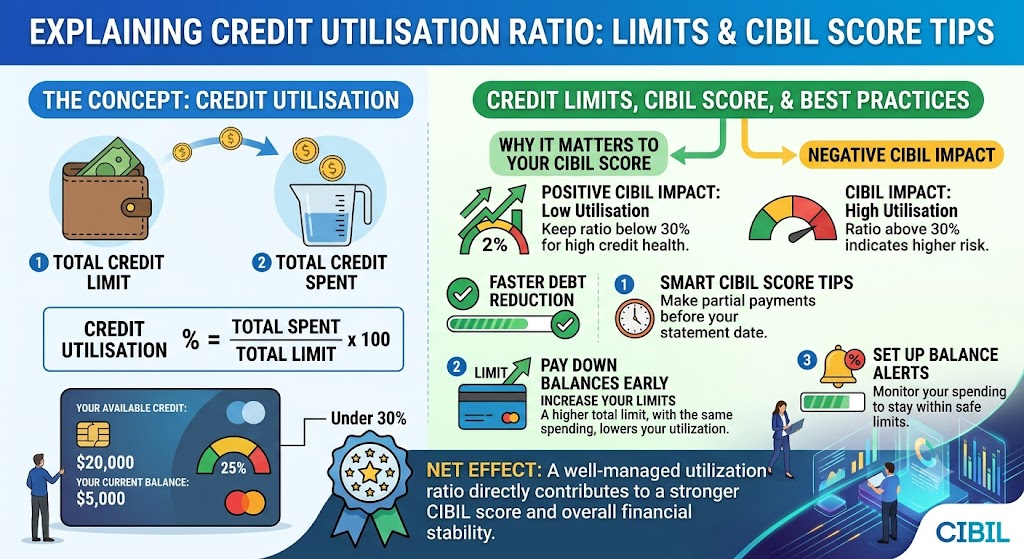
5. Keep Credit Utilisation Low
Credit utilisation is the percentage of your available revolving credit limit that you use.
For example, if your credit card limit is ₹20,000 and your outstanding balance is ₹4,000, your utilisation ratio is 20%.
A lower utilisation ratio is generally preferable to consistently using most of your available limit. Keeping utilisation below 30% is a common guideline, not a guaranteed scoring threshold.
Avoid unnecessary spending simply to demonstrate credit activity.
6. Avoid Applying for Too Many Credit Products
Submitting multiple credit applications within a short period may lead to several hard enquiries on your credit report.
Frequent applications can make your credit profile appear riskier to lenders. Instead, research eligibility requirements and apply selectively for products that fit your financial situation.
7. Give Your Credit History Time to Develop
Building credit is a gradual process. Your score may not appear immediately after opening a credit account, and there is no fixed timeline for reaching a particular score.
The time required depends on factors such as the lender's reporting practices, the type of credit account, and the amount of information available in your credit report.
Focus on consistent, responsible financial behaviour rather than trying to achieve a specific score within a few weeks.
What Is a Good First Credit Score?
In India, the CIBIL score generally ranges from 300 to 900. A higher score typically indicates a stronger credit profile, although lenders use their own eligibility requirements and assessment methods.
If you are new to credit, you may not have a score initially because there is insufficient information to calculate one.
Your first priority should be establishing a positive repayment history. Avoid focusing only on the number; accurate reporting, timely payments, manageable debt, and consistent financial habits are equally important.
Common Mistakes to Avoid When Building Credit
First-time borrowers can protect their financial health by avoiding these common mistakes:
-
Missing payment deadlines: Even a single delayed payment may affect your credit record.
-
Using the full credit limit: High utilisation can negatively influence your credit profile.
-
Applying for unnecessary loans: Borrowing solely to build credit can create avoidable financial pressure.
-
Paying only the minimum due: This can result in interest charges and a growing balance.
-
Ignoring your credit report: Errors and unfamiliar accounts should be investigated promptly.
-
Trusting guaranteed-score promises: No legitimate provider can guarantee a particular CIBIL score within a fixed period.
Building credit is about demonstrating that you can borrow responsibly and repay what you owe.
How Long Does It Take to Build Credit From Zero?
There is no universal timeline for building a credit history or obtaining a CIBIL score. A credit account must first be opened and reported, and the bureau needs sufficient information to assess your credit behaviour.
Your initial credit history may begin appearing after the lender reports your account, but the timing varies. Developing a strong profile generally requires consistent repayment habits over time.
Instead of opening multiple accounts to speed up the process, maintain one suitable credit facility if you need it, pay on time, and review your credit report periodically.
Conclusion
Building credit from zero is an important step towards establishing a healthy financial future. For beginners in India, the process starts with understanding their credit status, selecting an appropriate credit product, paying bills on time, and keeping outstanding balances manageable.
Published on : 19th October 2026
Published by : yogendra
www.vizzve.com || www.vizzveservices.com
Follow us on social media: Facebook || Linkedin || Instagram
🛡 Powered by Vizzve Financial
RBI-Registered Loan Partner | 10 Lakh+ Customers | ₹600 Cr+ Disbursed