

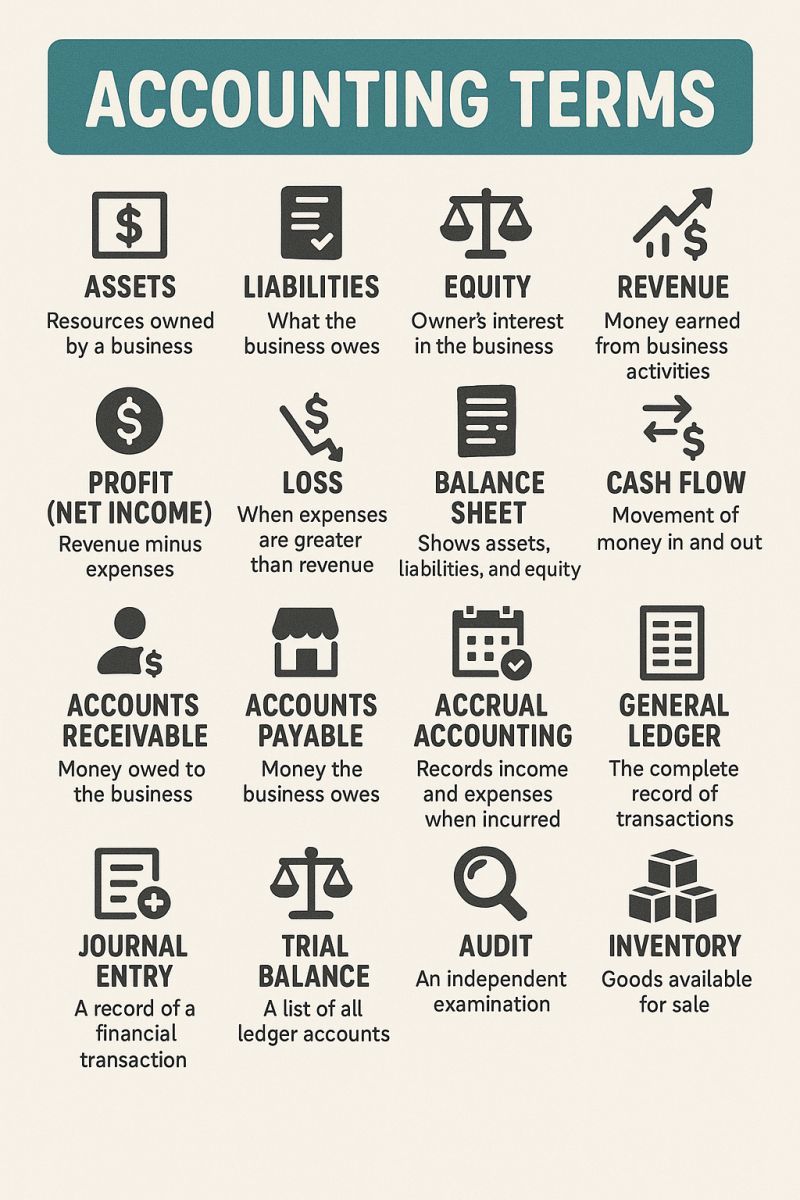
Business Terms to Reckon With
Understanding key business terms is crucial for entrepreneurs, investors, and professionals navigating today’s complex corporate environment. Here’s a concise guide to essential business terminology every stakeholder should know in 2025.
1. EBITDA (Earnings Before Interest, Taxes, Depreciation, and Amortization)
A measure of a company’s operating performance. EBITDA indicates profitability by showing earnings before deducting financial costs and accounting adjustments.
2. Market Capitalization
The total market value of a company’s outstanding shares. It’s calculated by multiplying the share price by the number of shares and indicates company size.
3. Burn Rate
Commonly used in startups, it refers to how quickly a company spends its capital before reaching profitability.
4. CAGR (Compound Annual Growth Rate)
The mean annual growth rate over a specified time period longer than one year, used to measure investment returns or business growth.
5. Valuation
The process of determining the current worth of an asset or company, often critical in funding rounds and investment decisions.
6. Runway
The amount of time a company can operate before it runs out of cash, typically calculated by dividing current cash reserves by the monthly burn rate.
7. KPI (Key Performance Indicator)
Metrics used to evaluate the success of a business or project against predefined objectives.
8. Due Diligence
The comprehensive appraisal of a business undertaken by a prospective buyer or investor to evaluate assets, liabilities, and risks.
9. Exit Strategy
A planned approach to liquidate an investment or business stake, commonly via IPO, sale, or merger.
10. Leverage
The use of borrowed capital (debt) to increase the potential return on investment.
Frequently Asked Questions
Why is knowing business terms important?
Understanding key terms helps stakeholders make informed decisions, communicate clearly, and assess business opportunities effectively.
What does EBITDA indicate about a company?
EBITDA gives insight into operational profitability by excluding non-operational expenses.
How is market capitalization used?
Market cap helps investors gauge company size and compare it to peers within industry sectors.
What is the difference between burn rate and runway?
Burn rate is the speed of spending capital, while runway is the period the company can sustain operations given its burn rate.
How are KPIs chosen?
KPIs are selected based on strategic goals and critical success factors unique to each business or project.
Published on: July 22, 2025
Published by: PAVAN
www.vizzve.com || www.vizzveservices.com
Follow us on social media: Facebook || Linkedin || Instagram
🛡 Powered by Vizzve Financial
RBI-Registered Loan Partner | 10 Lakh+ Customers | ₹600 Cr+ Disbursed