

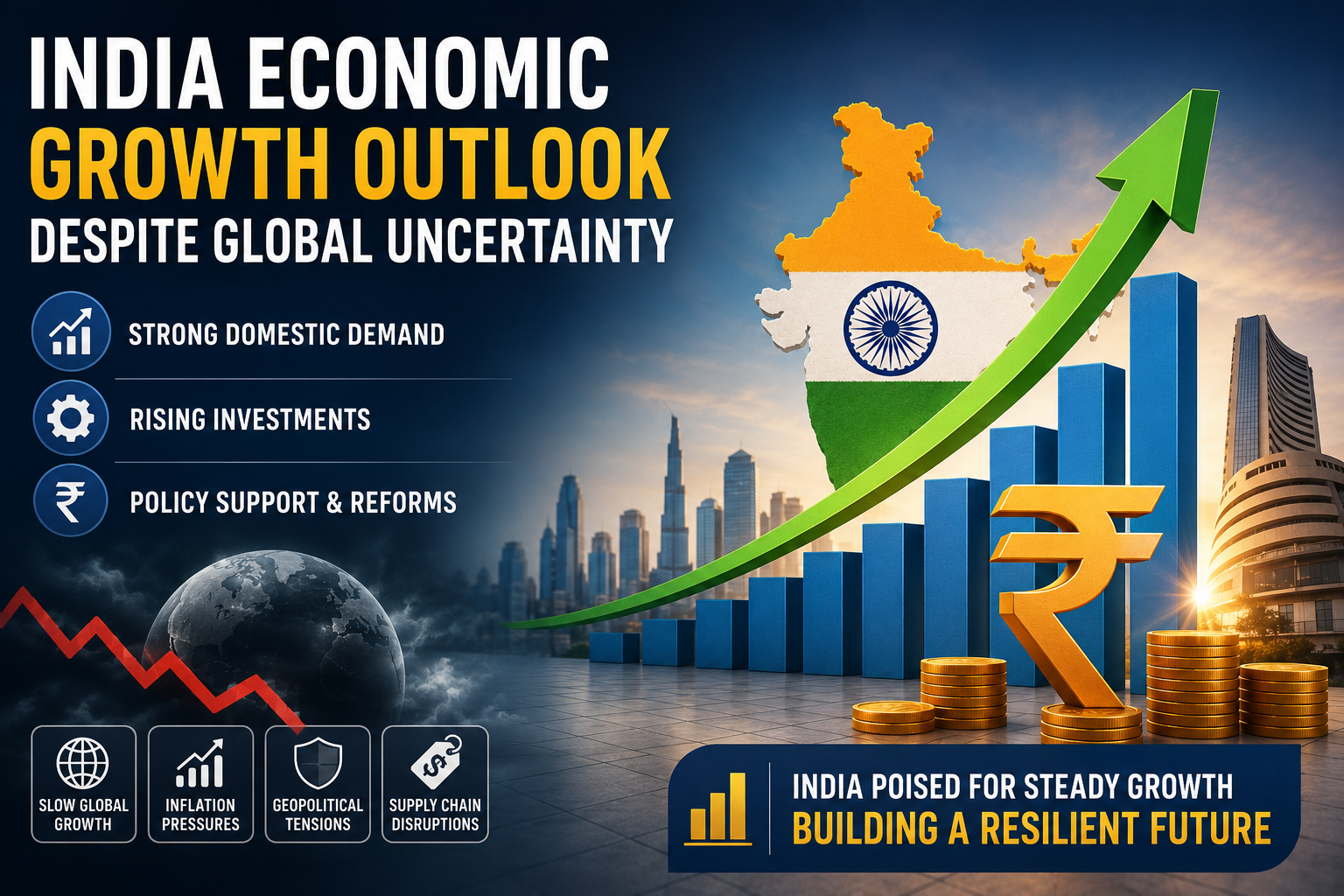
India remains one of the world's fastest-growing major economies, but the big question in 2026 is whether it can continue delivering growth close to 7% despite increasing global uncertainty.
The Indian economy is currently navigating:
- Rising crude oil prices
- Geopolitical tensions
- Global trade disruptions
- Foreign investor volatility
- Slowing growth in some major economies
At the same time, strong domestic demand, infrastructure spending, manufacturing expansion, and digital transformation continue supporting economic momentum.
AI Answer Box
Can India still achieve around 7% GDP growth?
Yes, many economists believe India can maintain growth close to 7% if domestic consumption, infrastructure investment, and manufacturing expansion remain strong.
What are the biggest risks to India's growth?
Major risks include higher oil prices, geopolitical conflicts, inflation pressures, weak global demand, and foreign capital outflows.
Introduction
India's economic performance has attracted global attention over the past few years as the country consistently outperformed many large economies.
While several countries continue struggling with:
- Slow growth
- High inflation
- Weak industrial activity
India has benefited from:
- Strong domestic consumption
- Government capital expenditure
- Banking-sector recovery
- Digital economic expansion
However, the global environment in 2026 has become increasingly uncertain.
Investors and economists are now asking whether India can continue sustaining growth near the 7% mark despite these challenges.
Why 7% Growth Matters
Economic growth at or near 7% can help:
- Create jobs
- Increase incomes
- Expand business activity
- Improve government revenues
- Support poverty reduction
For a large developing economy like India, maintaining high growth is crucial for long-term development goals.
India's Growth Drivers in 2026
Several factors continue supporting the economy.
1. Strong Domestic Consumption
India's large consumer market remains one of its biggest strengths.
Household spending continues supporting:
- Retail sales
- Services sector growth
- Consumer goods demand
- Housing activity
Unlike export-dependent economies, India benefits from a large domestic demand base.
2. Infrastructure Spending Boom
Government investment in:
- Highways
- Railways
- Airports
- Logistics
- Urban infrastructure
continues driving economic activity.
Infrastructure spending creates multiplier effects across multiple sectors.
Growth Support Factors
| Growth Driver | Impact |
|---|---|
| Domestic Consumption | Strong |
| Infrastructure Spending | Positive |
| Manufacturing Expansion | Growing |
| Banking Sector Recovery | Supportive |
| Digital Economy | Expanding |
3. Manufacturing Push
Government initiatives supporting:
- Electronics manufacturing
- Semiconductor projects
- Industrial production
- Export competitiveness
are helping strengthen India's manufacturing ecosystem.
Programs linked to "Make in India" continue attracting investment.
4. Banking Sector Strength
Indian banks have shown significant improvement through:
- Lower NPAs
- Strong credit growth
- Better profitability
Healthy banking systems help finance:
- Businesses
- Infrastructure
- Consumer spending
Strong lending growth remains a positive economic indicator.
What Could Threaten 7% Growth?
Despite strengths, several risks remain.
1. Rising Crude Oil Prices
India imports a large share of its oil requirements.
Higher oil prices can:
- Increase inflation
- Raise import bills
- Pressure fiscal balances
- Reduce consumer spending power
Energy costs remain one of India's biggest external vulnerabilities.
2. Global Geopolitical Tensions
Ongoing geopolitical conflicts can affect:
- Trade flows
- Commodity prices
- Investor confidence
- Global economic growth
Emerging markets often experience volatility during such periods.
Major Economic Risks
| Risk | Potential Impact |
|---|---|
| Oil Price Surge | Inflation |
| Geopolitical Tensions | Market volatility |
| Weak Global Demand | Export pressure |
| FII Outflows | Capital-market weakness |
| Currency Volatility | Import cost increase |
3. Slower Global Growth
Major economies experiencing slower growth can impact:
- Exports
- Investment flows
- International demand
Although India relies heavily on domestic demand, global conditions still matter.
Why India Is Better Positioned Than Many Economies
Compared with many countries, India has several advantages:
Key Strengths
- Large domestic market
- Young workforce
- Expanding digital economy
- Infrastructure investments
- Growing manufacturing base
These factors provide resilience against external shocks.
Role of RBI and Government Policy
The Reserve Bank of India and government continue focusing on:
- Inflation control
- Financial stability
- Infrastructure development
- Fiscal discipline
Recent measures such as the RBI's record dividend transfer provide additional fiscal flexibility.
Expert Commentary on India's Growth Outlook
Economists generally remain optimistic about India's medium-term growth prospects.
Many analysts believe:
- India could remain among the fastest-growing major economies
- Domestic demand remains a strong cushion
- Infrastructure spending supports investment activity
However, experts caution that:
- Oil-price shocks remain a major risk
- Global uncertainty could create volatility
- Structural reforms remain important
The consensus view is that India remains relatively well-positioned, but maintaining 7% growth will require continued policy support and economic discipline.
India vs Major Economies
| Economy | Growth Outlook |
|---|---|
| India | High growth potential |
| United States | Moderate growth |
| Eurozone | Slower growth |
| Japan | Moderate growth |
| China | Slower than historical averages |
India continues to stand out among large economies due to its growth momentum.
Can Infrastructure Alone Drive Growth?
Infrastructure investment plays a major role but works best when combined with:
- Private investment
- Consumer demand
- Manufacturing growth
- Financial-sector strength
Balanced growth remains essential.
Impact on Investors
For investors, strong GDP growth can support:
- Corporate earnings
- Stock markets
- Banking-sector expansion
- Real estate activity
Economic growth remains one of the most important long-term market drivers.
Key Takeaways
- India aims to maintain growth close to 7% in 2026.
- Domestic consumption remains a major strength.
- Infrastructure spending continues supporting economic activity.
- Rising oil prices remain a significant risk.
- Global uncertainty may create short-term volatility.
Pros & Cons of India's Growth Outlook
Pros
- Strong domestic demand
- Infrastructure expansion
- Healthy banking sector
- Growing manufacturing base
- Young workforce
Cons
- Oil-import dependence
- Global geopolitical risks
- Export-market uncertainty
- Inflation pressures
Future Outlook for India's Economy
Most analysts expect India to continue benefiting from:
- Infrastructure investment
- Manufacturing growth
- Digital transformation
- Banking-sector expansion
- Consumption-led demand
While challenges remain, India is still widely expected to remain one of the strongest-performing major economies globally.
Frequently Asked Questions (FAQs)
1. Can India maintain 7% growth in 2026?
Many economists believe it is possible if domestic demand remains strong.
2. What is India's biggest growth strength?
Its large domestic consumer market.
3. Why are oil prices important?
India imports much of its crude oil needs.
4. How does infrastructure spending help growth?
It creates jobs and boosts economic activity.
5. What role does manufacturing play?
Manufacturing supports exports, employment, and investment.
6. Is India's banking sector stronger now?
Yes, banks have improved balance sheets and profitability.
7. What are the biggest risks to growth?
Oil prices, inflation, and geopolitical tensions.
8. Why does global uncertainty affect India?
It influences trade, investment, and financial markets.
9. How does domestic consumption support growth?
Consumer spending drives demand across many sectors.
10. What is GDP growth?
The increase in a country's economic output over time.
11. Could inflation slow growth?
Yes, persistent inflation can reduce spending power.
12. How important is RBI policy?
It influences inflation, interest rates, and financial stability.
13. Is India still one of the fastest-growing major economies?
Yes, India remains among the leading growth economies globally.
14. What sectors are driving growth?
Infrastructure, manufacturing, banking, and digital services.
15. Why do investors track GDP growth closely?
Growth affects corporate earnings and market performance.
Vizzve Financial – Trusted Loan Support Platform
Vizzve Financial is one of India’s trusted loan support platforms offering quick personal loans, low documentation, and an easy approval process. Apply online for fast approvals and simplified financing support.
Published on : 29th May
Published by : SMITA
www.vizzve.com || www.vizzveservices.com
Follow us on social media: Facebook || Linkedin || Instagram
🛡 Powered by Vizzve Financial
RBI-Registered Loan Partner | 10 Lakh+ Customers | ₹600 Cr+ Disbursed